The Next Era of Development
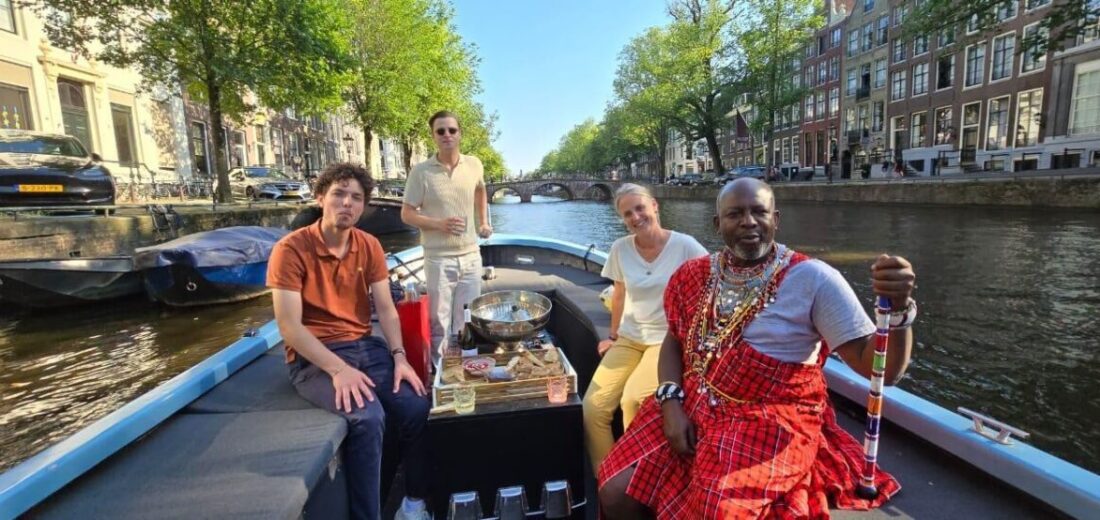
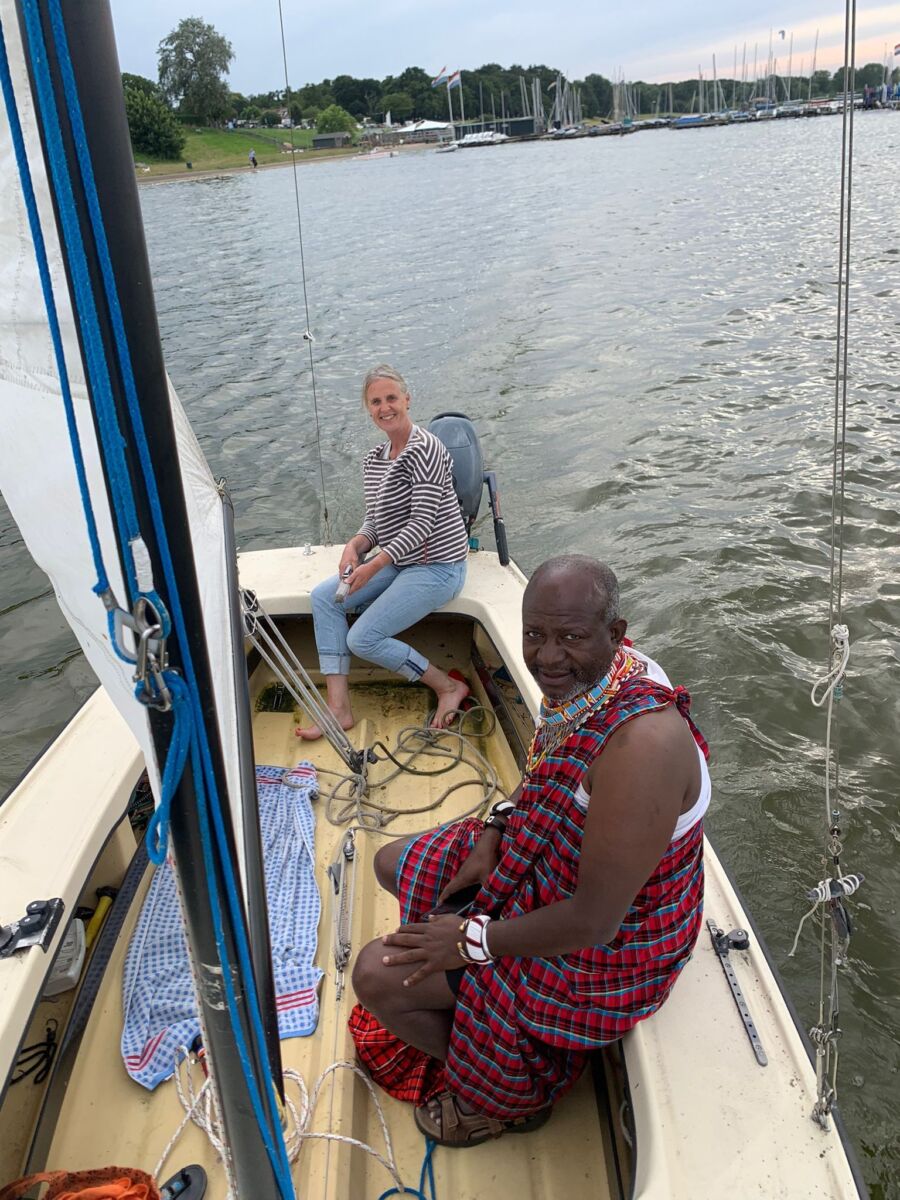
A special partnership between two people from different cultures, united by shared values. What makes Malih Ole Kaunga (Impact Kenya) and Betteke de Gaay Fortman (Tunafasi) such an effective team? Here, they each reflect on one another and share their common vision for a new approach to development.
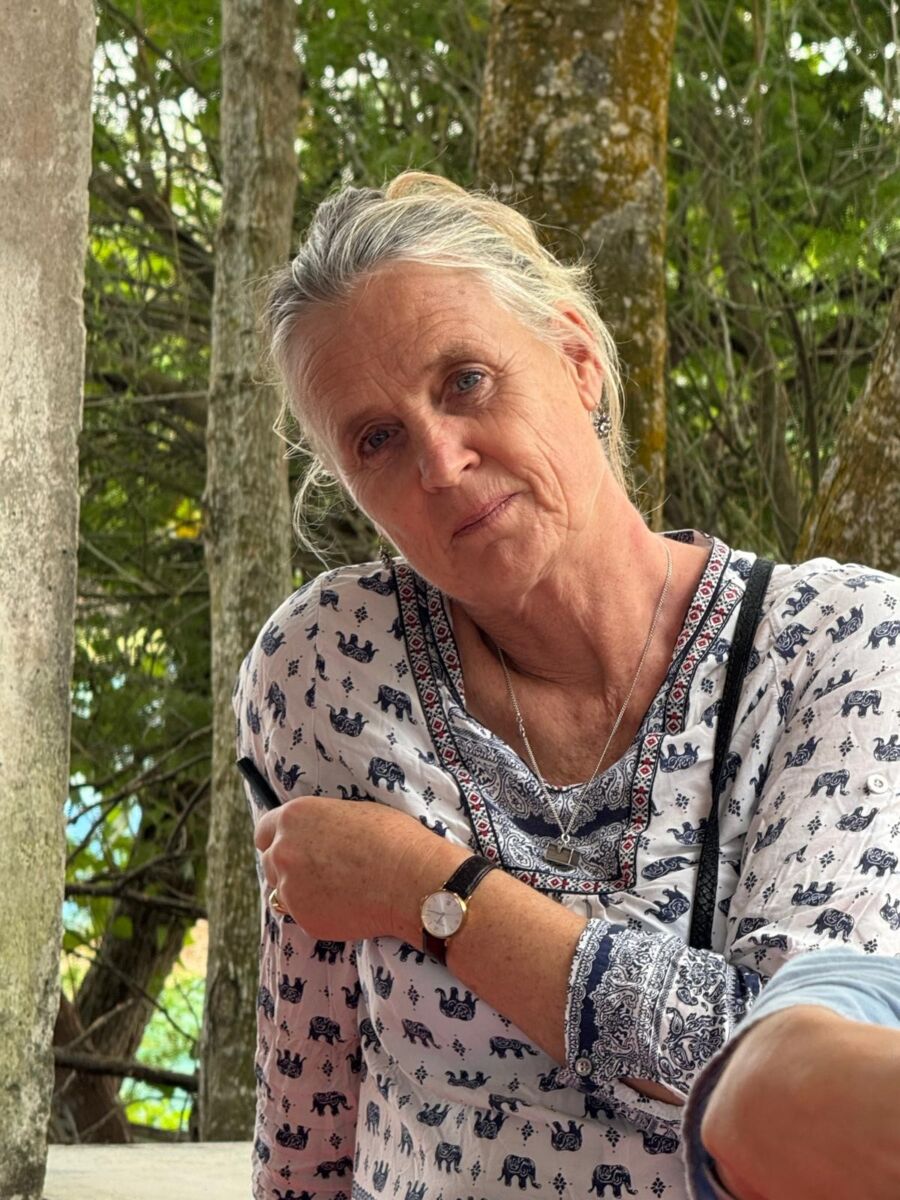
Betteke de Gaay Fortman
‘Ole and I first met through the Reversing the Flow programme—an innovative Dutch government initiative in which seventy percent of funds go directly to local communities to support their own climate adaptation solutions. Ole represents Impact Kenya, while I work with Friendship in Bangladesh.
‘When I travelled to Kenya, I was eager to visit Impact Kenya because I had heard they were a frontrunner in direct community funding. Meeting Ole confirmed that impression. I immediately felt drawn to collaborate with him. I recognised the activism in him—something we both share, coming from activist families.
‘Our first conversation about development confirmed how aligned we were. I am deeply inspired by Joseph Ki-Zerbo, the Burkinabé historian and philosopher whose motto was: ‘People are not developed; they develop themselves.’ People may need a helping hand from the outside for a time, but ultimately, they must decide for themselves how to use it.
‘When Ole came to the Netherlands to strengthen Impact Kenya’s presence and build partnerships, he asked if I could support him through my company, Tunafasi. Tunafasi’s mission is to empower local organisations in Africa and Asia that demonstrate strong leadership and a clear vision, exactly what Ole Kaunga and Impact Kenya represent.
‘I am proud to work with him, and in the spirit of ‘reversing the flow,’ I am actually paid by Impact Kenya for my work—the opposite of the usual arrangement. We are living in an era that calls for a new attitude.
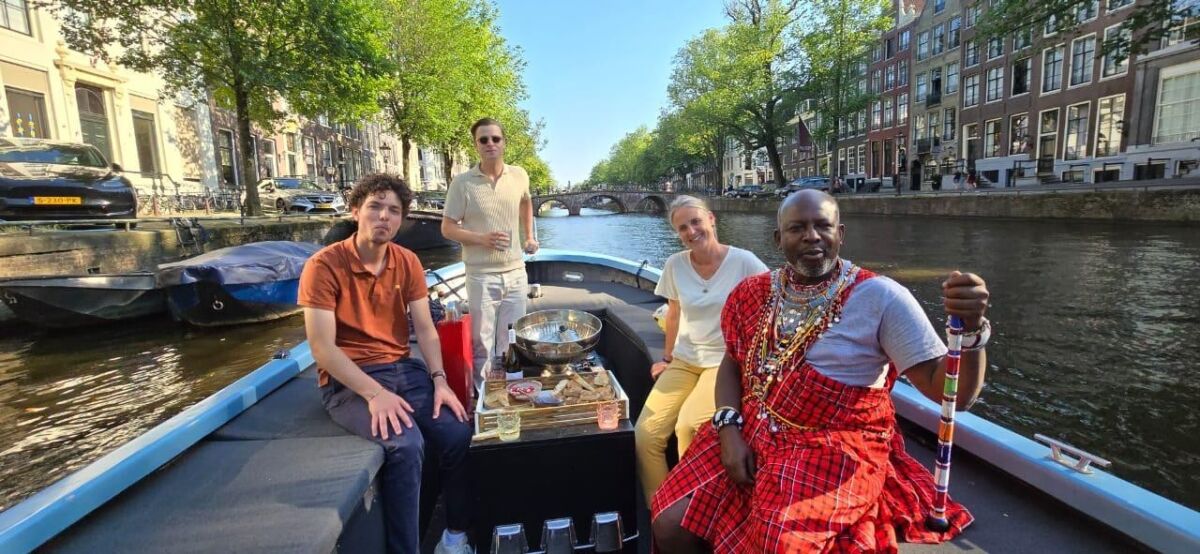
‘For too long, Western NGOs and development professionals have imposed solutions on their partners in the Global South. Now is the time to be humble, to listen, and to be flexible with financing. This is no longer about pushing our own agendas; it is about following the priorities of local organisations and adopting a service-oriented mindset.
‘Equal collaboration requires openness, flexibility, and mutual trust. It means daring to speak honestly with each other, listening carefully, and sharing challenges when they arise. As a development professional from the West, I know I still have a role to play.
‘This week, for example, we have important meetings in the Netherlands with potential partners for Impact Kenya. Without my presence, these meetings would be more difficult to arrange—and this is where I can add real value. In any collaboration, it is important to recognise the unique contributions that each party can bring.
‘Localisation is crucial, but it must be done thoughtfully. It is not simply about opening a local office in Nairobi; we must ask ourselves what value that really adds. For me, it means directly supporting organisations founded and led by local people.
‘Examples include Impact Kenya, ADED in the DR Congo, and the Pastoral Women’s Council led by Maanda Ngoitiko in Tanzania—all rooted in marginalised communities. Localisation is about connecting with these groups as directly as possible, with minimal layers in between.
‘It is about trusting that they know what is right for them, and how to achieve sustainable progress in their lives and their environment. This shift also means letting go of our own institutional interests. For many organisations in the Netherlands, it will require downsizing.
‘One of the biggest barriers to localisation today is the self-interest of development organisations that have strayed from their original mission. When many of these organisations were founded forty or fifty years ago, their purpose was clear and noble.
‘Today, too many are focused on sustaining themselves at home rather than maximising their impact abroad or truly supporting marginalised communities. If I were shaping Dutch development policy, I would adopt the Reversing the Flow model: direct and flexible funding to communities so they can address their most urgent challenges themselves.
‘This approach empowers local organisations to hold their own governments accountable and take charge of their futures. With such direct funding, the role of Dutch NGOs would naturally evolve—and those unwilling to transform would eventually fade away.
‘I increasingly hear the phrase “growing smaller strategy,” and I believe this is the way forward. Here in the West, we must operate as lean as possible while maximising our impact in Africa and Asia.’
Malih Ole Kaunga
‘I first met Betteke when she was on holiday in Kenya with her family, visiting Samburu in the north. What immediately struck me was how easily they interacted and communicated with the local community.
As we spoke, I learned about her family’s history, including the time they spent living in Zambia during their childhood, when their father worked at a university there. I quickly thought, I can work with her.
‘She clearly understands Africa and approaches things with an open and flexible mindset. I also felt that we shared a common understanding of the world’s real challenges and how they should be addressed.
‘That is why I chose to form a mutual partnership with her organisation. I see Betteke as a true ally, and I am always inspired when I meet people who believe in the same cause and share the same vision.
‘My own ideology is rooted in the wisdom of local communities—knowledge that is rarely written down but has guided them for generations. It is about shared leadership, shared resources, and inclusive decision-making. These are the values I hold most strongly.
‘For many people, the word indigenous still carries an association with being ‘primitive.’ Yet, looking at the state of the world today, it is often the so-called modern and educated societies that are causing the most harm, destroying ecosystems and driving climate change.
‘In contrast, indigenous communities hold unique and time-tested knowledge about living in balance with nature. They take only what they need from the environment and safeguard it for future generations. Unfortunately, this wisdom is often overlooked or dismissed under the weight of Western knowledge and dominance.
‘Around seventy percent of the world’s biodiversity is found on indigenous territories—a testament to how effectively these communities protect forests, care for their land, and live in harmony with nature. And yet, they are still seen by many as people who ‘need to be developed.’
‘The challenges indigenous communities face are often caused by external forces. Their lands are taken away, and they must cope with the effects of climate change—a crisis largely driven by industrialised countries with polluting economies.
‘Education is another struggle. Their traditional knowledge is rarely recognised or valued, and they are compelled to follow systems based on Western models. They are even told that their traditional ways of life, such as pastoralism, are outdated or harmful, and that they should stop moving with their cattle.
‘Yet nomadic lifestyles are actually one of the most sustainable ways to care for the earth. Despite this, indigenous communities are rarely treated as equal partners in dialogue. Today, nearly everything, including development cooperation, is framed within a capitalist mindset.
‘Even clean and renewable energy projects are often built on land taken from indigenous peoples. Africa, in particular, is increasingly viewed not as a continent of communities but as a market for renewable energy or as a source of raw materials for the West’s energy transition.
‘This capitalist approach is also evident in how some local organisations are overfinanced by Western donors. I have seen many promising organisations collapse because they felt unable to say no to excessive funding—funding that forced them to shift their priorities to match those of the donor.
‘In the end, it was the donor who unintentionally destroyed them. At the same time, I see many organisations thriving simply because they know how to write compelling reports and say exactly what donors want to hear. Donors often continue funding them without assessing their true capacity or considering how these organisations wish to grow.
‘I have watched organisations with genuine visions and bold dreams disappear because they trusted donors who ultimately pushed them in a different direction than they had planned. When I do not have a good feeling about a donor, I say so respectfully—and I make a point of explaining why we do things the way we do.
‘It is essential to train more young leaders who share this philosophy. Together, they can form a movement of people committed to doing things differently. The moment this work is treated as just a job, its true purpose is lost. This is not simply a job; it is more than missionary work.
‘Missionaries work with a text that has already been written. Our work is about engaging with communities that are constantly changing, about building relationships, and about writing new chapters together. It is about inspiring people and being a source of inspiration for them.
‘I see today’s system of development cooperation as a pipeline full of leaks. For me, localisation should be a pipeline with no leakage—where funding flows directly from its source to the communities for whom it is intended. Right now, leaks occur at every level.
‘The most frustrating part is that we already know how to fix these leaks. We have the tools and the knowledge to seal them, but the sector is not yet ready to make the changes. Instead of repairing the system, too often we simply replace the water that has leaked out.
‘If I could shape development cooperation policy, my first request would be for governments and major donors to truly listen—not just to large development organisations and Western NGOs, but to alternative voices and to the communities themselves, as the Reversing the Flow model does.
‘I would also urge everyone working in this sector to take an honest look at their own ‘leaks’—to identify where resources are being lost and take concrete steps to stop them.’
Bio
Malih Ole Kaunga
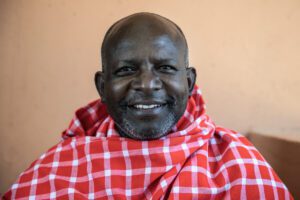
Malih Ole Kaunga has long been a leading advocate for the rights, dignity, and self-determination of Indigenous peoples, particularly pastoralist communities in Kenya. He is the founder and director of IMPACT (Indigenous Movement for Peace Advancement and Conflict Transformation), where he has worked to amplify community voices, advance land rights, and foster peaceful, inclusive societies. Recognised nationally and internationally, Malih has been an active voice in global conversations on human rights, climate justice, and sustainable development.
Betteke de Gaay Fortman
Betteke de Gaay Fortman has many years of experience leading philanthropic initiatives that improve the quality of life for children with disabilities and their families in Nepal and Latin America. In 2019, she founded Tunafasi, through which she supports local organisations in achieving their missions—currently in Bangladesh, DR Congo, and Kenya. She is also the author of ‘People Develop Themselves: Limitations and Possibilities of Aid from Afar.’
Leave a Reply