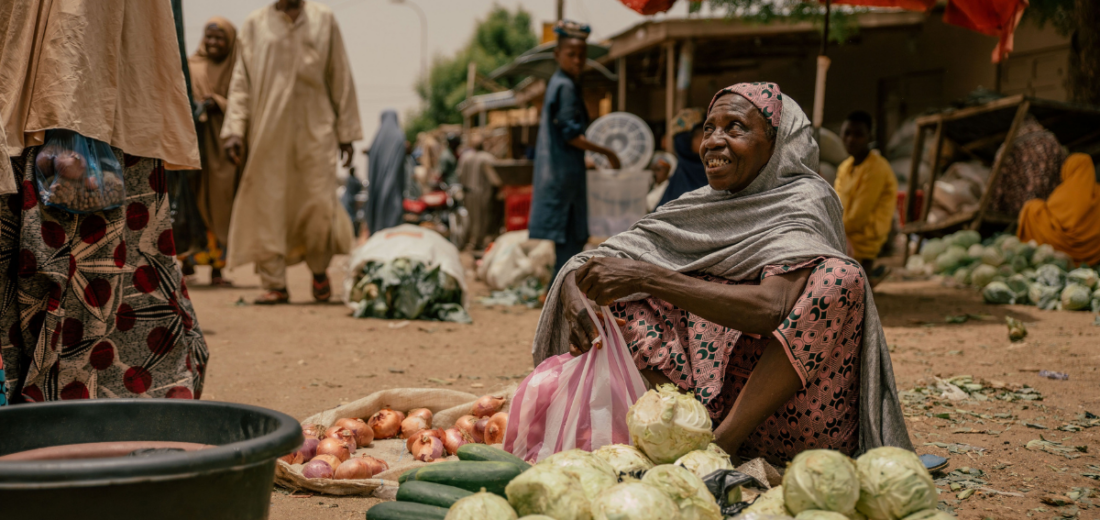
Poverty reduction isn’t enough: Rethinking development for lasting prosperity
Poverty reduction has long been the benchmark of progress, but it often stops at subsistence. Across communities, short-term gains often fade without robust systems in place to sustain them. The future of development lies in shifting focus from relief to resilience, from aid to ownership, and ultimately, from poverty reduction to wealth creation.
Inequalities in societies have existed since time immemorial. With civilisation, this divide has become more pronounced, and bridging the gap between the “haves” and the “have-nots” has never followed a straightforward or uniform path. Efforts to address the issue have largely focused on either alleviating poverty or creating wealth.
 Numerous approaches have been adopted to reduce poverty and ensure that even the most vulnerable members of society can access basic needs for survival. For example, around 2018, an organisation called GiveDirectly devised a strategy to reduce poverty by providing cash transfers to targeted groups in Mathare. Beneficiaries were free to use the funds to meet their most urgent needs. Some cleared rent arrears, others settled debts, while some invested in small businesses.
 Another example is the Youth Enterprise Development Fund. This government initiative offered loans to youth groups to help them start income-generating ventures. It was introduced at a time when many young people were ineligible for loans from mainstream financial institutions such as banks.
Poverty alleviation initiatives
Youth groups could access KES 50,000 as an initial loan, pay a one-off maintenance fee of 5%, and conveniently repay the amount over one year. These funds enabled the establishment of numerous small enterprises, including product sales, farming ventures, and service-based businesses such as car washing. In both cases, the initiatives had a ripple effect by increasing cash flow within communities and contributing to poverty reduction.
However, much like a treasure hunt where small victories often uncover new obstacles, additional challenges have emerged alongside these gains. These include loan defaults, violent conflicts among youth groups that split and compete over revenue or resources, and even broken families, among others.
Yet, despite these shortcomings, the benefits and broader impact of such programmes remain significant. They have contributed to poverty reduction, wealth creation, and even a decline in crime rates in some communities.
 For a long time, poverty reduction has been a key goal for development partners worldwide. Many of these actors, particularly from the developed world, are often moved by images and stories of suffering from the least developed countries.
Narratives of mass casualties following disasters or humanitarian crises frequently trigger urgent responses, prompting donors and charities to intervene. However, many of these interventions are designed through a top-down approach, with minimal involvement from the host communities, often resembling knee-jerk reactions.
In some cases, such interventions override the free will of the target groups and, by extension, infringe on their human rights. More often than not, the dignity of beneficiaries is compromised in the process of achieving donor objectives.
Most of these interventions are also hardly sustainable. While they may be scalable and easily replicated across different contexts, many fail to survive beyond the project funding cycle. A major reason is the lack of ownership by host communities, which eventually affects stewardship and continuity once donor support ends.
For example, Mutua, a man from Makueni County, shares the story of a donor who saw news reports about community members who had died due to drought. Deeply moved, the donor rushed to intervene.
Concluding that the community urgently needed a source of nutrition, the donor provided food aid and constructed an artificial fish pond meant to supply fish for dietary needs. However, fish was not part of the community’s preferred diet. Once the donor left, residents began drawing water from the pond for domestic use.
Gradually, the fish died, and the project was abandoned. It later became clear that the community’s most pressing need was water, not fish. Since the community valued the water more than the fish, the pond was eventually drained, and the project collapsed.
Long-term sustainability
Poor participation and limited involvement of intended beneficiaries during needs assessment and project design often make communities perceive such initiatives as donor-driven. As a result, the projects are seen less as solutions to their actual problems and more as external interventions imposed on them.
 Projects focused on poverty reduction generally seek to improve living standards and ensure equal access to resources and opportunities. While these efforts are important, they require a gradual transition towards sustainability through wealth creation.
Poverty reduction primarily addresses immediate needs, whereas wealth creation is a long-term process of generating, accumulating, and growing financial assets. In this sense, the two approaches are complementary: poverty reduction lays the foundation, while wealth creation sustains and expands the gains achieved.
Poverty reduction is also a global priority, as reflected in United Nations Sustainable Development Goal 1 (SDG 1). The Sustainable Development Goals are 17 interconnected global aspirations adopted in 2015 as a universal call to end poverty, protect the planet, and ensure peace and prosperity for all by 2030.
SDG 1 specifically calls for an end to “poverty in all its forms everywhere.” This goal is largely pursued through inclusive economic growth, job creation, social protection, improved education and healthcare, and sound governance. Poverty is generally defined as the inability to meet basic needs.
As a result, poverty reduction aims to create opportunities for individuals to fulfil those needs. Sustainable Development Goal 1 (SDG 1) includes eight targets that guide efforts to eradicate poverty. For instance, Target 1.A calls for the mobilisation of resources to implement policies aimed at ending poverty.
On the other hand, wealth creation focuses on expanding assets, generating multiple streams of income, and building resources that support living standards beyond mere survival. This becomes possible when a significant proportion of the population can sustain their livelihoods and have enough surplus to save and invest.
Wealth creation also depends on broader factors such as peace, security, and economic stability. Essentially, it strengthens and solidifies the resource foundation of individuals and communities.
In some quarters, particularly in reports evaluating poverty alleviation programmes in urban informal settlements across the Global South, concerns have been raised that certain poverty reduction initiatives can foster long-term dependency among beneficiaries.
For example, in communities where scholarships are offered to children from impoverished backgrounds, some parents reportedly withdraw from their responsibilities, including attending parents’ meetings or following up on their children’s academic progress.
Dependency has also been observed in socio-economic projects that provide stipends for participation. After such projects conclude, sustainability becomes challenging as communities may grow reliant on allowances and incentives merely for participation.
Wealth creation
On the other hand, wealth creation largely builds on existing structures and seeks to strengthen results or stabilise the foundation already laid. For example, after receiving grants as a form of welfare support, women in groups were later trained in entrepreneurship and provided with start-up loans to establish businesses.
Some also acquired practical skills such as soap making, dressmaking, and catering. Equipped with knowledge, skills, and financial support, many were able to transform their lives from impoverished conditions to a stable financial footing.
 Some who once depended on bursaries to educate their children eventually became capable of sponsoring other children within their communities. In this sense, wealth creation initiatives tend to foster less dependency and greater ownership.
Wealth creation also draws on the intersectionality of different community issues. For instance, the establishment of industries increases cash flow within an area, promotes local value addition of raw materials, and improves infrastructure such as roads, health facilities, and schools. These developments create a ripple effect that benefits not only the intended target groups but also the wider community.
Most wealth creation initiatives employ participatory approaches, involving the target communities from the stages of needs assessment and project design to implementation and evaluation. In contrast, many poverty reduction projects have often been criticised for tokenism, where inclusivity is minimally practised, and community ownership remains weak. As a result, sustainability after the project timeline frequently becomes a challenge.
Although wealth creation appears to offer stronger long-term outcomes than poverty reduction, it still depends on pre-existing structures that are often laid through poverty alleviation initiatives.
After establishing a foundation through poverty reduction programmes, it becomes necessary to scale up the gains through wealth creation strategies. Like building a house, laying the structure alone is not enough; finishing and strengthening it are equally important.
Likewise, wealth creation programmes often become more effective when introduced after a series of poverty alleviation interventions. Furthermore, wealth creation fosters independence by enabling communities to mobilise local resources for development, including through mechanisms such as corporate social responsibility initiatives.
For many developing nations, different regions require different approaches. A combination of both poverty alleviation and wealth creation is therefore necessary. Better still, a hybrid model that integrates the two offers a more sustainable solution.
Development is not only about laying a foundation, but about building a strong and durable one, then reinforcing it with programmes that sustain the gains and impacts achieved.
 At the initial stages, it is often practical to introduce poverty alleviation programmes to address urgent and immediate needs while establishing the presence of development partners within a community.
These interventions can then pave the way for more participatory and sustainable wealth creation programmes. As illustrated earlier, the process may begin with welfare-oriented support that addresses immediate challenges before transitioning into wealth creation initiatives focused on building assets, accumulating resources, and establishing long-term sustainability.
It is therefore safe to conclude that both poverty reduction and wealth creation are not only important, but complementary and necessary for meaningful development.
Photos credits: GiveDirectly, Youth Enterprise Development Fund, and [Lagos Food Bank Initiative, Hvkeem Photos, Prod Shutter, Swastik Arora, Namuyomba Beatrice, Muhammad-Taha Ibrahim via Pexels].
Leave a Reply