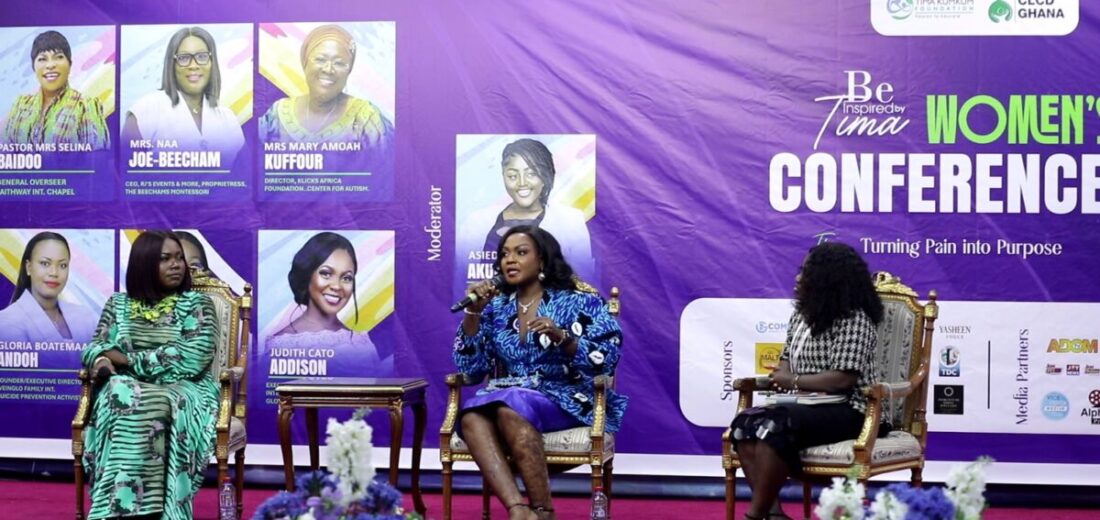
Every woman carries a story. Some are told freely. Others stay hidden beneath duty, expectation and the pressure to appear unbreakable while everything inside is crumbling.
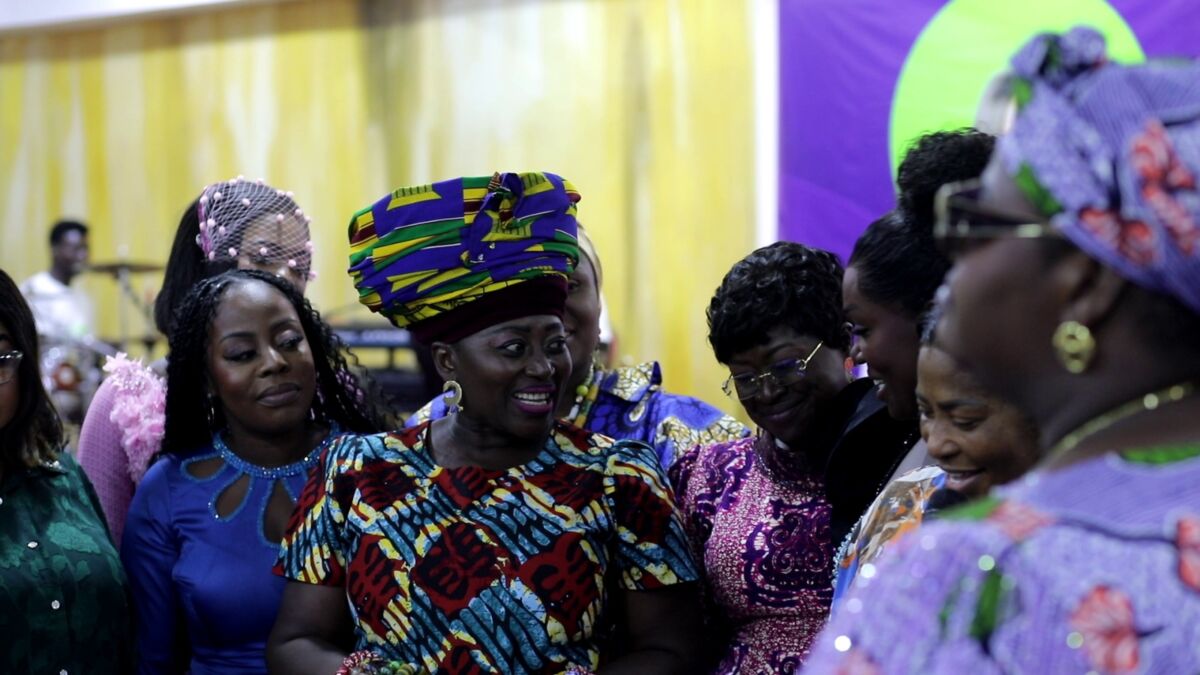
That thought stayed with me throughout the 2026 Be Inspired by Tima Women’s Conference, held at Faithway International Chapel, Kwabenya, under the theme “Turning Pain into Purpose.” The event was organised by Tima Kumkum in partnership with CLCD.
It felt like far more than a conference. It was a mirror held up to the hurts women carry in silence, and to the resilience they are expected to show even when no room has been made for them to recover. Society praises a woman’s strength but seldom asks what that strength has cost her. This event never asked the women present to be flawless. It let their lived experiences breathe.
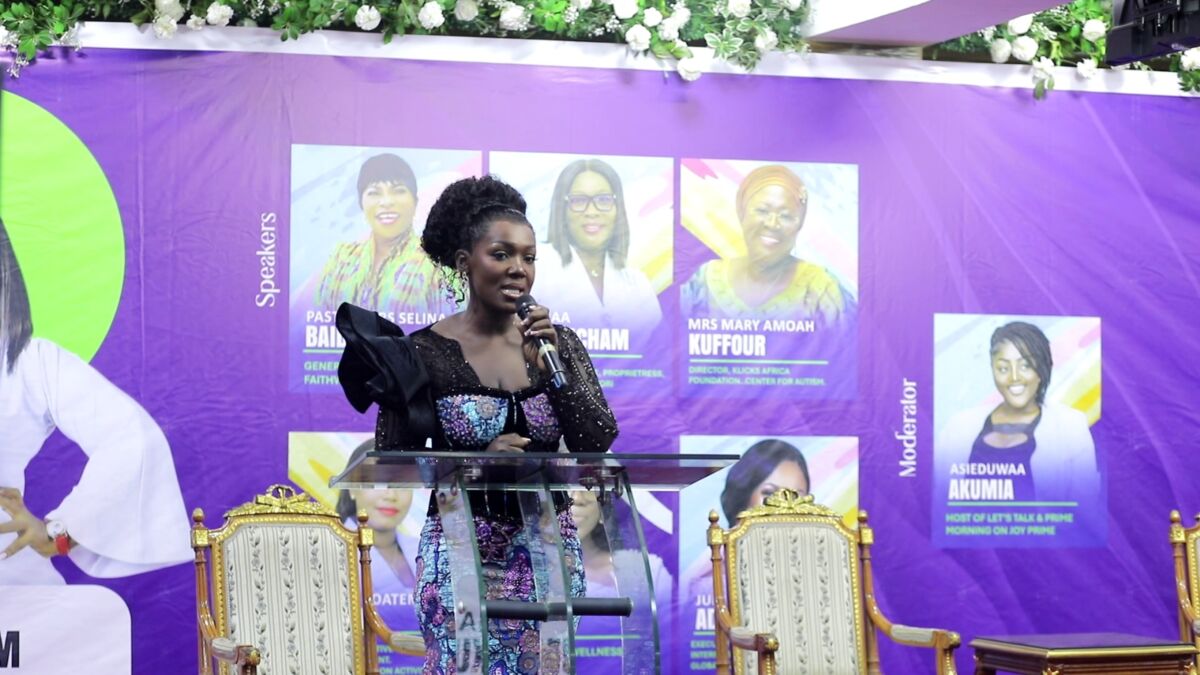 Cynthia Tima Yeboah, popularly known as Tima Kumkum is a Ghanaian media personality and host of the Aben Show. Through the Tima Kumkum Foundation, in partnership with CLCD Ghana, she organised the maiden Be Inspired by Tima Women’s Conference under the theme “Turning Pain into Purpose.” Drawing on her own life experiences, she set out to create “a safe haven for women” to share their stories and find strength in one another.
When a Dream Makes Room for Other Women
Tima Kumkum opened with a sincerity that set the tone for the day. “This is a vision that I have carried for so many years, and to see it come to life is only because of God,” she said.
Her ambition went beyond hosting an event. She wanted a space where women could speak out, learn and draw strength from one another’s journeys.
“This is a stage where women will come together, rise together, and share our stories. Someone’s tale will act as a warning to you. Another person’s story will become a source of encouragement.”
The women had not come merely for motivational speeches. They were being invited to face the experiences that had shaped them, some of which they had spent years keeping buried. Tima called the conference “a safe haven for women,” and as one speaker followed another, the phrase felt less like a hope and more like something being built before our eyes.
What Happens When You Stop Hiding?
One story lingered with me long after the day ended. Judith Cato Addison, a burn survivor and global burns advocate, described how an accident in childhood changed the way people saw her. She went from being regarded as a bright, beautiful, promising girl to someone whose appearance drew whispers, questions and assumptions. In time, those reactions began to shape how she saw herself.
“I wanted to be just regular. Is that asking too much?” she asked.
The question was hard to brush aside. It laid bare how draining it can be for a woman to keep negotiating her right to exist without being reduced to whatever makes others uncomfortable. Judith eventually made a choice. She would wear short sleeves, short skirts and ordinary clothes, and she would not let people’s reactions dictate how she lived. She knew the stares and comments would keep coming. “I wanted what I wanted,” she said.
Afterwards, I heard of a woman in the audience who, inspired by Judith, wore a short formal outfit to a class presentation, though she had once felt compelled to conceal her scars. The outfit itself is not remarkable. What is remarkable is that something ordinary to one person can be a huge leap for another. For that woman, appearing without concealment was a silent refusal to let other people’s unease control how she took part in life.
No woman should have to wait for society’s approval before she allows herself to live fully. Sometimes, liberation begins with something as small as choosing not to hide.
When Survival Becomes Service
Judith’s testimony was only one of several deeply personal stories. Gloria Boatemaa Andoh spoke about losing her father and the suicidal thoughts that followed. Grief had taken her to a very dark place, but a message she heard in church led her to rethink what loss means and what it takes to keep living. Today, she channels that experience into mental health advocacy and suicide prevention.
“Sometimes the pain can be a pain, but try and turn it around because when it gets turned around, it impacts generations. This isn’t merely about you alone, it touches everyone.”
That struck me because it challenges the idea that healing is a private duty with a private reward. When suffering is worked through and channelled outward, its effects can reach people who may never know what the survivor went through.
Gloria also offered a message countless women need to hear: “Accept that you have a problem. Talk to somebody. You don’t always have to stay silent.” In a world that applauds women for suffering without complaint, asking for help can be mistaken for weakness. Gloria framed it differently. Asking for support is not giving up. At times, it is the first genuine act of protecting yourself.
Rosina, speaking on behalf of Josephine Koduah of Slimnfit Wellness Centre, approached the theme from another angle: wellness, self-image and self-care. Josephine’s journey began when she realised that caring for her body was not about appearance or shrinking herself. It was about physical health, emotional balance and self-assurance. The message was simple: “Your body is not your enemy.”
That line spoke to another weight women carry, the habit of seeing their bodies as flaws in constant need of fixing. Wellness should not grow out of self-hatred. It should stem from knowing that your body deserves care, respect and kindness. For Josephine, that shift became a way of helping other women fighting the same battles.
The Conference Will End. The Stories Will Not.
By the end of the day, “Turning Pain into Purpose” had stopped being a slogan on a banner. It had taken shape in many forms: a woman reaching out instead of enduring alone, a survivor choosing not to hide her scars, another learning to care for her body without hating it, a grieving daughter turning loss into advocacy. Each story circled back to the same question: What do you do with what you have been through?
I do not believe turning pain into purpose means pretending the pain never happened. That would be unjust to anyone who has survived trauma, loss, rejection or heartbreak. Pain leaves traces. It can reshape how a person trusts, loves and speaks. Purpose does not wipe those scars away. It offers a way to carry them, so they never harden into the only label that defines her.
For me, that was the conference’s greatest takeaway. Women do not always need another nudge to be strong. At times, they need permission, something they should never have had to ask for, to speak honestly about their pain, to reach for support, to rest, to start over, and to grow beyond what was done to them.
And perhaps the real work begins only when the conference ends. Once the applause fades and each woman returns to her life, will she reach out for help? Will she care for herself without apology? Will she let her experience become a source of strength, not just for herself, but for another woman still searching for her way?
I left holding a conviction I already had, but now understood more deeply: no woman needs anyone’s permission to shine. The power to turn her story into purpose rests, at least partly, in her own hands, but no one should have to travel that road alone.
Leave a Reply