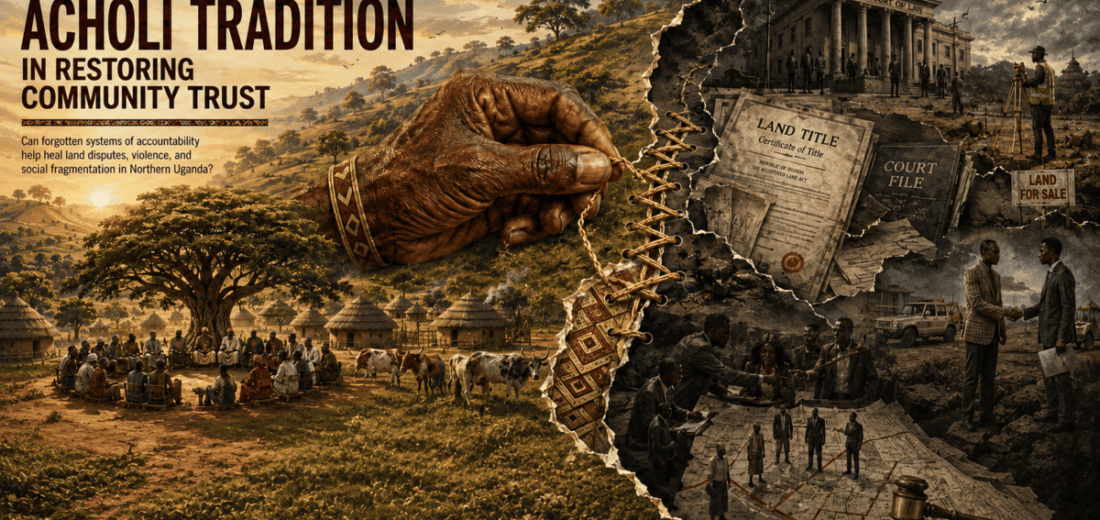
As trust in formal justice systems continues to erode, many communities are left grappling with rising insecurity, land disputes, and limited access to accountability. In Acholi society, traditional systems once offered a different path; one rooted in restoration, responsibility, and collective truth. Revising these approaches may hold critical lessons for rebuilding justice and restoring trust today.
Today, we live with more fear within our own communities than ever before. This fear has grown as Acholi traditional values have been abandoned in favour of formal legal systems that often fail to protect people and their property.
With endless adjournments, high costs, and widespread corruption, the formal system has created space for violent crime and land grabbing to go unpunished. As a result, many perpetrators operate with impunity, deepening insecurity and eroding trust.
Unlike our elders, who prioritised restoring harmony, modern courts are often perceived as arenas where justice can be bought. In this system, the poor, the widowed, and the vulnerable are frequently left without recourse.
Traditionally, justice encompassed not only punishment, but also healing relationships and restoring community balance. Today’s system, however, tends to produce winners and losers, often leaving deeper divisions in its wake.
Breakdown of communal systems


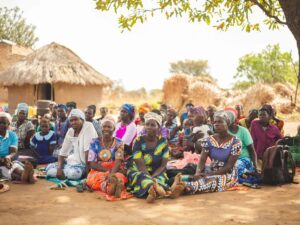
We have moved from a communal approach—where councils of elders upheld accountability—to a system where individuals navigate complex and often corrupt institutions alone. In doing so, we have weakened the bonds that once held our communities together.
The result is a growing breakdown of trust. Fear no longer comes only from strangers, but from within communities themselves—where neighbours feel less accountable to one another, and shared responsibility is fading.
The erosion of elders’ authority has given rise to a generation increasingly disconnected from the principles of communal land stewardship. Today, it is not uncommon for a family member to exploit formal legal systems—forging documents and selling land that rightfully belongs to the entire clan.
Traditionally, land was held as a communal trust, safeguarded by clan leaders and bound to ancestral heritage. It was not merely property, but identity—carrying the memory of those buried within it and the responsibility of those yet to come.
By replacing this system with individualised land titles, we have opened the door for exploitation. Wealthy individuals and external actors can now acquire ancestral land with ease, often displacing entire families. What was once a source of unity has become a source of fear, with many living under the constant threat of losing what remains of their inheritance.
The council of elders
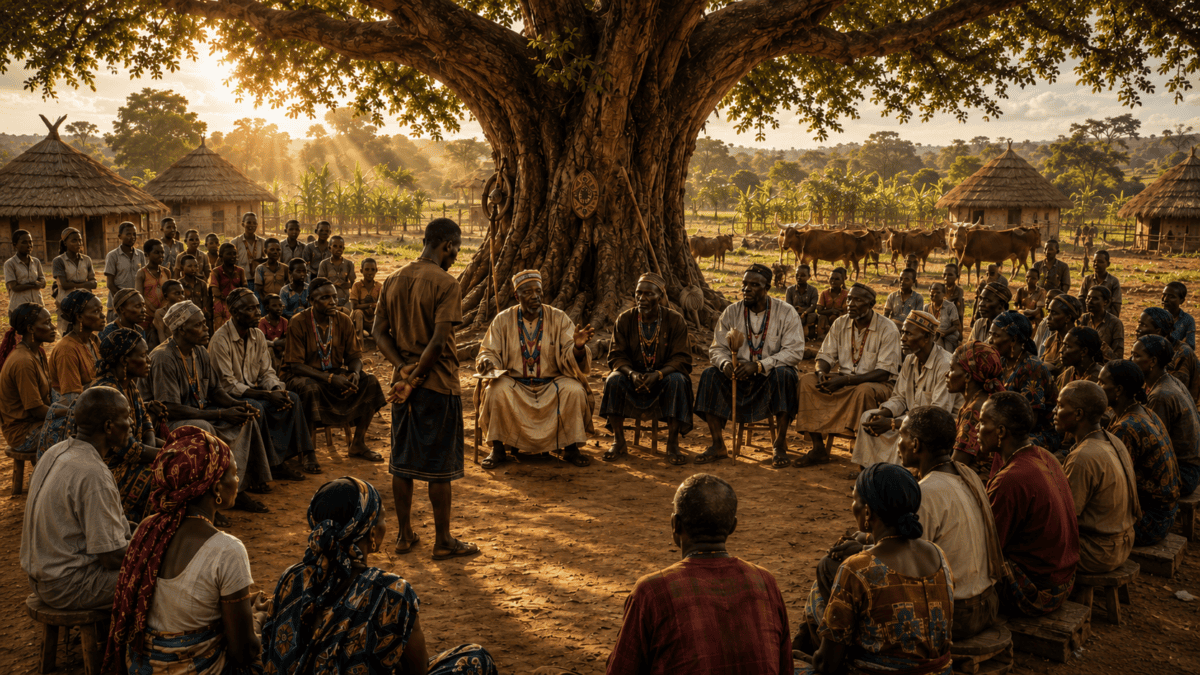
Kal Kwaro – The Circle of Truth – Illustration created using AI
At the heart of the traditional system was Kal Kwaro—a council of elders who administered justice as a moral and, in many ways, sacred duty. Justice was understood not simply as a legal process, but as a form of divine order, guided by truth, accountability, and spiritual balance.
Each clan was represented within this structure, and when disputes arose—such as in cases of killing—the responsibility extended beyond the individual to the entire community. The leaders from both clans gathered to assess the situation and decide on the next course of action.
Crucially, the offender was expected to be open with their clan. It was then the responsibility of the clan to acknowledge the wrongdoing and engage directly with the affected family. Justice, in this sense, was collective—anchored in accountability, but also in the preservation of relationships.
At its core, the traditional justice system was not driven by punishment, but by restoration—restoring relationships, dignity, and balance within the community. When a life was taken, the process began with truth.
The offender was expected to openly confess to their clan, acknowledging responsibility for the crime. This act of honesty was crucial, as it enabled the clan to step forward and take collective responsibility in supporting the affected family.
The discussions that followed centred on three key pillars: restoration, compensation, and reconciliation. Compensation was not a price placed on life, but a means of supporting the bereaved family as they coped with their loss.
Mato oput reconciliation
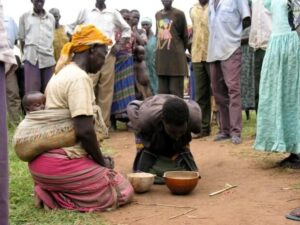

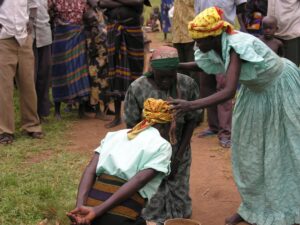
Mato Oput ritual – Restoring the Broken Calabash
At the same time, cleansing rituals were performed to restore the offender and their family, preventing the spirit of the deceased from causing further harm.
This process culminated in the Mato oput ritual—a powerful act of reconciliation in which both families would eat from the same plate and drink from the same cup. It symbolised forgiveness, the restoration of unity, and a shared commitment to move forward without revenge.
However, when an offender fled or refused to take responsibility, the process took a different turn. In such cases, the elders would convene and, during burial rites, perform a ritual known as Agat. This act called upon Cen—the spirit of the deceased—to compel the perpetrator to come forward.
Through unexplained disturbances and mounting psychological distress, the spirit was believed to push the offender toward confession. If the individual continued to remain silent, the consequences could intensify, sometimes extending to their close relatives.
Yet even in these circumstances, the system remained rooted in restoration. Once the offender confessed, the path returned to dialogue, compensation, and reconciliation through Mato oput. Punishment was never the starting point. It was the refusal to acknowledge wrongdoing that invited consequences. Accountability, not retribution, was the foundation of justice.
Everything began to shift with the introduction of Western legal systems under British colonial rule in 1902. Over time, these systems pushed Acholi’s traditional practices to the margins, gradually weakening the authority of elders and dismantling long-standing structures of accountability.
Colonial disruption
While colonial administrators may have designed these systems to subdue communities like the Acholi—who mounted some of the strongest resistance in Uganda’s history—the situation today is compounded by corruption and inefficiency.
What remains is a system that is often inaccessible, unaccountable, and increasingly disconnected from the realities of the people it is meant to serve.
In abandoning traditional systems, we did not simply adopt a new form of justice—we lost a framework that emphasised responsibility, reconciliation, and communal harmony. In its place, we have a system where accountability is uneven and where those with resources can often evade consequences, while the poor are left without recourse.
Yet the traditional system has not disappeared entirely. It exists in tension with the formal legal system, as many people navigate both paths in their pursuit of justice. This duality presents a possibility: that the path forward may not lie in choosing one system over the other, but in recognising the value of what has been lost.
To understand how we reached this point, we must revisit the foundational practices that once upheld order and accountability. By revisiting these rituals, we may begin to uncover pathways to address today’s violence, resolve land conflicts, and rebuild trust within our communities.
Leave a Reply