AMO Trains PWCE Tutors to Turn Passive Classrooms into Active Ones
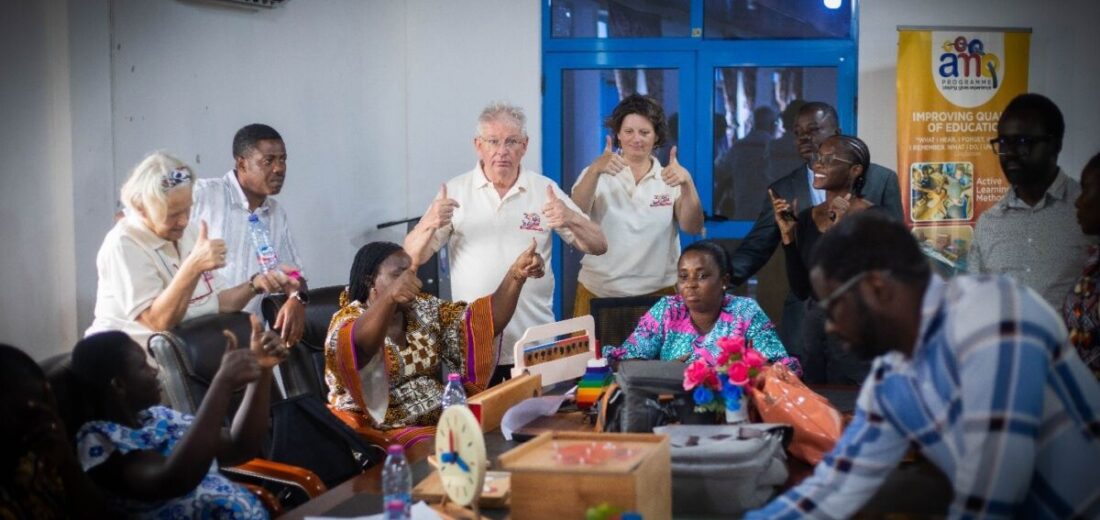
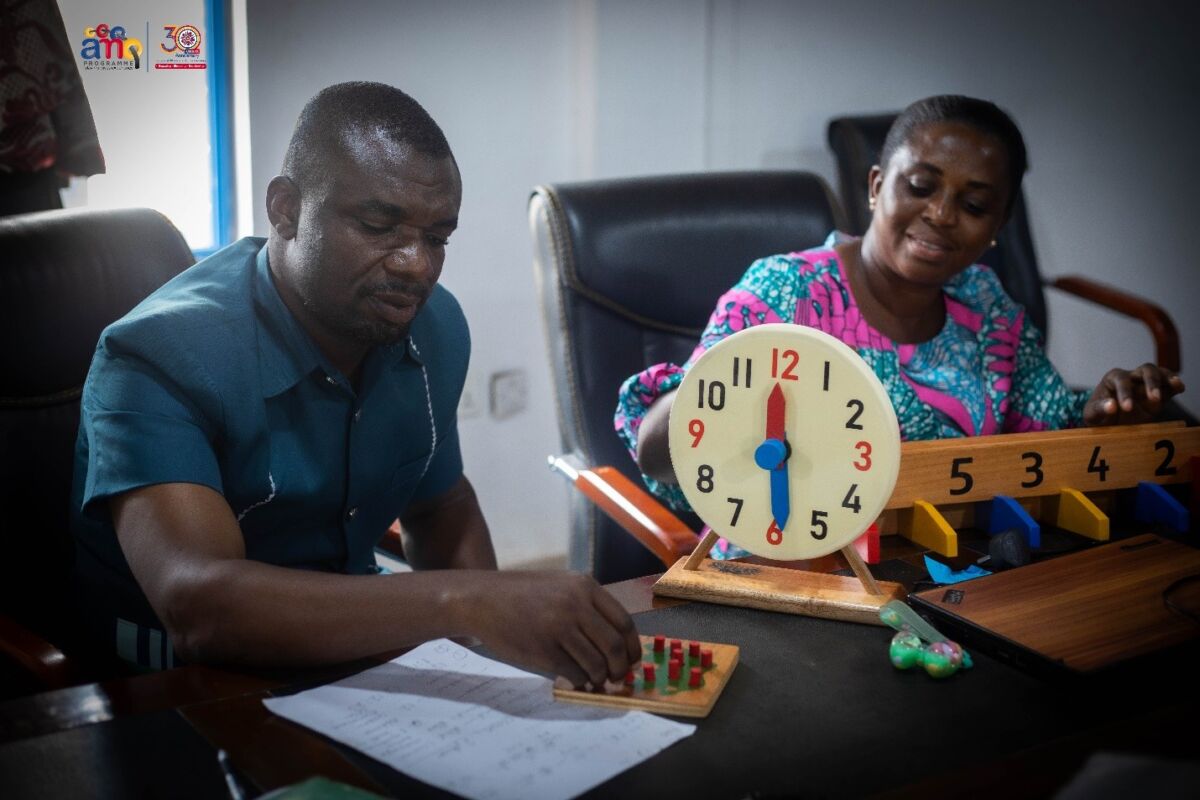
As part of activities marking its 30th anniversary, AMO Programme Company Limited has brought its active learning approach to the people shaping the next generation of teachers. At the Presbyterian Women’s College of Education (PWCE) in Aburi, tutors from seven departments (Science, Social Sciences, Mathematics, ICT, TVET, Languages and English) were taken through a hands-on workshop built around AMO’s active learning materials, with the aim of turning passive classrooms into active ones.
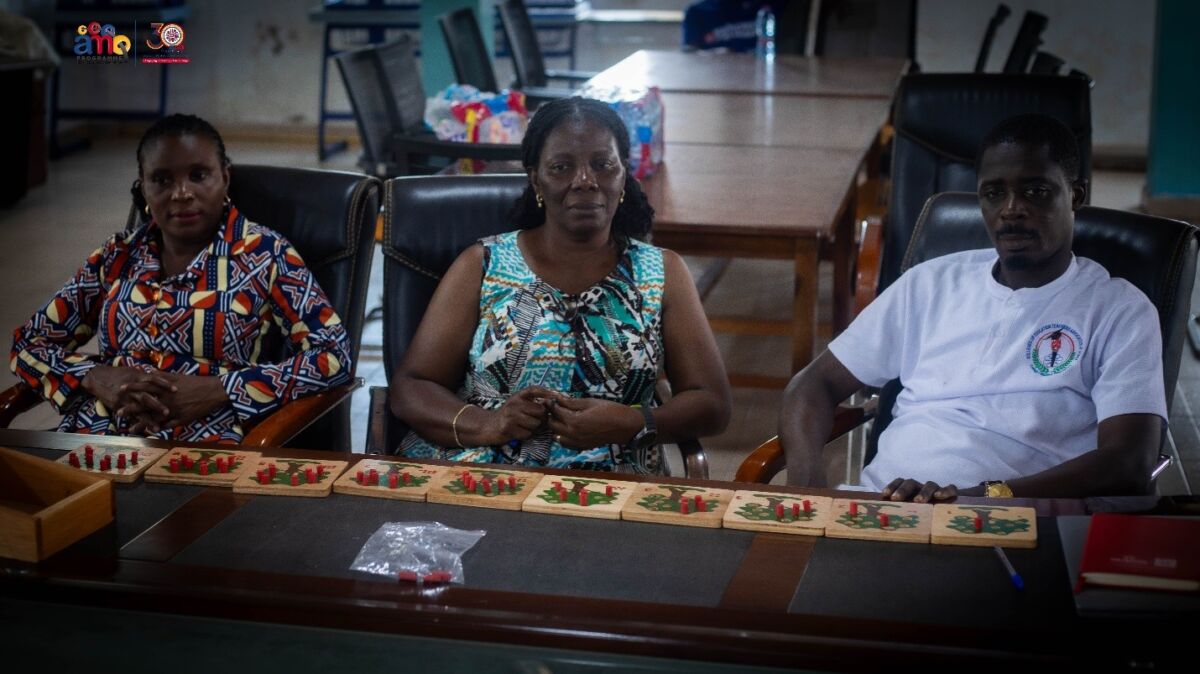
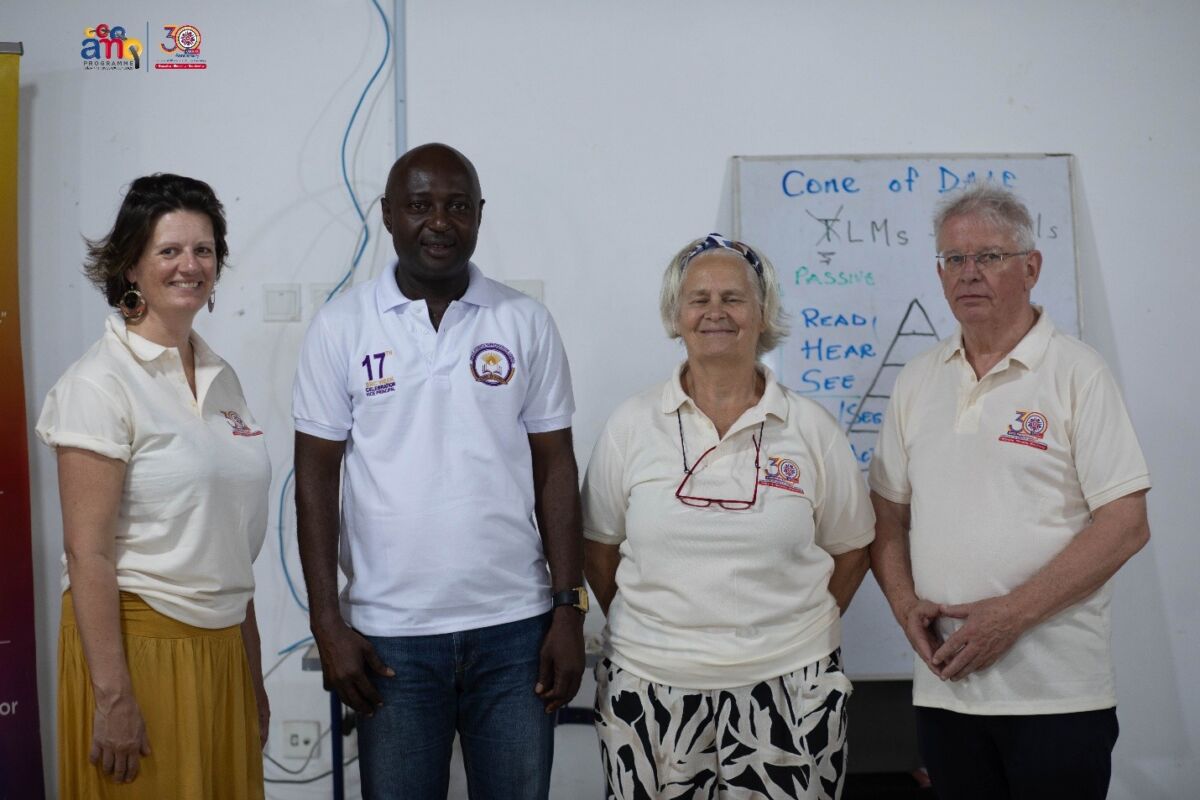 Henk Bosch founder of AMO Programme Company Limited on the extreme right
Why AMO is training the trainers
The tutors were split into their departments and given a task. Each group picked a material from the AMO set and worked out how to use it to teach a concept from their own subject, in a way that gets learners doing rather than simply listening. For AMO founder Henk Bosch, producing materials is only half the job. “We are producing active learning materials, but how to apply them within the classroom situation is still not easy,” he said. That, he explained, is why the company set up a dedicated training unit.
He said the choice of a college of education was deliberate. The tutors there are preparing future teachers, so they have to model the approach themselves. “You have to practice what you preach,” Mr Bosch said, adding that the workshop was meant to challenge tutors to use the same materials designed for basic school classrooms in their own lessons.
He also pushed for a change in vocabulary. Rather than speaking of teaching and learning materials (TLMs), he wants the sector to speak of active learning materials (ALMs). “The emphasis shouldn’t be on the T,” he said, arguing that the shift also changes the teacher’s role.
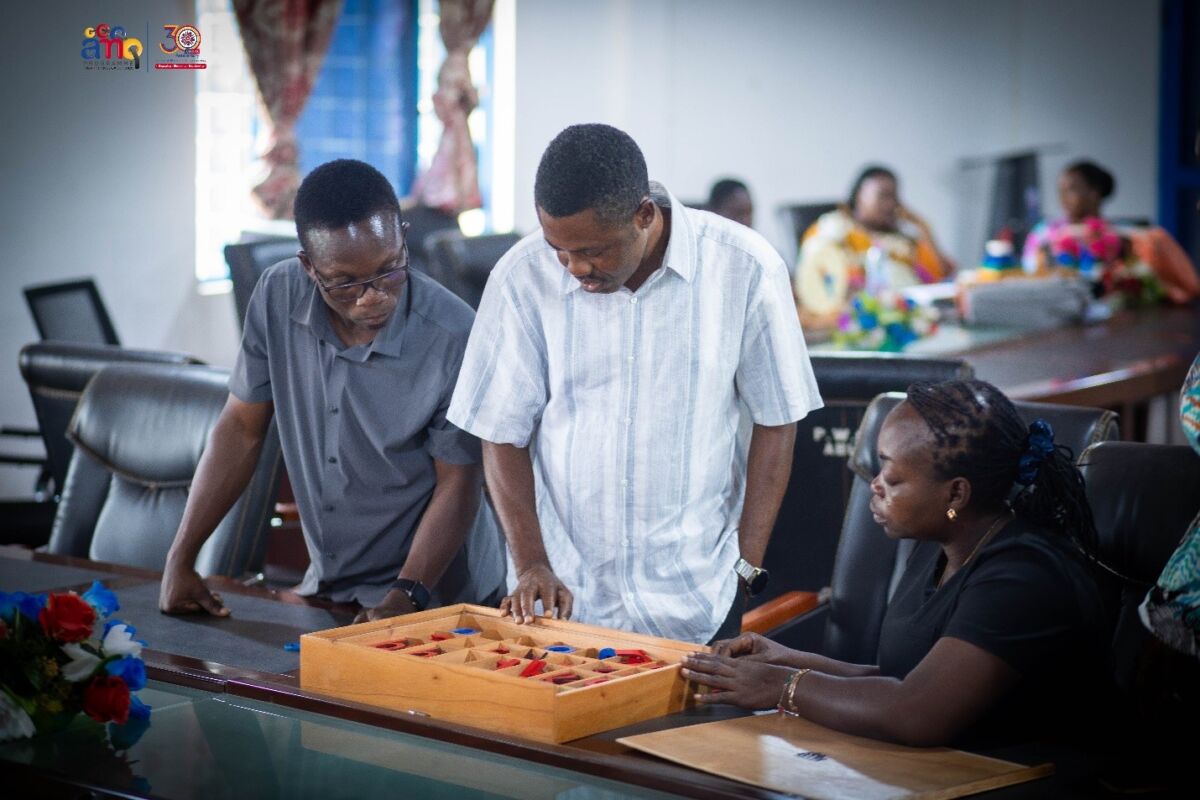
The Cone of Dale
To make the case for active learning, Mr Bossman walked the tutors through the Cone of Dale, a learning model he said stems from research done in the 1960s. It asks how much people remember two weeks after a lesson, depending on how they learned it.
As he presented it, reading alone leaves learners with about 10 per cent. Hearing raises that to 20 per cent, and seeing to 30. Hearing and seeing together bring it to 50 per cent. “If you really want 70 per cent to be remembered, then at least it should be active. Then you have to do something,” he told the tutors. Retention reaches 90 per cent, he said, when learners say and do, reflect, and make their own presentation.
His message to the lecturers was direct. “If I give a lecture, I already know what is being taken by them after two weeks,” he said, challenging them to ask how they could make their own lessons active instead of standing behind a lectern.
It brings it closer to the teacher and the learner
Dr Daniel Nti, Head of the Physical and Applied Science Department, said working with the materials before taking them to class is what makes them useful. He noted that the acronym has moved on from TLM. “It’s A-L-M, not T-L-M anymore, meaning it is very interactive,” he said.
According to Dr Nti, familiarity makes teaching easier and learning more enjoyable. “The more you interact with the materials, the more you become familiar, and in fact it makes learning very interesting. You will not get tired, as if you are playing, but indirectly you are also learning,” he said.
He added that the college tutors serve as a multiplier because they train the student teachers who will soon enter classrooms. “Instead of being abstract, it brings it closer to you, the teacher and the learner as well,” he said.
Making mathematics fun
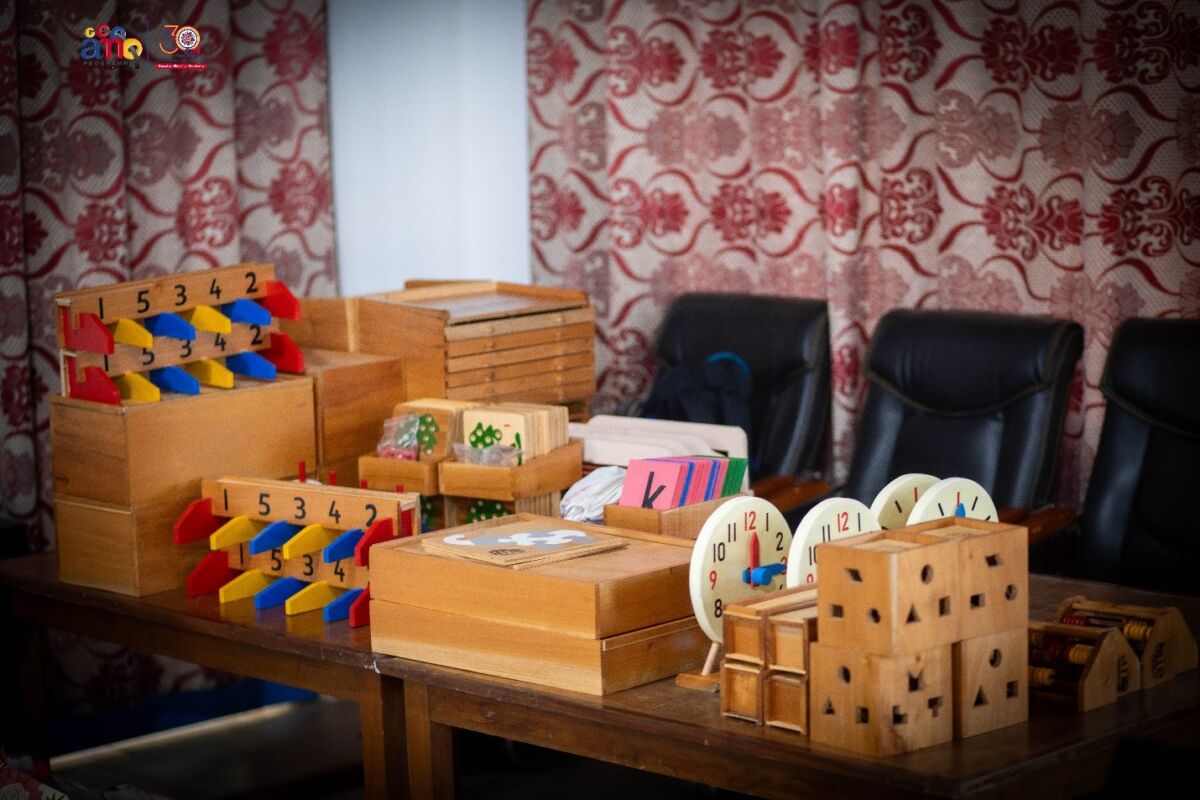
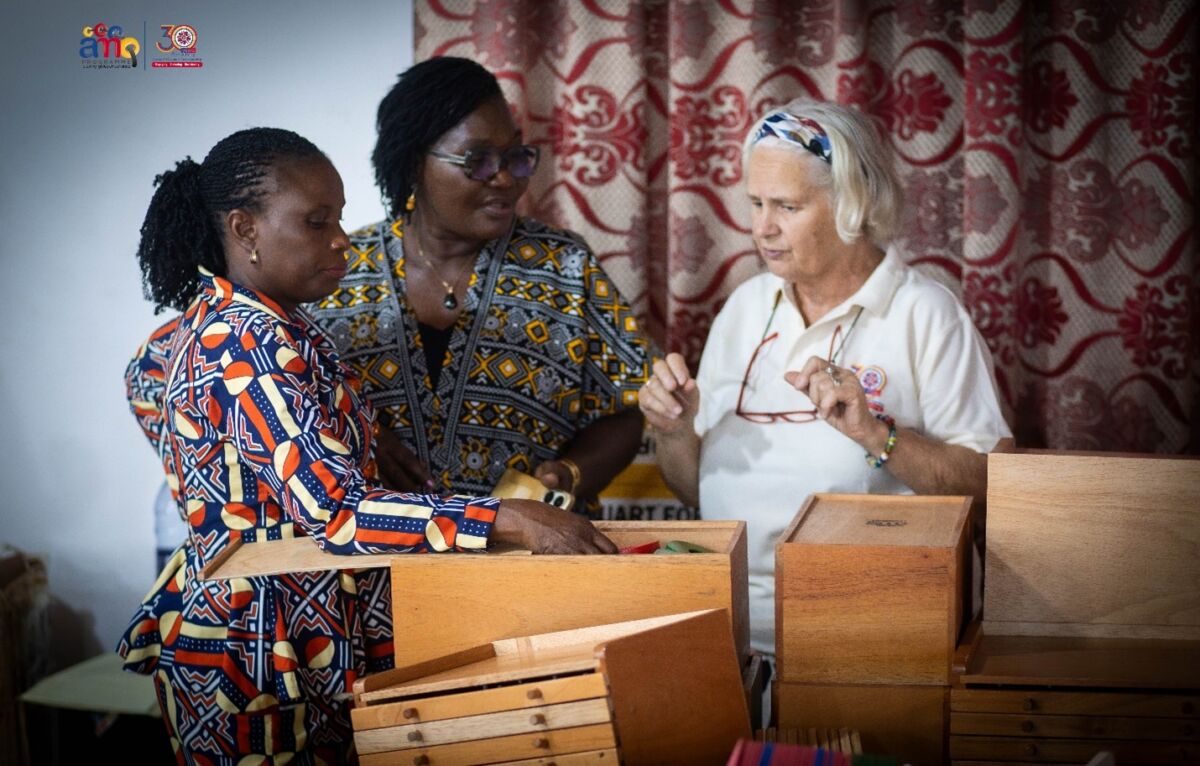
Speaking on behalf of his Head of Department, Kofi of the Mathematics and ICT Department said the low-cost wooden resources AMO brought can be used to teach concepts from kindergarten through to senior high school. The four basic operations, he noted, cut across all levels.
He linked this to Ghana’s new curriculum. “The new curriculum is about participative learning, and it is about active learning. It’s about the learners being involved in the learning, manipulating and using the materials, a hands-on activity,” he said.
He also took on the belief that mathematics is hard. “People think mathematics is difficult, and I believe that is a misconception. Mathematics is our everyday activity. Everything that we do is involved in mathematics,” he said.
The key, in his view, is to start from the basics with materials and to link every concept to real life: “Any time you teach a concept, make sure you relate it to a real-life situation.”
PWCE is a female institution, where teaching mathematics can sometimes be a struggle. Not so here, he said. “The ladies really love learning mathematics because of the way we are teaching it.”
During the department sessions, one group showed how the approach works in practice, using a toy bus to teach addition and subtraction. Passengers board one by one, and learners count until the bus is full. As passengers alight at different stops, learners work out how many remain. The group also suggested sharing out the questions so that every member of the class gets a turn.
Learners building their own knowledge
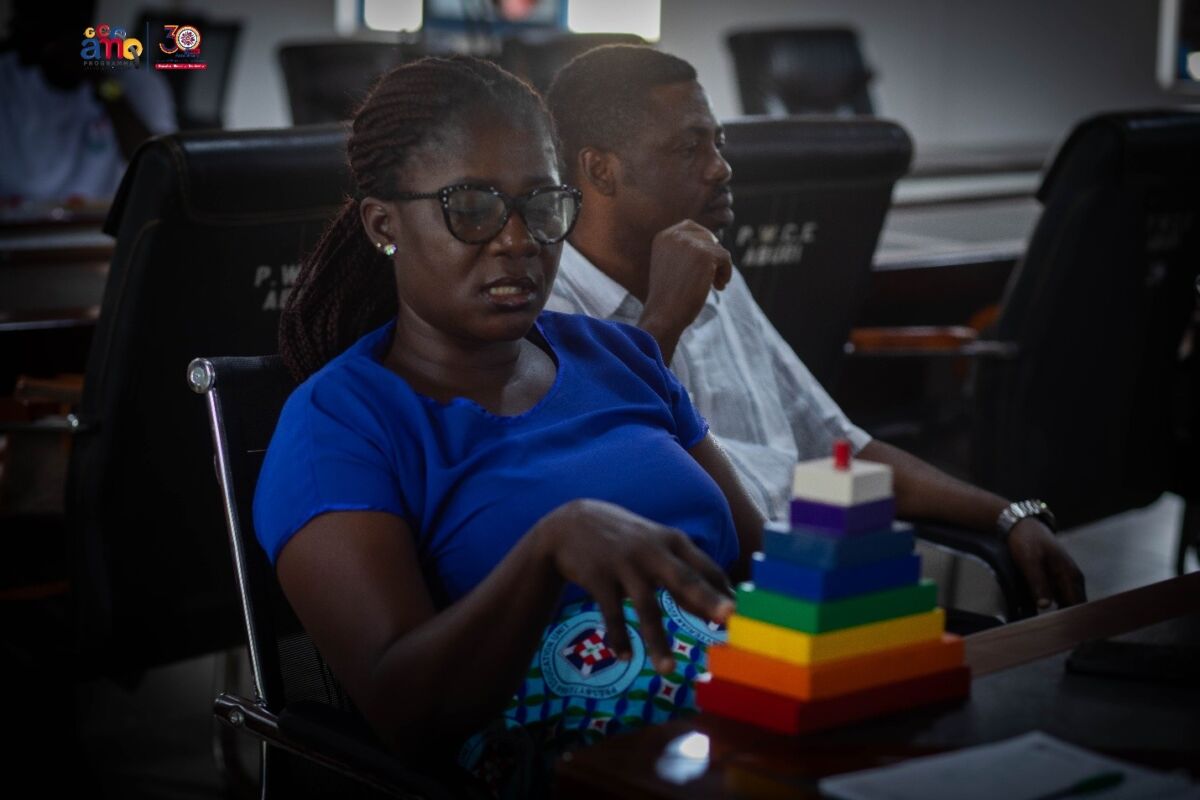
Mrs. Victoria Asante-Hanson, Head of the Social Science Department, described the workshop as “a refreshing situation for us”. She said resources such as the colour blocks and the toy trotro could be used to teach many concepts at the early grade level.
She explained how pupils could use the colour blocks to learn about the Ghana flag. In groups, they would arrange the blocks by colour and construct their own knowledge of it. The same approach works for self-identity. Learners can move from the individual to the nuclear family, the extended family, the community and the nation.
What matters, she said, is that the facilitator does not simply announce the answer. “When they hear, definitely they are going to forget. But when they manipulate with these resources, the knowledge that they construct from it, they will understand and it will stick better,” she said. Such learning, she added, will not be “the old-time chew, pour, pass and forget system”.
A call for TVET materials
The appreciation was not uncritical. Joanna Dzeagu-Kudjodji, from the TVET Department, said her colleagues had “enjoyed this workshop so much”, but she asked that AMO also develop materials for her department.
“The curriculum and everything is changing, and if we have ALMs that will also benefit the TVET Department, we will be very, very glad,” she said, pointing to home economics, which covers clothing and textiles as well as food and nutrition. She said she hoped AMO would return “in the near future” with more materials.
Can it be sustained?
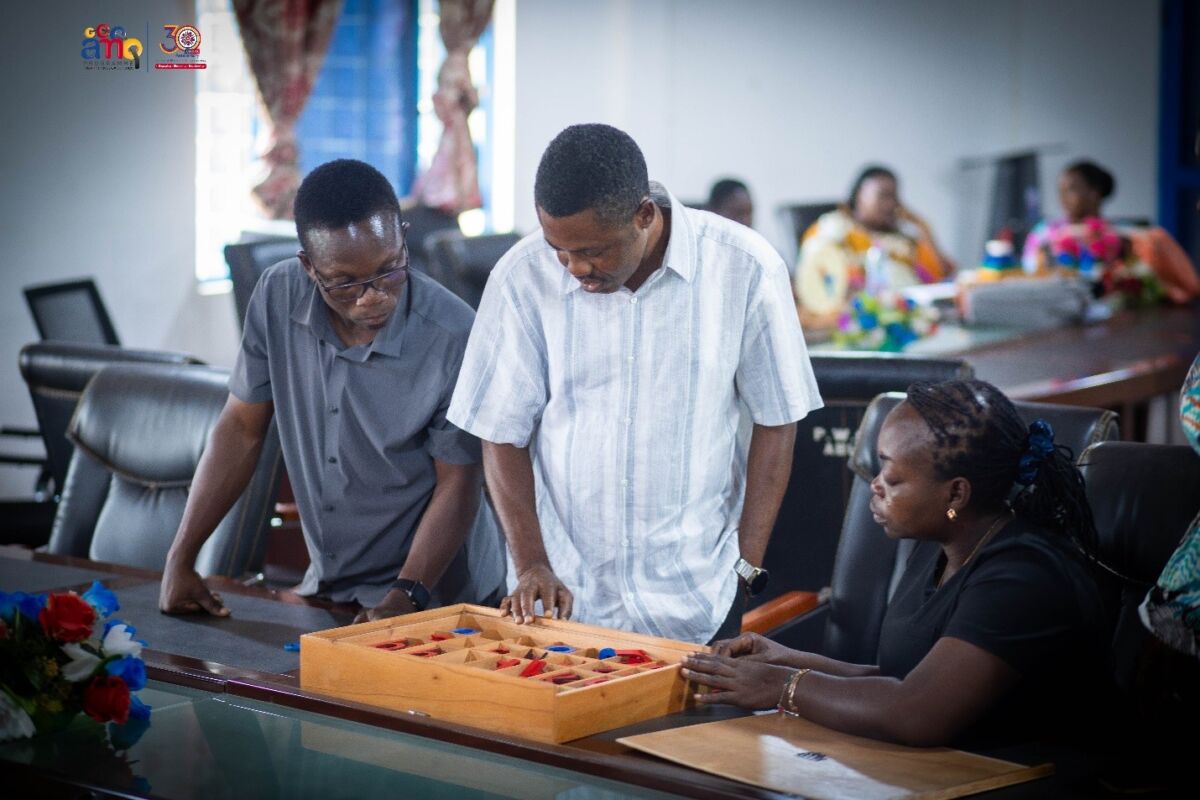
A recurring concern was supply. Each department received only a few sets of materials, and Mrs Asante-Hanson was candid that they are “not enough”. But she said the shortfall can be made up locally. “There are cheap materials available in our society. Even if it is not with wood, as theirs are made of, we can also use some locally available material,” she said. She even suggested that waste plastics could be melted and moulded into similar shapes.
She traced the problem to supply, saying the materials are simply not available in many schools, which is why PWCE teaches improvisation as part of its curriculum. “So that our students on their own can even produce without waiting for the government to supply. So it is sustainable, if only we are willing to add on,” she said.
Class size was another question raised by participants. One lecturer in the audience said she teaches about 90 students at a time. Mr. Bosch’s answer was that active learning is not only for small classes or for early childhood pupils, and that large classes can be split into groups with assignments. “It is not easy, I know. But if you try it, you will see miracles,” he said.
A relationship the college wants to deepen
The college’s Vice Principal, Dr Francis Tetteh-Osei, said PWCE has worked with AMO before and wants the relationship to grow. “The lessons are so practical, and the activities are such that if you are able to implement them in the classroom, they will help our students and many of the students that they will be teaching,” he said.
He said the college’s mandate is to train teachers for the future, and that the workshop sharpens the tutors’ skills for that job. “It is a practical activity that every teacher will want to go through, so that they will be equipped with the skill of practicalizing lessons,” he said. He noted that AMO has donated some TLMs to the college after earlier engagements.
On getting more of the materials for the college, he was positive. “As we have been given these ones, we will try using them and we will come in for more of such TLMs for our use,” he said, adding that the materials themselves are “very nice”.
The workshop marked a critical step for AMO as it celebrates three decades of producing active learning material across Ghana.
Leave a Reply