When science leaves the lab: Nairobi hosts its first Science Summit
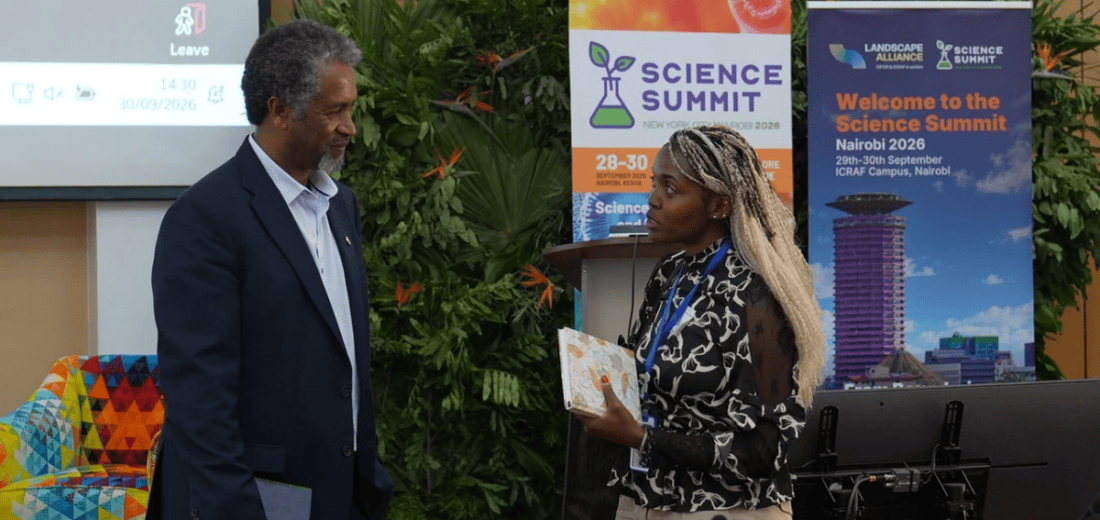
For the first time, the Science Summit was held in person on African soil. In Nairobi, scientists, policymakers, students and innovators explored a question central to today’s development debate: how can research improve people’s lives? Nicera Kimani reports on a gathering where local knowledge, global development goals and the difficult journey from evidence to policy repeatedly converged.
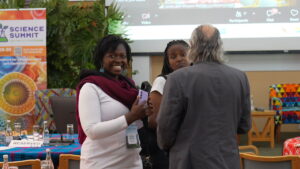
Anticipation filled the air as participants arrived for the first Science Summit to be hosted in person on African soil. On a sunny, slightly windy Nairobi morning, researchers, diplomats, technocrats, scientists, students and other participants made their way into the venue.
The Science Summit 2026 combined online participation with in-person programmes in New York and Nairobi. Held from 28 to 30 September, the Nairobi programme marked the first time the Summit had been physically hosted in Africa. The enthusiasm was palpable. Scientists, policymakers, diplomats, civil society representatives, innovators and students had gathered to exchange ideas and explore the connections between science and some of the world’s most pressing challenges.
The wider Science Summit ran from 14 to 30 September 2026, alongside the 81st United Nations General Assembly. Its programme sought to facilitate scientific collaboration and knowledge sharing across disciplines and sectors. Topics included science diplomacy and global governance, regenerative systems and circular economies, health and biotechnology, artificial intelligence and data, and climate and planetary stewardship.
For young scientists, particularly those from Africa and the wider Global South, bringing the Summit to Nairobi let them engage directly in discussions that often happen elsewhere. “The Science Summit is a great platform for young scientists who want to transform the world through science,” said Kaunda Jill, who works in policy and advocacy at the Kenya Red Cross.
Science beyond the lab
The Summit also brought together scientists whose work addresses practical challenges within their communities. Among them was Lorraine Kabaka, a young microbiologist working at ICIPE. She spoke passionately about Project Shambani, an initiative that connects research with policy action. The project focuses on rehabilitating landfills and transforming them into ecological spaces through bioremediation.
For Kabaka, gatherings such as the Science Summit offer an opportunity to bridge the gap between scientific research and the communities and policymakers who could put it to use. “Most scientists are left in the lab. Some are not well versed in science diplomacy, while others cannot communicate their work to the community,” she said.
“At the Summit, we can scale up our research findings rather than leave them as papers on shelves. We interact and exchange ideas about how they can be scaled or implemented to make an impact in the community.”
She also emphasised the importance of research grounded in local realities. “It is important to have local science capturing local challenges and solutions, since most of the time, where the problems are, solutions can also be derived from the same context.”
She illustrated this with the example of agricultural inputs developed elsewhere and introduced into African farming systems without sufficient consideration of local soils and microorganisms. Research rooted in local ecological conditions, she argued, can help develop solutions better suited to those environments.
When development goals intersect
One session in the Nairobi programme brought this question of context directly into discussions about development policy. Organised around the five-year NWO research programme on SDG interactions, the workshop explored how different Sustainable Development Goals can reinforce one another, while also creating tensions, trade-offs and unintended consequences.
Titled “Taking SDG Interactions Seriously: African Perspectives on Policy Coherence, Trade-offs and Integrated Development”, the workshop brought together Prof. Robert Lensink from the University of Groningen, Dr Kelvin Shikuku from the International Livestock Research Institute (ILRI) and Dr Abbi Kedir from the African Economic Research Consortium (AERC).
Their presentations highlighted a deceptively simple point: development goals do not operate in isolation. An intervention intended to advance one goal can have consequences, both positive and negative, for another. Understanding development therefore requires examining the assumptions behind interventions, as well as their trade-offs, conflicts, benefits, costs and unintended consequences.
Lensink illustrated this through research examining the relationship between women’s empowerment, food security and nutrition. The project brought together a multidisciplinary team of psychologists, economists, anthropologists and researchers from different countries to work in Bangladesh and Ethiopia. Its activities included women’s empowerment training and extensive data collection on empowerment, food security and nutrition.
Baseline and endline surveys were conducted to assess changes associated with the training. In Bangladesh, researchers also examined child health and nutrition, while in Ethiopia they looked at nutrition and access to subsidised quality seeds.
The results are still being analysed, but preliminary findings from Ethiopia indicate improvements in women’s empowerment, based on the indicators used by the researchers. Women who consistently attended the empowerment training were also more likely to follow up on opportunities to access subsidised seeds and expressed a willingness to pay for quality seeds.
Preliminary findings from Bangladesh similarly suggest improvements in child nutrition, particularly among children whose mothers participated in the empowerment training. The research offered a practical illustration of the central question raised during the NWO session: what happens when an intervention targeting one development objective begins to influence others?
Turning research into policy
Dr Abbi Kedir, another panellist in the session, linked this discussion to the relationship between research and policymaking. He explained that research can help track countries’ progress towards the Sustainable Development Goals, identify gaps and generate evidence to inform policy. It can also allow countries to learn from one another’s experiences.
However, evidence does not automatically translate into policy. “Research ensures the policies are deliberately inclusive, although the reality may differ due to issues like short political cycles and depleted national treasuries,” Kedir said.
He pointed to pastoralists, people living in informal settlements, women and persons with disabilities as examples of groups whose experiences can easily be overlooked in policymaking. For Kedir, decisions about public resource allocation are therefore crucial. Investment in education, health and agriculture can directly affect communities and help address exclusion.
As the Nairobi programme drew to a close, participants emerged from the sessions physically weary but still animated by the discussions and presentations of the previous days. For many, the gathering’s significance extended beyond the individual research projects presented.
Hosting the Science Summit in Nairobi brought researchers, policymakers and innovators from Africa and elsewhere together to discuss how scientific knowledge can shape decisions that affect people’s lives.
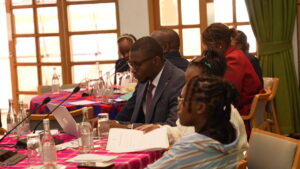
It also placed African researchers and institutions at the centre of conversations about science, policy and sustainable development that have often taken place elsewhere. As participants slowly left the venue, one message from the Summit remained clear: producing knowledge is only part of the challenge.
The harder question is what happens next. How does that knowledge move from laboratories and research projects into communities, public debate and policy? And whose knowledge and experiences are included along the way?
Leave a Reply