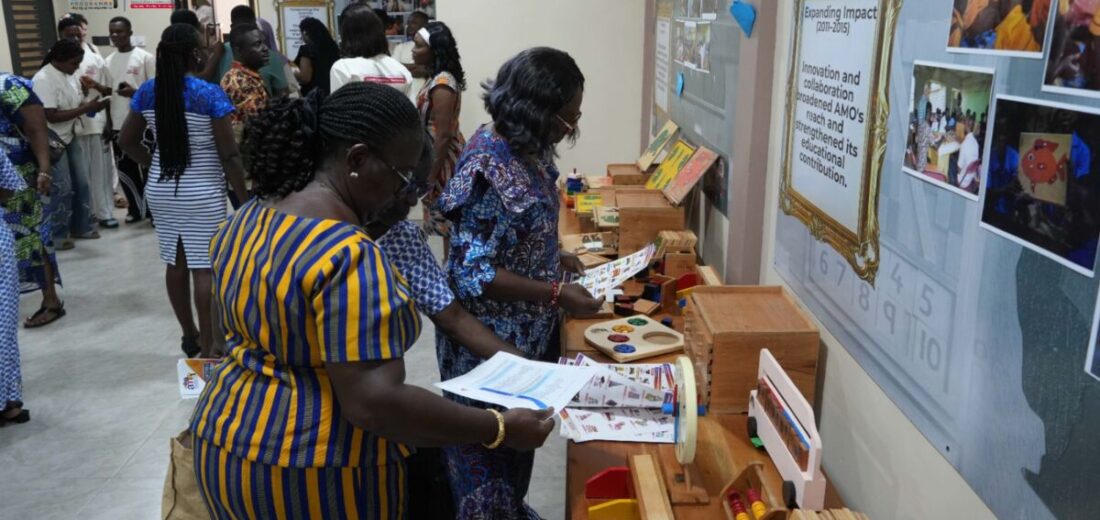
Who Turns the Children’s Play into Active Learning?
For many Ghanaian children, the first years of school still mean sitting quietly while the teacher talks. As the government revises the curriculum to put foundational learning first, the question is no longer whether children should learn by doing, but who will equip teachers to make that happen at scale.
That question was at the center of AMO’s 30th anniversary durbar in Accra, where the organization, which has promoted active learning for three decades, opened a new office. Government officials, educators, church leaders and development partners attended.
The Ministry of Education’s message was that policy is moving closer to what AMO has promoted for years, that is, learning that is hands-on, playful and rooted in local materials and languages.
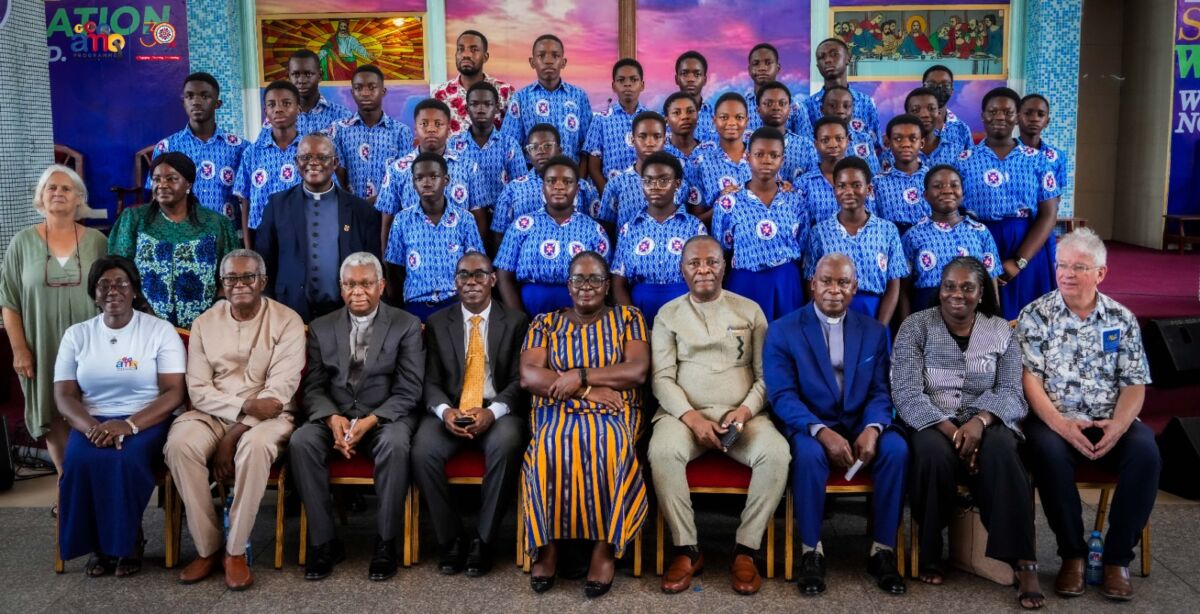
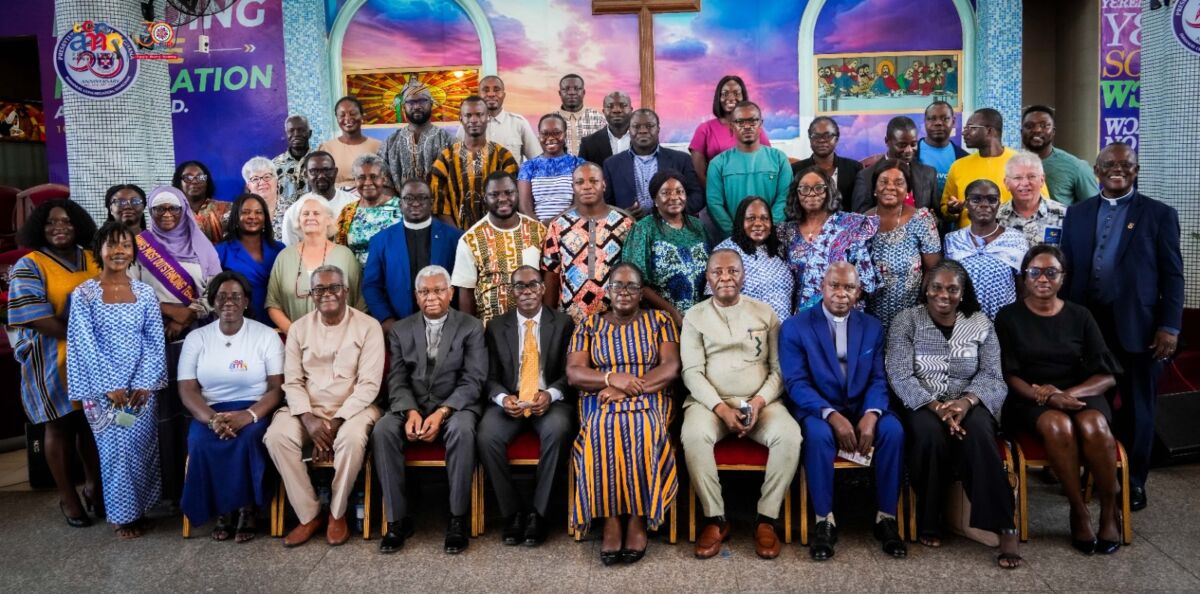 Government officials, educators, church leaders and development partners present at the AMO 30th Anniversary durbar
Play alone is not learning
Priscilla Audzie-Walters of the Early Childhood Education Unit at the Ghana Education Service (GES) headquarters described how many early-grade classrooms looked before active learning materials arrived. “Teachers went to the classroom and lectured the little ones, like teaching in the adult classroom. They hardly used teaching and learning materials to teach,” she said.
Teachers were not the only ones who needed convincing. At a session where AMO introduced the materials to senior GES officials, many saw play as simply play, until they handled the materials themselves. “To the child, he is playing, but to us teachers, he is learning,” Ms Audzie-Walters explained.
Teachers’ practice changed once they were introduced to the materials and trained in how and when to use them. “It has gone a long way to improve the learning outcomes of our children in our classrooms,” Ms Audzie-Walters said. Children also pick up skills even the teachers did not know about.
Attendance has also risen, and children are more excited in class, with less strain on the teacher. “With these manipulatives, you can teach a whole lot,” she said.
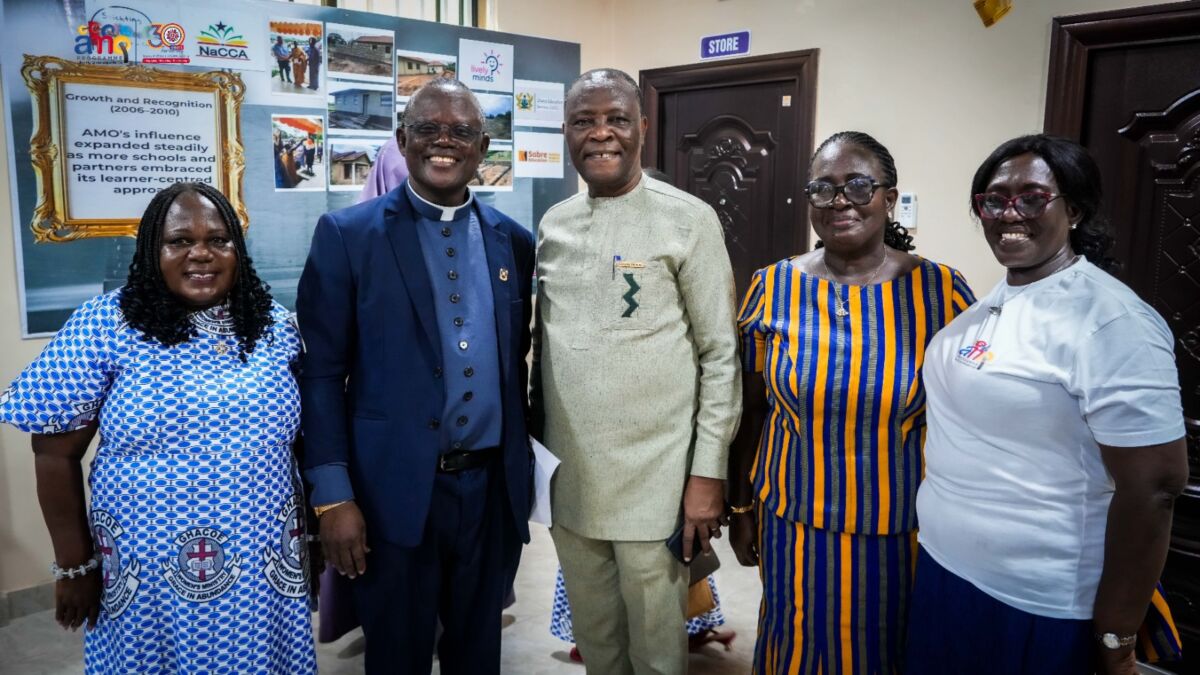 Prof. George K. T. Oduro, Technical Advisor to the Minister of Education in a grey caftan
Government Signals Support
Delivering the keynote address, Prof. Oduro said the Ministry is reviewing the curriculum so that children are trained as Ghanaians within a global context. The review seeks to strengthen foundational learning around four pillars: language literacy, mathematics literacy, scientific literacy and cultural literacy, with social and emotional learning cutting across all of them.
The thinking is that quality problems at the secondary and tertiary levels can be addressed once the foundation is strong. “We are committed and will collaborate with NGOs such as the AMO Foundation to ensure that education in Ghana does not only pride itself in access expansion, but in quality as well,” he said.
On AMO’s work, he was direct. “I must commend the AMO program for the good work they have been doing over 30 years. Particularly, their concentration on using local materials to develop learning materials for children. I think this is something that we need to collaborate with them to scale up,” he said.
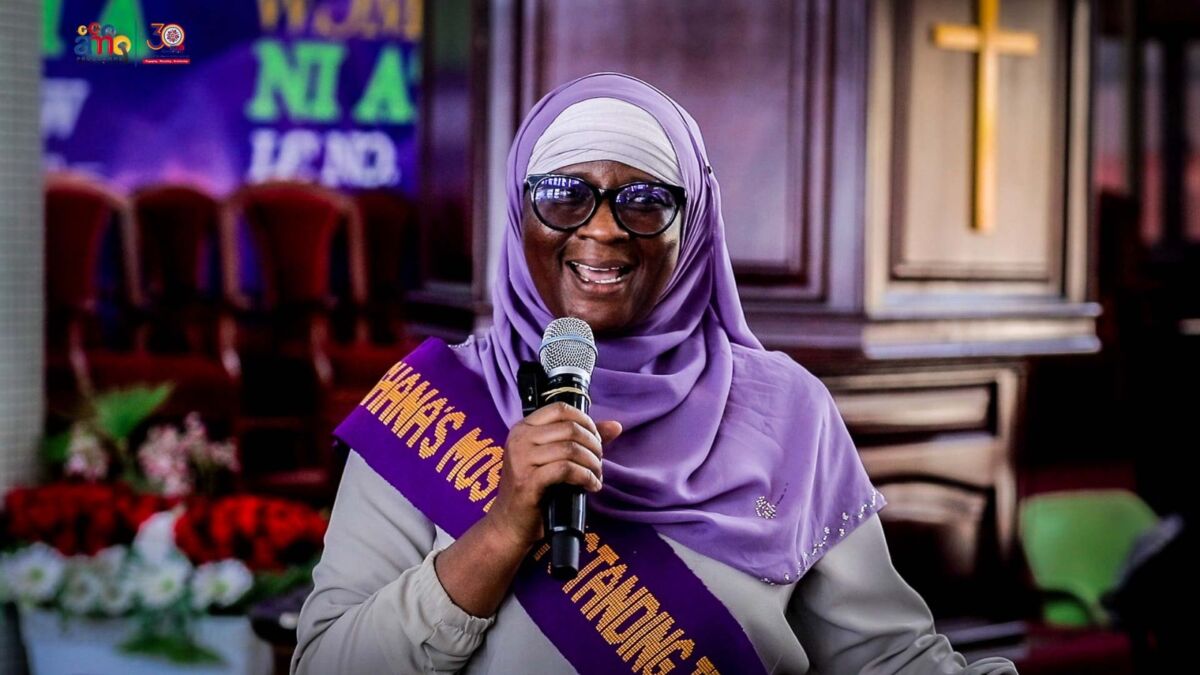 Fuseina Fuseni, the 2024 National Best Teacher and a kindergarten teacher at Marina SDA Basic School in a lilac headscarf and a purple sash, speaking at AMO’s 30th anniversary durbar.
The idea that local materials fall short has long been part of the problem. Fuseina Fuseni, the 2024 National Best Teacher and a kindergarten teacher at Marina SDA Basic School, said it had been widely assumed that foreign-made resources were better. “What we used to say is that materials that are brought from outside of the country are of more quality, but I can testify that AMO teaching and learning resources are durable, and it’s in line with the strengths of the kindergarten classrooms,” she said.
Prof. Oduro also said the Ministry is formalising a bilingual policy that prioritises indigenous languages in the early years before transitioning to English. Research, he noted, shows that children who begin reading and expressing themselves in their mother tongue adapt faster to new concepts and gain confidence.
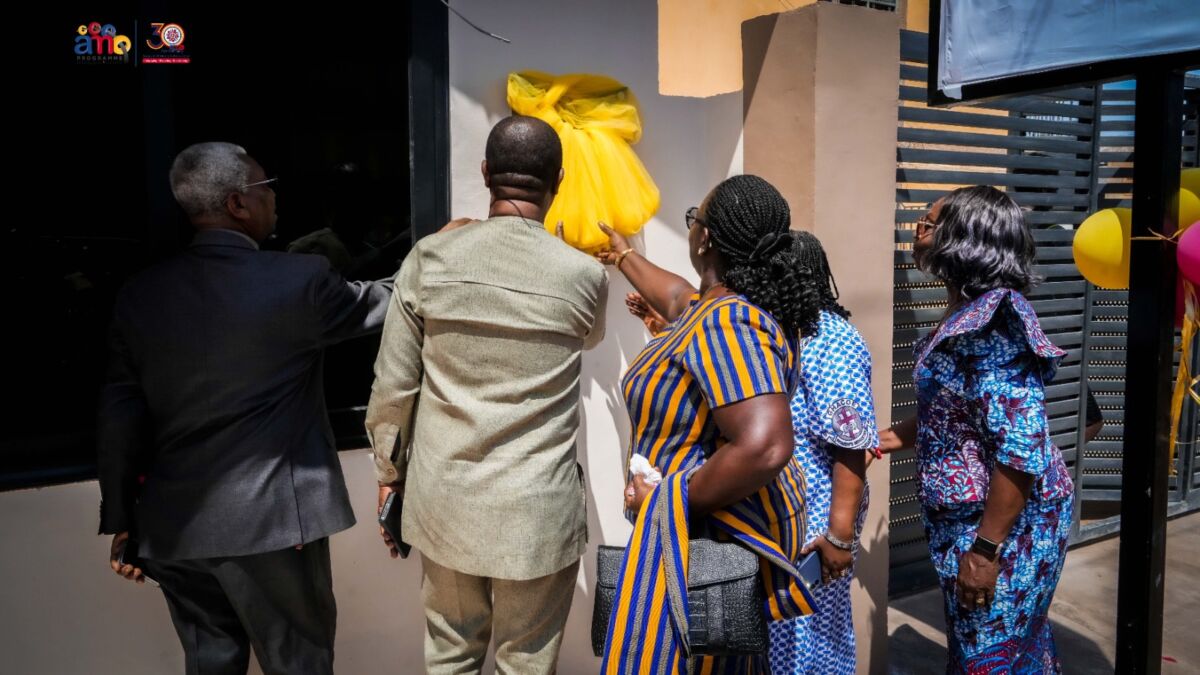
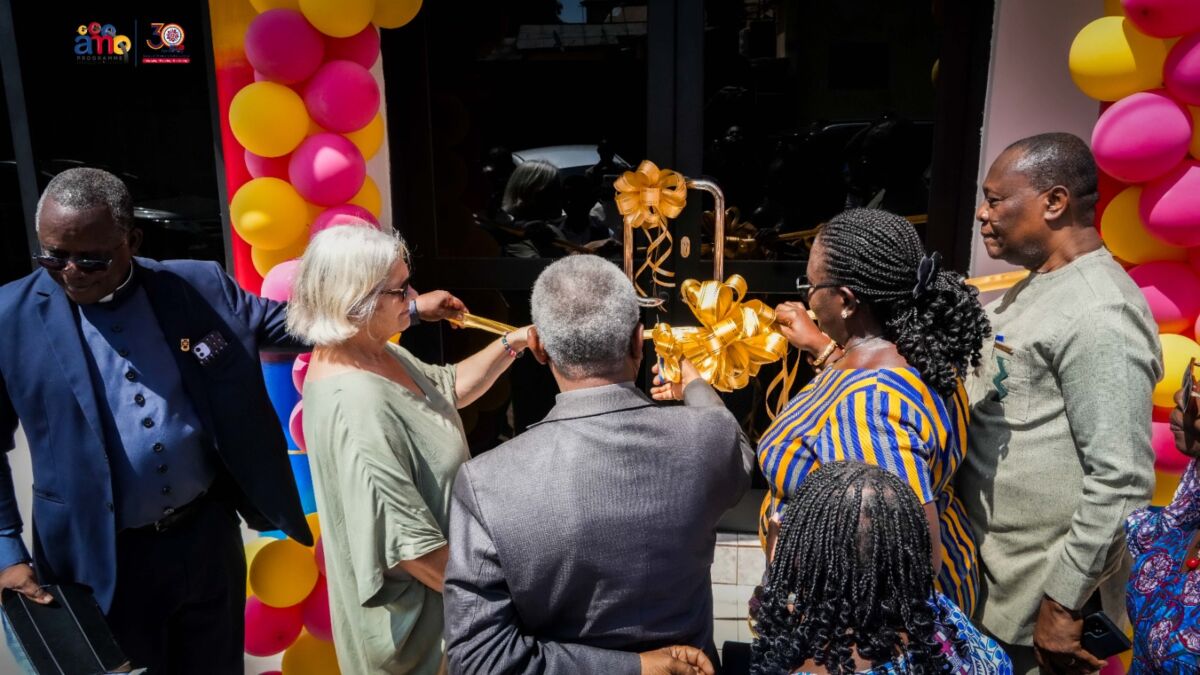 Amo unveils new office in Accra during the 30th Anniversary durbar
Play alone is not learning
Prof. Oduro’s support came with a warning. Activity alone is not enough, he cautioned, and a classroom can be busy without children learning anything. Activities must be purposeful, with clearly defined outcomes, and teachers must guide exploration and correct misconceptions.
He put the point this way. “When you focus on learning, you love teaching. But when you focus only on teaching, you risk losing learning,” he emphasised.
He also challenged the vocabulary of the classroom. Terms such as “instruction” can, he said, foster a “teacher-centred environment where pupils are expected to listen passively rather than engage.” Active learning, he argued, demands a shift towards facilitation, guidance and active engagement.
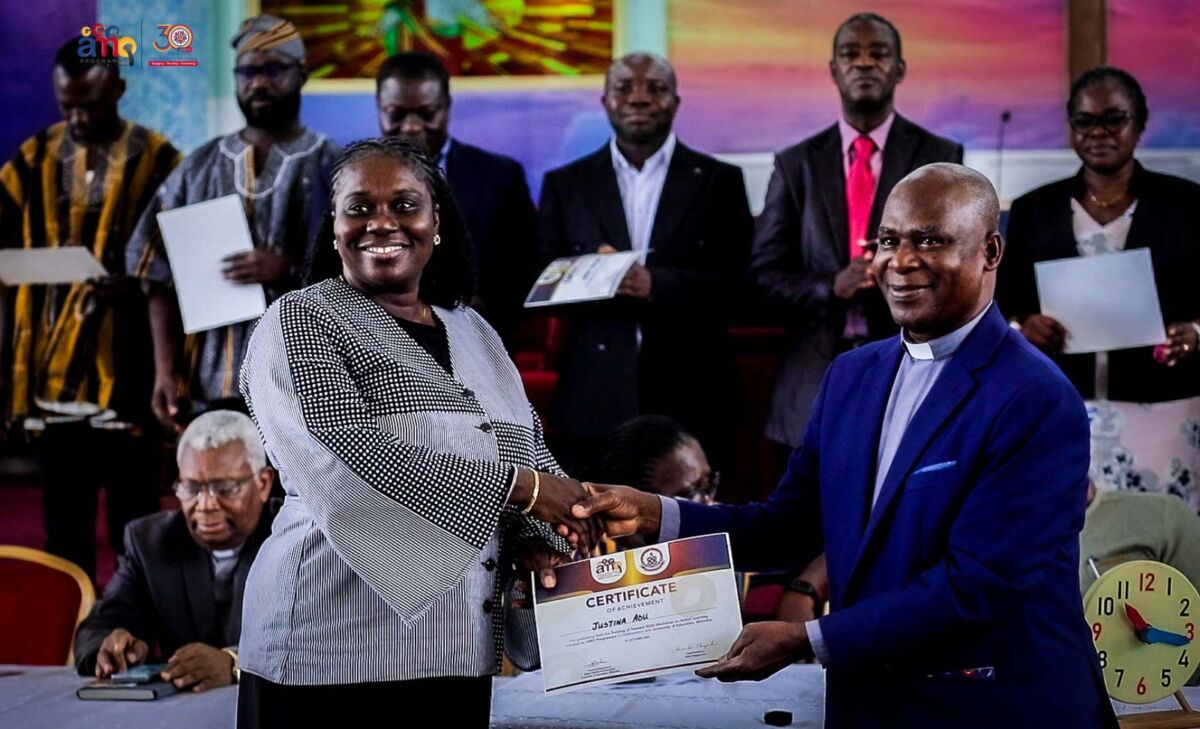 Graduates of AMO’s Teachers of Training program (ToT) standing behind the panel
That is why teacher training matters. If play is to become learning, teachers must be trained to guide the exploration and correct misconceptions. This is the gap AMO’s virtual Training of Trainers (ToT) programme is meant to close. Teachers who completed it were honoured at the durbar in a graduation ceremony, with remarks from the lead facilitator and a participant.
 Rosamund Amoako-Apenteng, former National Director of Education for the Presbyterian Church of Ghana and General Manager of Presbyterian Schools in a yellow-and-blue striped gown
Children still waiting for suitable materials
On the question of children with disabilities, Rosamund Amoako-Apenteng, former National Director of Education for the Presbyterian Church of Ghana and General Manager of Presbyterian Schools, said work on inclusive materials has started but is not finished. “It’s a discussion that is ongoing,” she said.
AMO is looking for more people with the right expertise to support the work, and results are expected soon. “Very soon we’ll see AMO doing more inclusive materials for special needs children,” she said.
Jennifer Appiah, Programmes Officer at Chance for Childhood, said inclusion is already part of the partnership. Her organisation has worked with AMO for four years, and she said its inclusive teaching in partner schools has benefited from it. “We’ve supported over 10,000 children with their materials, making learning more participatory, with better outcomes,” she said. The aim, she added, is to ensure “that all learners benefit regardless of their learning needs”.
Prof. Oduro asked AMO’s leadership to prioritise inclusive education so that children of varying abilities and language backgrounds can take part.
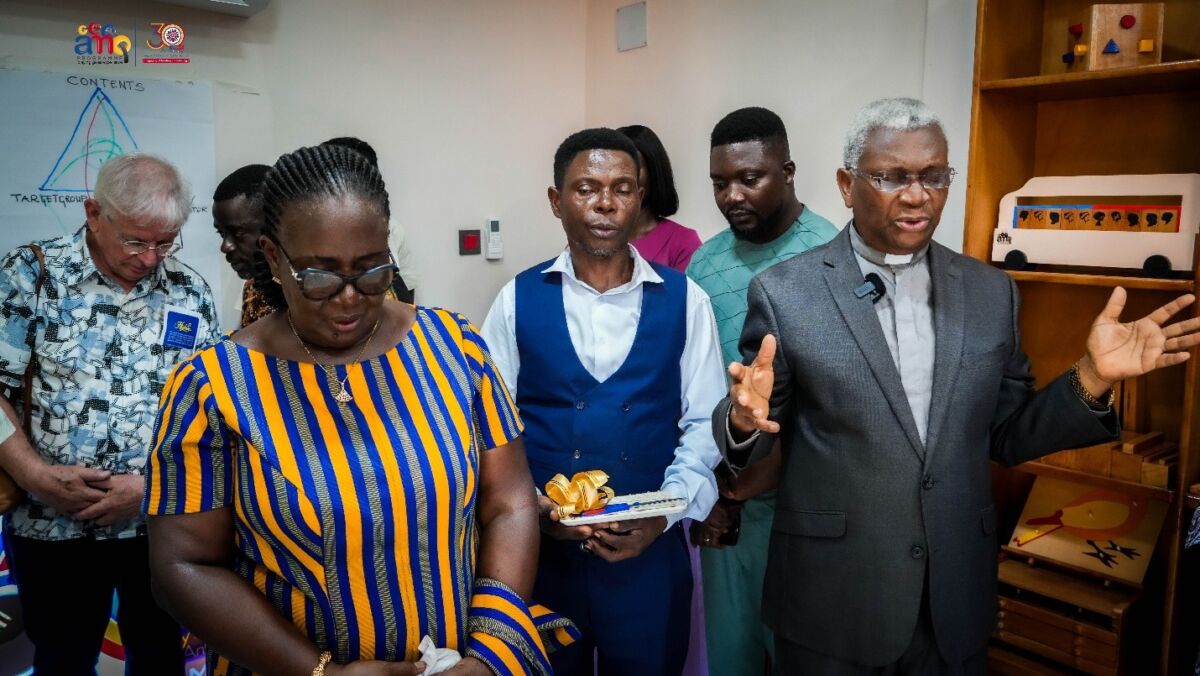
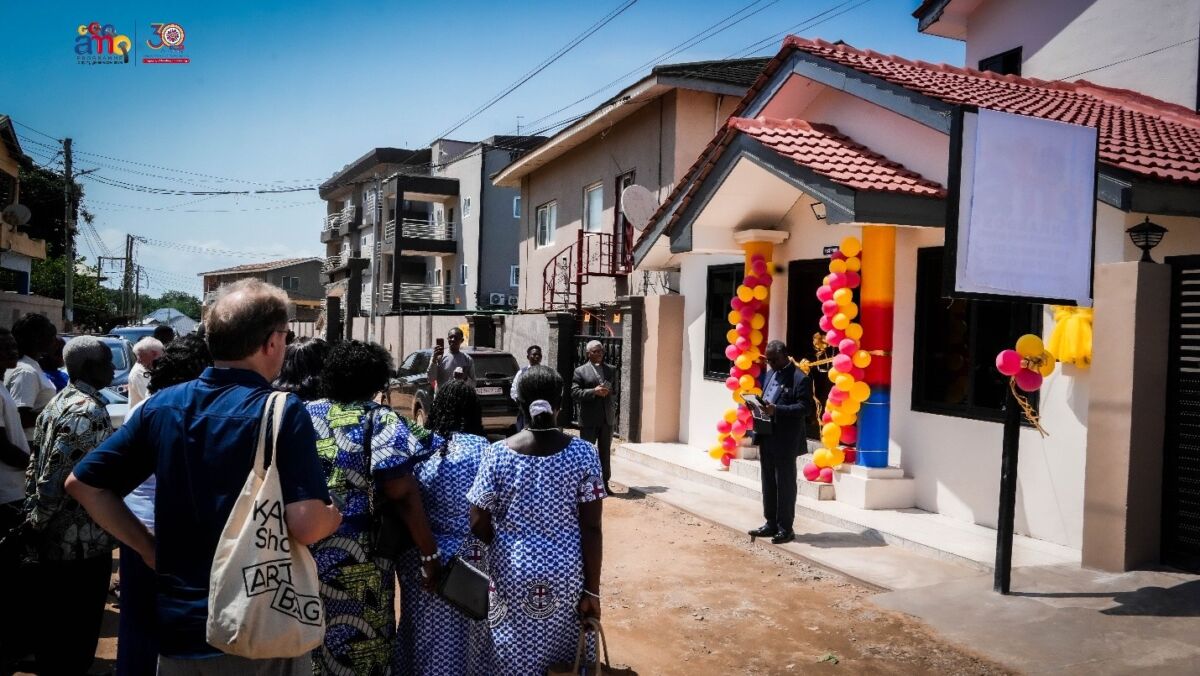 AMO unveiled a new office in Accra and dedicated it at the durbar
The questions that remain
Beyond inclusion, Prof. Oduro set two further tests for AMO and its partners. The first is evidence, which means research into what works in classrooms. The second is results, measured by learning gains in literacy and numeracy rather than by how many schools are reached or how many materials are handed out. He added that the transformation cannot be left to government alone. It needs teachers, faith-based organisations, policy makers, civil society, researchers and development partners to share the commitment.
Who turns play into learning?
Play does not become learning of its own accord. It becomes learning when an adult gives it a purpose, defines what the child is meant to take from it and corrects what the child gets wrong. That is the difference between a busy classroom and a learning one, and it is a difference made by the teacher.
Materials, a supportive curriculum and the backing of government are necessary conditions. They are not sufficient. The unfinished work, which includes inclusive materials for children of every ability, evidence of what works and measurable gains in literacy and numeracy, will be done in classrooms by teachers who have been trained to do it. Whether Ghana’s young children learn by doing therefore depends less on what was promised at the durbar than on how many teachers are prepared and equipped to turn play into active learning.
Leave a Reply