
Kenya and the Netherlands: Whose priorities will shape future cooperation?
Kenya and the Netherlands are more than 6,000 kilometres apart, yet their relationship has long been shaped by development cooperation. Often described as mutually beneficial, the partnership has also raised questions about whether both countries have an equal say in setting its priorities. As global development priorities shift, this relationship is expected to evolve.
The Dutch government is seeking to strengthen its ties with selected African countries, and Kenya is among those identified in a recent policy letter submitted to the Dutch Parliament. This signals the Netherlands’ intention to deepen its bilateral relationship with the Kenyan government.
As the international development community looks to the future of development cooperation, an important question emerges: what should the partnership between Kenya and the Netherlands look like in the years ahead, and who should shape it?
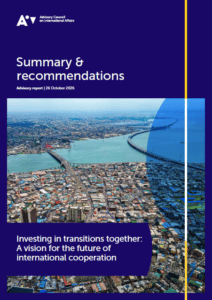
On 26 October 2026, the Advisory Council on International Affairs (AIV) launched a new advisory report examining the future of development cooperation towards 2040. As an independent body advising the Dutch government and parliament on foreign policy and international cooperation, the AIV offers perspectives and recommendations on how countries can navigate changing global priorities.
The report provides an opportunity to consider how Kenya and the Netherlands could strengthen mutual trust and align their interests amid shared development challenges.
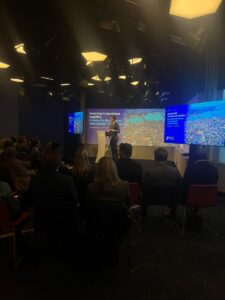


(Nieuwspoort, The Hague [Courtesy; Wikipedia] and Baraza Media Lab)
As the report was being launched at Nieuwspoort in The Hague, bringing together Dutch policymakers, politicians and international cooperation professionals, a group of Kenyans gathered at Baraza Media Lab. The group included young professionals, researchers, entrepreneurs, civil society actors and experienced development practitioners.
They wanted to share perspectives on how international cooperation must evolve to respond to today’s realities and tomorrow’s challenges. They also sought to examine the report’s recommendations critically.
In his keynote address, Deputy Ambassador Eran Nagan highlighted the Dutch government’s intention to pursue equal partnerships with like-minded countries around the world. He described the report as an internal Dutch advisory document, prepared by the Advisory Council on International Affairs for the Dutch Minister of Foreign Affairs.

(Eran Nagan, Deputy Ambassador for the Netherlands in Kenya)
Foreign Affairs on the future of development cooperation
To explain the thinking behind the report, Sara Kinsbergen, an AIV member and one of the co-authors, outlined how the advisory process began. She said the report followed a formal request from the Minister of International Trade and Development Cooperation to the AIV chair.
The central question was: in light of geopolitical developments and global aid cuts, what should shape the Netherlands’ vision and approach to development cooperation in 2040 as part of its foreign policy? Kinsbergen explained that the report drew on a series of dialogues designed to gather perspectives from experts with diverse backgrounds and from different countries.

(Professor Sara Kinsbergen, Radbound University)
Kinsbergen emphasised that although development cooperation has contributed to progress in sectors such as health, agriculture, education, infrastructure and disaster management, the traditional understanding of how countries work together has changed significantly.
She highlighted three major shifts. First, the traditional division between the Global North and Global South is becoming less relevant. Countries such as the Netherlands can no longer dictate what happens in partner countries such as Kenya. Development cooperation must increasingly recognise the agency and priorities of the countries involved.
Second, global challenges such as climate change are increasingly interconnected and transcend national borders. Addressing them requires countries to work together rather than pursue isolated national approaches.
Third, many countries receiving development assistance face pressing domestic challenges, while the resources available to address them are also under growing pressure.
In her view, these changes are exposing the limitations of established development models, particularly the traditional donor-recipient framework. Such approaches are gradually losing their effectiveness, relevance, legitimacy and credibility. She argued that international development cooperation therefore needs a more fundamental shift.
Her presentation set the stage for a working dialogue in which participants reflected on the report’s recommendations and shared perspectives on how to develop just, secure and sustainable pathways for future cooperation.
The report also identifies recurring obstacles that have long challenged development cooperation. These are interconnected and reflect wider criticisms of development programmes, often described as technocratic, donor-driven and fragmented, with limited policy coherence.
It also examines the motivations behind international development cooperation and the importance of having clear policies and programmes. For the Netherlands, a key motivation is to protect the international legal order and promote human rights.
The AIV advisory team further identifies three distinct motivations: solidarity, shared interests and Dutch national interests. These reflect the different reasons countries engage in development cooperation and the priorities they seek to advance through such partnerships.
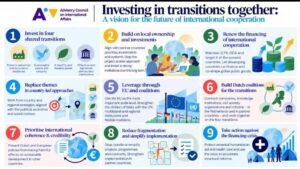
Beyond these obstacles and motivations, the report presents nine recommendations informed by four proposed joint transitions. These include broad-based prosperity, poverty reduction and economic resilience; sustainable peace and security; a healthy and liveable planet; and effective and legitimate democratic constitutions.
According to Kinsbergen, the recommendations and transitions are closely linked. Together, they are intended to provide a starting point for dialogue and collaboration between the Netherlands and its partner countries.
The AIV has outlined its vision for the future of development cooperation based on research and evidence. However, an important question remains: how realistic is it to implement such an ambitious agenda? Are both countries, and their citizens, willing and able to turn these recommendations into reality?
The Kenyan perspective: Four recommendations under scrutiny
At Baraza Media Lab, participants engaged in roundtable discussions focused on four recommendations from the report. Each discussion was facilitated by a Kenyan expert, who presented the group’s findings live to an audience gathered in The Hague.
The four recommendations focused on local ownership, building coalitions, policy coherence and reducing fragmentation. Participants considered them particularly relevant to Kenya’s development priorities, institutional realities and policy needs.
The moderator, Nellie Chepkemoi, described the connection between Nairobi and The Hague as an opportunity to influence decisions that could shape development cooperation between Kenya and the Netherlands towards 2040.
She challenged participants to go beyond questioning decisions about international cooperation and reflect on how these decisions affect development programmes and activities across the country.

(Expert panel, left to right; Nellie Chepkemoi, Zaina Kombo, Linda Akitela, Harrison Manga)
Building local ownership and investment
The first recommendation focused on building local ownership and investment. The discussion was led by Linda Longole Akitela, a researcher at Restless Development.
The group examined how institutions and, more importantly, the people who fund development through their taxes influence, and are influenced by, decisions about development cooperation and its priorities.
A recurring theme was the need to build local ownership through trust-based relationships and equitable resource sharing. Participants raised concerns about the sustainability of resources provided through development cooperation, particularly when funding comes with predetermined conditions that may not align with Kenya’s priorities or implementation timelines. They therefore called for better harmonisation of development priorities.
The discussion also raised questions about data ownership and control. Who generates, owns and controls the evidence used to inform investment and financing decisions, including those involving foreign investment? Participants called for greater transparency and shared ownership of data and evidence to ensure local actors have a meaningful role in shaping these decisions.
The group also emphasised the need for a joint implementation matrix, which has long been lacking. Such a framework would help align priorities, clarify responsibilities and track shared commitments.
Akitela further highlighted the importance of capacity development, proposing a shared framework that invests in current and future generations while strengthening the sustainability of local institutions and expertise.
Finally, participants questioned how existing resource-sharing agreements should be evaluated. Rather than measuring success by the number of projects implemented, they argued that greater attention should be given to actual impact, sustainability and meaningful outcomes.
This includes promoting responsible use of resources, raising awareness and supporting behavioural change, while recognising that communities in Kenya and the Netherlands may require different approaches when translating interventions into practice.
Building Dutch coalitions for the transitions
The second recommendation focused on building Dutch coalitions to support the proposed transitions. The discussion was led by Zaina Kombo, Programmes Manager at Amnesty International.
Participants examined how existing networks could be strengthened and better utilised to support international development cooperation. One of the key recommendations was to rethink the language and terminology used in these partnerships.
The group noted that terms such as “knowledge partners” can unintentionally suggest that knowledge originates from external institutions and international organisations, while local communities are merely recipients. This overlooks the expertise, experiences and, most importantly, indigenous knowledge that already exist within communities.
Participants also called for changes in the tools, methodologies and approaches used in development cooperation. Kombo emphasised the importance of recognising existing local accountability frameworks and tools.
Communities and institutions already have mechanisms for ensuring accountability, documenting results and measuring impact. These should be recognised and incorporated into development cooperation processes rather than replaced by externally imposed systems.
The group also highlighted the need to build coalitions and strengthen partnerships between farmers and farmer organisations. Such partnerships could help address unequal trade relationships and remove barriers that prevent local producers from participating fairly in international markets.
The discussion concluded with a call to leverage public-private partnerships to create an enabling environment for more equitable trade.
Prioritising policy coherence
The third recommendation focused on prioritising policy coherence. The discussion was led by Nellie Chepkemoi, Policy and Advocacy Lead at We Care. Participants reflected on the 2024 Kenya-EU Economic Partnership Agreement, raising concerns about credibility, accountability, mutual trust, inclusivity and unequal negotiating power.
Speaking on behalf of her group, Chepkemoi questioned how broad policy commitments, including structural adjustment programmes intended to reduce poverty, translate into tangible improvements at household level.
She also emphasised the need for greater independence and inclusivity in bilateral negotiations. Diverse voices, particularly those of young people, civil society organisations and local communities, must be represented. She observed that such discussions are often dominated by government representatives, leaving limited room for independent institutions and affected communities to influence decisions.
The group proposed a joint, multi-sectoral Development Impact Assessment involving both countries. This would provide a framework for evaluating the social, economic, environmental and gender-related implications of bilateral agreements.
Participants also called for locally led civil society organisations to play an independent role in monitoring implementation and holding both governments accountable.
The discussion further highlighted differences in national interests and unequal negotiating power. It raised a fundamental question: how can Kenya and the Netherlands agree on shared sustainable development outcomes before establishing how success should be measured?
Particular attention was given to policy coherence across taxation, trade, investment and climate policy. Participants questioned whether these policies genuinely promote decent working conditions for agricultural workers and create equitable opportunities for all.
Reducing fragmentation and simplifying implementation
The fourth recommendation focused on reducing fragmentation and simplifying implementation. The discussion was led by Harrison Manga, Country Director at Media Focus on Africa.
Participants identified fragmentation as a persistent challenge in development cooperation. They highlighted the short-term nature of much of the funding and support, which creates difficulties for organisations whose work requires sustained engagement and time to deliver meaningful outcomes.
The group also questioned how success is defined and measured. Measuring performance by the number of contracts managed or organisations brought on board risks favouring larger organisations while excluding smaller, grassroots actors.
To address this, participants recommended adopting network-based approaches to development cooperation, with the Dutch government considering channelling support through inclusive networks.
Manga emphasised that these networks should be structured around an intersectional approach, ensuring that different groups have equitable opportunities to participate and benefit from development initiatives.
The plenary discussion brought together the issues raised across the four roundtables, underscoring the need to rethink development cooperation around national interests and priorities.
Participants questioned how decisions made in the Netherlands affect Kenya and other African countries. They emphasised that policies and bilateral agreements must reflect the priorities and aspirations of the people they affect.
Kevin Owiti of Africa Connect reiterated that local organisations already possess the expertise and skills needed to deliver meaningful development outcomes. They should therefore be trusted to co-own, design and implement development projects.
Violet Mativu, meanwhile, highlighted persistent policy inconsistencies, particularly the export to African countries of pesticides banned for use in Europe. She questioned how meaningful cooperation can exist when African farmers and consumers remain exposed to risks from products that European citizens are protected against. “If we are going to talk cooperation, stop killing us!” she declared.
Her intervention reinforced the message of the Return to Sender Campaign, which calls for an end to pesticide double standards and greater accountability from exporting countries and manufacturers.
Taken together, the roundtable discussions affirmed that genuine cooperation must be built on trust, equality and respect for national priorities. It must also recognise local expertise and uphold the equal protection of human life.
Leave a Reply