How women are rewriting peace in the Philippines’ most fragile regions
In some of the Philippines’ most conflict-affected communities, women are reshaping what peace looks like. It is not from negotiation tables alone, but through land rights advocacy, community organising, and resistance to traditions that once silenced them. Across Mindanao and beyond, they are turning survival into leadership and redefining peace as both security and dignity.
At 17, Mambai Mahin was expected to follow a tradition of early marriage that had shaped generations of women in the Teduray Indigenous community on the island of Mindanao in the Philippines.
Today, as a leader within her tribe, she helps sustain peace in her community by resolving land disputes, and ensuring that women’s rights are recognised and protected. She encourages young women to finish school and pursue stable livelihoods before marriage—opportunities that would have been far more difficult to imagine in the past.
Mahin is part of a multi-year programme designed to bridge the gap between national peace policies and the lived realities of women across 47 municipalities in the Philippines. This includes conflict-affected areas such as the Bangsamoro Autonomous Region in Muslim Mindanao (BARMM) and Caraga.
‘It is part of our tradition for women to marry early. But through the programme, I realised we could challenge that and assert our rights,’ she says.
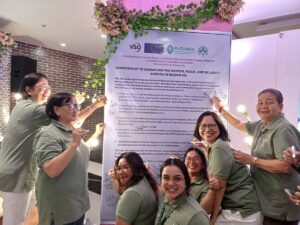
The Gendered Actions on Peace, Advocacy, and Community Transformation (G-PACT) project was launched in the Philippines in 2025. It seeks to localise and strengthen the implementation of the country’s National Action Plan on Women, Peace, and Security.
‘We conducted baseline studies in beneficiary areas that examined the intersection of gender and conflict, including the specific risks faced by women in different communities,’ says Ma. Lisa Dioneda Moalong, project manager VSO Philippines.
Across the country, VSO and its local partners identified a wide range of threats facing women, including armed conflict, harassment linked to mining activities, femicide, red-tagging, and climate-related risks such as flooding.
Moalong says these community assessments informed training programmes and the mapping of local policies on women, peace, and security. They also serve as the basis for advocacy efforts aimed at passing local ordinances that promote women’s participation in peacebuilding and development.
Project implementers believe that sustainable peace depends on gender equality and inclusive community participation. This approach that has begun to shift realities for the Teduray people.
Traditionally highland farmers and weavers from southern Mindanao, the non-Muslim Teduray community frequently face land-grabbing and displacement. These threats disproportionately affect the safety and security of women and children within their ancestral domain.
 ‘Many women in our community used to be afraid to engage with outsiders, but through the programme I learned that we can work with others, including NGOs, and assert our rights,’ Mahin says.
The Philippines ranked 131st out of 181 countries in the 2025/26 Women, Peace and Security (WPS) Index. It scored poorly in areas related to security, political violence, and the protection of women’s rights, particularly in conflict-affected communities.
Moalong says one of the key challenges is the lack of continuity in gender and development policies at the local government level, often driven by shifts in political leadership and priorities. ‘At the local level, appreciation of WPS and understanding of how it can be integrated into existing plans and policies remains weak,’ she says.
Gender equality as a tool for peace
In the predominantly Muslim city of Cotabato in Maguindanao, Maymana Esmail and Bai Rohayah Mama have become deeply familiar with the challenges confronting women in the Bangsamoro region.
As members of UNYPHIL-Women, a nonprofit organisation focused on women and youth, they also navigate their own obstacles while working to improve the lives of women across Bangsamoro, Caraga, and Sulu through the G-PACT initiative.
Across these regions, their vision extends beyond the mere ‘absence of conflict’ toward communities where women’s rights are fully recognised as both human and civil rights.
In Bangsamoro, Mama, who manages the G-PACT project for UNYPHIL, says the push for women’s meaningful participation in peacebuilding remains an uphill struggle despite growing policy support.
‘Cultural norms and traditional mindsets continue to limit women’s roles, requiring constant reminders that women are not just participants, but essential actors in peacebuilding,’ she says.
Mama, a social worker raised in a Muslim political family, says entrenched power structures continue to restrict women’s participation at the community level.
Although the Bangsamoro Women Commission (BWC) has introduced tools to track progress, she says there is still a limited understanding of how effective these mechanisms have been. ‘There are many interventions. But how do we monitor whether we are meeting the indicators of the gender action plan? How do we measure how far we have come?’ Mama asks.
Established in 2019 following the creation of BARMM, the BWC evolved from the earlier Regional Commission on Bangsamoro Women, reflecting broader political and governance transitions within the region.
Mama says women’s peace and security efforts across the Philippines reveal stark contrasts. While BARMM has made greater progress in policy development and participation, deeply rooted traditional norms continue to constrain women’s empowerment.
Caraga, meanwhile, remains at an earlier stage, grappling with red-tagging, mining pressures, and disputes surrounding indigenous consent.
For community workers like Esmail, a volunteer under the G-PACT project, the challenges are often more immediate and unpredictable. A teacher by profession, she coordinates with local women’s groups and government officials to ensure support reaches vulnerable communities.
But she says the work is frequently disrupted by armed clashes, clan feuds, and politically linked private armed groups that often trigger displacement. ‘Our work does not stop, but these conflicts continue to delay project activities,’ she says.
Recurring climate disasters add another layer of vulnerability for women, particularly in flood-prone municipalities across Maguindanao.
Yet, she says, these same conditions also reinforce why such communities must remain a priority. ‘Even during disasters, they continue to communicate and coordinate with us. Our connections remain strong,’ Esmail says.
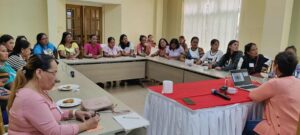
Strategies for transformation
As efforts to advance women, peace, and security in conflict-affected regions of the Philippines increasingly shift from awareness to long-term transformation, advocates say a central lesson has emerged: the responsibility for change cannot rest on women alone.
One of G-PACT’s key strategies is the cultivation of ‘male champions’—men drawn from government, communities, and civil society who undergo training to advocate for women’s participation in peacebuilding.
Moalong says the response from male leaders has been mixed, but largely encouraging. ‘For example, it is easier to develop male champions in the Bicol region because women there are generally more assertive,’ she says.
In BARMM, Mama says more men are becoming open to women’s participation in political decision-making and to rethinking policies around early marriage and gender-based violence.
To address resistance rooted in tradition and religion, advocates at UNYPHIL are also working at the intersection of faith and rights. By framing women’s rights within Islamic teachings, Mama says they can ground WPS principles in familiar religious contexts, making them more accessible and acceptable within Bangsamoro communities.
However, sustaining these gains will depend on embedding them within local systems—including allocating portions of gender and development funds to WPS initiatives and advancing local policies capable of withstanding shifts in political leadership.
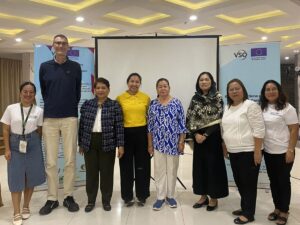 For G-PACT advocates, the broader vision is to build communities where economic stability reinforces peace, and where women’s rights are no longer debated, but accepted as fundamental.
‘The women we work with are not necessarily seeking political positions,’ Esmail says. ‘What many of them want most is economic stability for themselves and their families, especially in conflict-affected communities. They want economic empowerment.’
Leave a Reply