Is a school break the most dangerous time for teenage girls in Kenya?
When classrooms empty, vulnerability rises. Across Kenya, school breaks have become one of the most dangerous periods for adolescent girls, exposing them to exploitation and early pregnancy. As systems struggle to protect them, community initiatives are working to fill the gap and safeguard their futures.
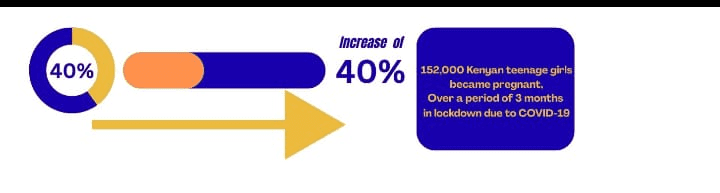
An unexpected reality emerged when schools reopened after the COVID-19 lockdown—many teenage girls never returned to class. During just three months of school closures, an estimated 152,000 teenage girls in Kenya became pregnant—a 40 percent increase in the country’s monthly average.
These figures, recorded as early as July, were among the first indications of how the pandemic disrupted protection systems for adolescent girls.
For many, the consequences were immediate and lasting. Verol Otieno, now 22, became pregnant for the first time at 17 while living under her parents’ care in Homa Bay County. She had little understanding of her body or the risks involved in sexual activity.
Naive and it being her first, she only realised she was pregnant when schools reopened. “When I discovered I was pregnant, I was afraid. My parents were already struggling to provide, and the shame I felt was unbearable,” she recalls.
She left home with her boyfriend and moved to Migori County, where they worked near a gold mine. Survival quickly replaced education. But the security she hoped for did not last—her boyfriend eventually abandoned her.
Verol’s experience reflects a broader pattern. Data from the African Population and Health Research Centre (APHRC) shows that in informal settlements, there are approximately 116 births per 1,000 girls aged 15 to 19, with nearly half of these pregnancies unplanned.
In areas such as Kibera, pregnancy rates remain consistently high, particularly where poverty and limited access to services intersect.
Economic pressure
Evelyne Bowa, founder of Awoche Foundation in Kibera, says the choices available to many girls are shaped by survival rather than agency. “Poverty has a way of cornering young girls into situations where every choice they make is a compromise—between preserving their dignity and surviving harsh conditions that often demand transactional sex,” she says.
She adds that for many girls, the lack of basic needs creates a pathway to early pregnancy. “Young girls in slum areas are vulnerable to early pregnancies because they lack basic necessities. For some, sex becomes a way to meet those needs.”
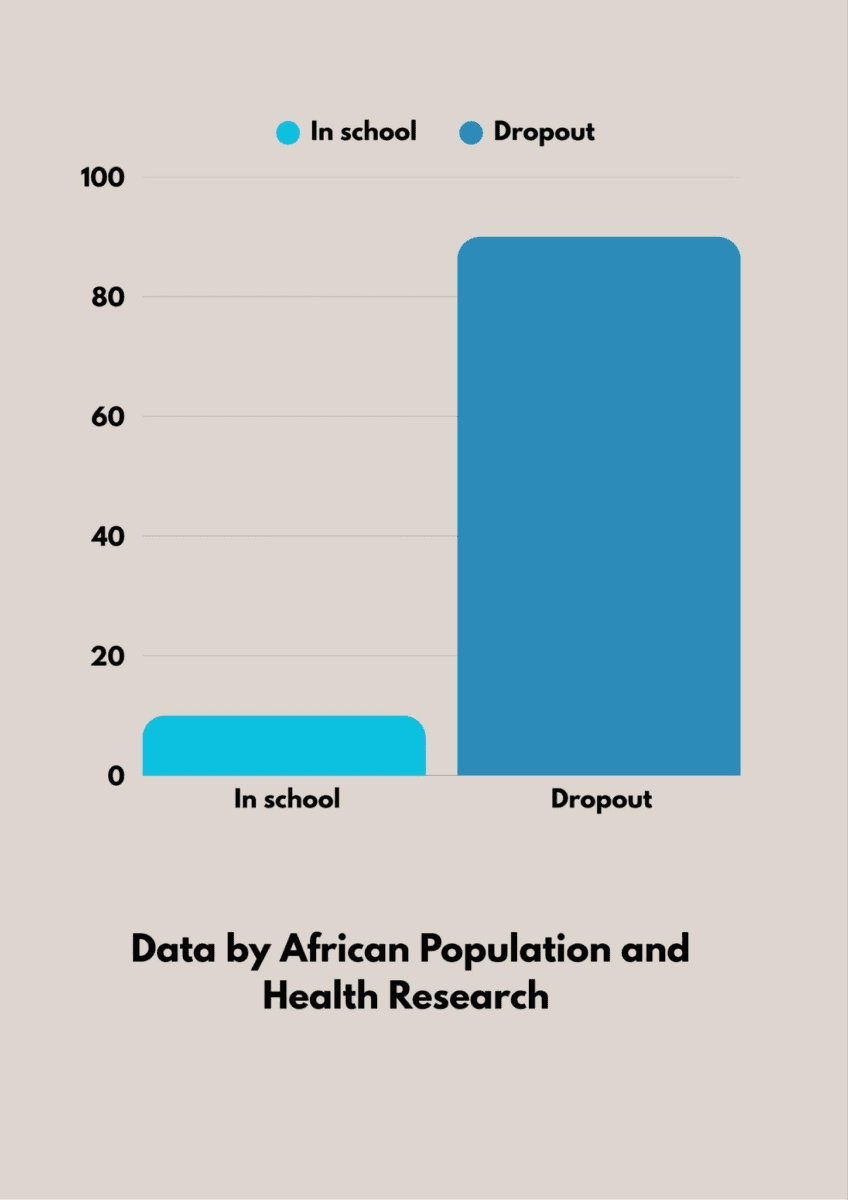
Earlier research by APHRC found that more than 90 percent of teenage mothers in Nairobi’s informal settlements were already out of school when they became pregnant—highlighting the strong link between disrupted education and adolescent childbearing.
In these communities, school attendance remains low. Only about 22 percent of girls aged 15 to 17 are enrolled in school, which is significantly lower than the national average.
For those who are enrolled, the risk does not disappear. In fact, some of the most vulnerable moments come when school is not in session.
Juma Salim, a gender advocate working with the Kamukunji Peace Network and other civil society organisations, warns that girls in informal settlements face heightened risks when they are out of school.
He points to a pattern of vulnerability—where exposure to drugs, sexual exploitation, and early pregnancy increases significantly during school breaks. “The most dangerous time is during school holidays,” he says. “That’s when many predators target schoolgirls.”
Despite ongoing efforts by community organisations to address sex trafficking, substance abuse, and teenage pregnancy, many girls continue to fall through the cracks.
Economic pressure remains one of the strongest drivers. According to data from the Kenya National Bureau of Statistics, financial hardship often pushes girls toward risky coping mechanisms, including transactional sex.
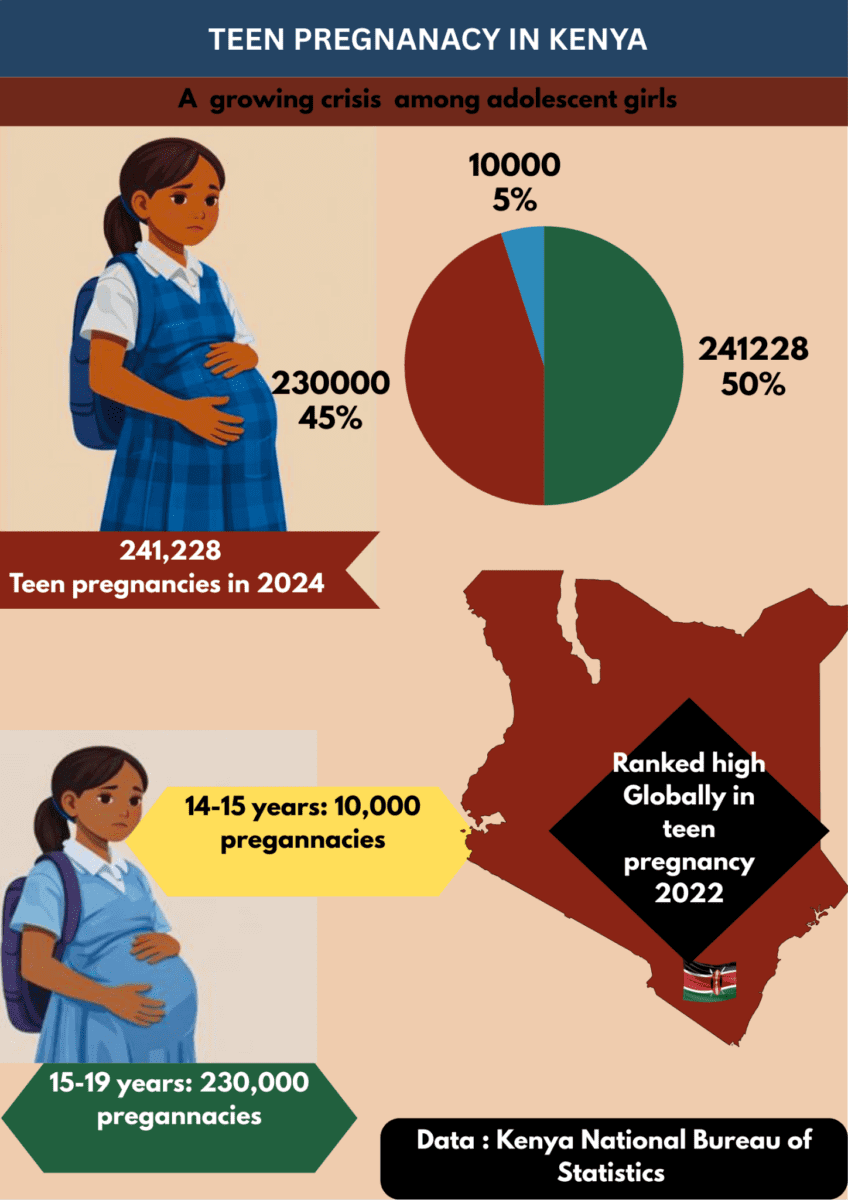
The scale of the challenge is evident. The Economic Survey 2025 reports that in 2024 alone, 241,228 girls aged 10 to 19 were recorded as pregnant during their first antenatal care visit. Of these, Nairobi accounted for the highest proportion, 6 percent, with informal settlements such as Kibra among the most affected.
In these spaces, vulnerability is not accidental but structural. This structural vulnerability is also reflected in Kenya’s legal framework. The Constitution guarantees the right to health (Article 43) and affirms the principles of equality and non-discrimination (Article 27).
Under devolution, counties are responsible for planning and delivering social services through County Integrated Development Plans (CIDPs) and annual budgets—placing them at the centre of prevention, protection, and response.
Bowa’s motivation
For Evelyne Bowa, founder of Awoche Foundation, the response began with a simple but urgent question: how do you keep girls in school, and safe, when the system does not fully protect them?
She established the foundation in 2012 to support girls through practical and preventive interventions. These include providing reusable sanitary towels, mentorship programmes during school terms and holidays, re-enrolment support for teen mothers, and skills training for those unable to return to school.
“There were girls I grew up with—girls who got pregnant not because they were chasing luxury, but because they lacked basic needs,” she says. Growing up in Kibera, Bowa witnessed these challenges firsthand. Her mother sold vegetables to support the family, while her stepfather relied on irregular electrical jobs. Even basic necessities were often out of reach.
She recalls struggling with self-worth from an early age, feeling invisible both at home and in school. “Being at the bottom of my class, with a big body in primary school, made me feel invisible,” she says. That experience shaped her understanding of vulnerability—not as an individual failing, but as a shared reality among many girls around her.
Today, the foundation focuses heavily on school breaks, recognising them as critical intervention periods. During holidays, between 70 and 100 girls and boys gather at the centre for open, judgment-free discussions about life, choices, and responsibility.
Awoche Foundation now works with 25 schools across Kibra, and includes boys in its mentorship programmes—an approach that Bowa says is essential in shifting attitudes and behaviour over time.
She has already begun to see change. Boys who once avoided even touching sanitary products now confidently request them—often on behalf of their sisters. Teachers now routinely reach out to Awoche Foundation whenever a student is pregnant or in need, and home visits have become a core part of the response.
In its early days, Bowa’s approach was simple. She bought sanitary pads, visited schools, placed pad boxes in restrooms, and spoke openly with girls—not just about menstruation, but about life, pressure, and the consequences of early pregnancy.
She had narrowly avoided becoming a teenage mother herself, but many of the girls she met had not been as fortunate. For them, education had already been interrupted—often permanently.
Over time, the initiative evolved into a more structured support system. To sustain its work, the foundation produces reusable sanitary pads made by teenage mothers—providing them with income, practical skills, and a pathway to economic independence.
Scaling impact
Beyond this, the programme equips young mothers with skills such as tailoring, baking, and entrepreneurship, while also supporting their reintegration into school where possible. “Awoche supports fees, transportation, healthcare—anything that keeps a child in school. Because once a girl stays home, the risk of pregnancy increases,” Bowa explains.
The organisation also works closely with parents and uses peer mentors—girls who have faced similar challenges—to support others navigating the same path. “We’ve seen girls that people had given up on now running businesses,” she says.
So far, the foundation has reached more than 15,000 children, 12,000 of them girls, and supported 252 teenage mothers through skills training and economic empowerment. Yet even with this progress, challenges remain. Limited resources make it difficult to support every girl who needs help.
“For those who cannot return to school, we offer skills training and alternative ways to survive,” Bowa says.
The foundation’s approach balances prevention and response—keeping girls connected to education, family, and community, while addressing the realities they face. In schools, it provides comprehensive support, including access to reproductive health education and medical guidance. Outside school, it equips young mothers with parenting skills and links them to health services.
But structural barriers continue to limit outcomes. “Once a girl drops out, she becomes vulnerable,” says Juma Salim, a youth and gender advocate. “Most of them don’t get the chance to return. It’s a massive challenge.”
Financial constraints, childcare responsibilities, and transport costs often prevent teenage mothers from re-entering school—even when policies allow it. Bowa notes that while the school re-entry programme has made a difference, sustaining young mothers through education remains difficult.
“Some schools lack basic facilities, while some teachers are not trained to support teen mothers. This leads to stigma, name-calling, and discouragement,” she says—barriers that continue to push girls out of the system.
Visionary Milestones
“Every time a school called to tell me one of my mentees was pregnant, it broke my heart,” says Bowa. “But I kept going, believing that one day we could have zero teen pregnancies in the schools we work with.”
Her goal is simple but ambitious: to remove every barrier that places girls at risk. Yet even as community-led efforts expand, broader structural challenges remain.
In 2020, the government introduced the National School Re-Entry Guidelines to ensure that pregnancy does not permanently interrupt a girl’s education. The policy affirms that no student should be expelled due to pregnancy and encourages schools to work with parents, health providers, and community organisations to support reintegration.
It recognises adolescent mothers as students first, not as disciplinary cases. However, implementation remains uneven. At the continental level, Agenda 2063 and the African Union’s Gender Equality and Women’s Empowerment Strategy call for inclusive education, youth well-being, and women’s economic participation.
When counties allocate funds for menstrual health, enforce school re-entry protocols, and track outcomes, these commitments move from policy into practice.
So, while these policies allow girls to return to school, financial barriers, childcare responsibilities, and persistent stigma continue to limit their effectiveness. Thousands of girls—particularly those aged 10 to 14—remain vulnerable, highlighting ongoing gaps in protection, access, and support systems.
These challenges reflect broader commitments at the continental level. The African Union’s Strategy for Gender Equality and Women’s Empowerment outlines a set of core outcomes that anchor efforts to improve the lives of women and girls. These include guaranteeing free and compulsory education, alongside targeted vocational training and literacy programmes for youth and women.
Equally critical is advancing economic empowerment and financial inclusion—ensuring women and girls have income autonomy, access to social protection, and the opportunity to participate fully and meaningfully in economic life.
In this context, organisations like Awoche Foundation play a critical role—bridging the gap between policy and lived reality. By supporting girls to return to school, building skills, and creating pathways for economic independence, they demonstrate how grassroots action can translate policy into tangible change.
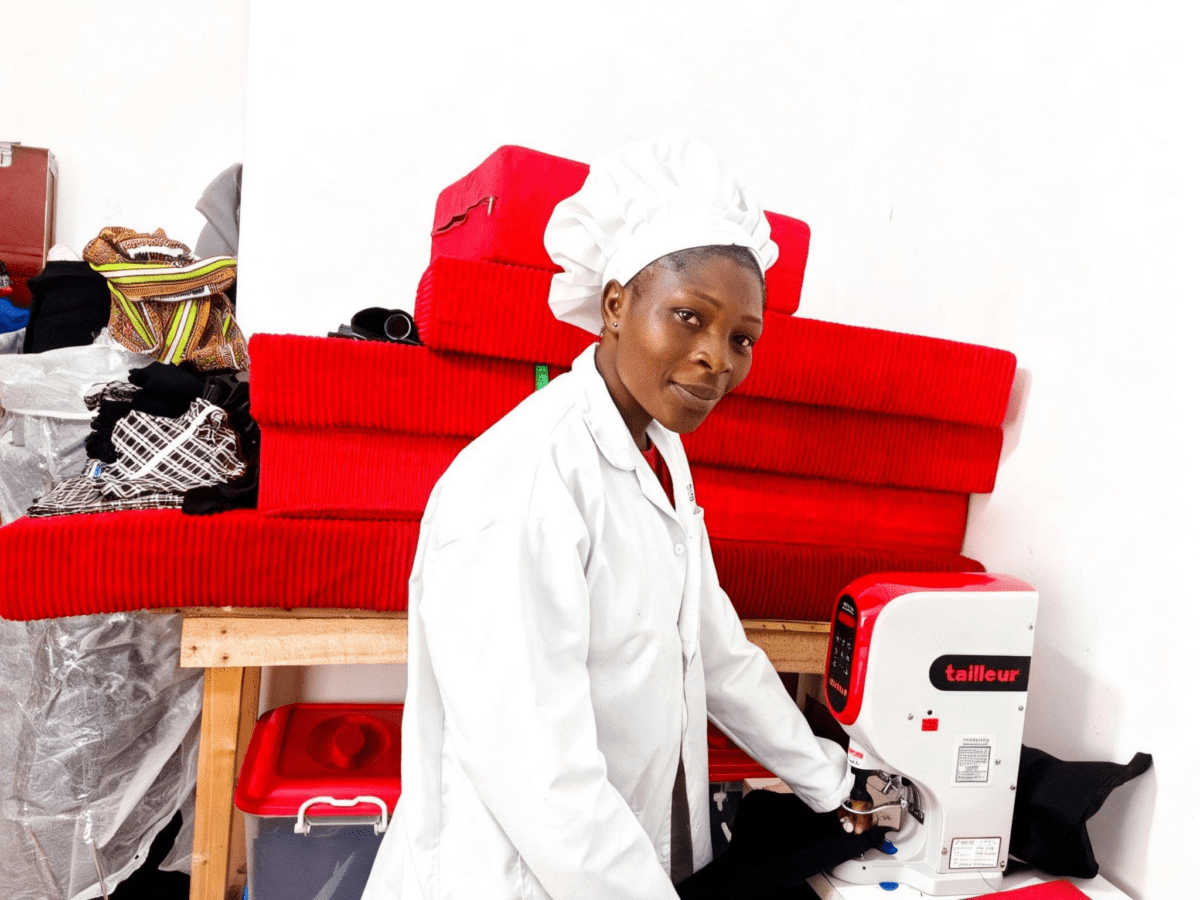
For Verol, that change has been deeply personal. After leaving home and navigating early motherhood, she found her way back through Awoche’s mentorship programme. Today, she earns a modest but steady income producing reusable pads and bags—skills she now passes on to other young mothers.
“Awoche changed my life,” she says. “My children now look like they have a parent.” Her journey reflects the reality faced by many girls growing up in informal settlements—where basic needs are often out of reach, and silence around issues like menstruation shapes early vulnerability.
When she got her first period, she told no one. For years, she improvised—using whatever she could find, hiding it out of shame. It was only later that she began to understand how something as basic as access to sanitary products—and the absence of open conversations—could shape the trajectory of a girl’s life.
Witnessing the struggles of other girls like her, Verol turned that experience into purpose. After studying community development, she returned to Kibera to work with Awoche Foundation—supporting other girls through mentorship, awareness campaigns, and access to essential resources.
“We distribute sanitary pads, support hospital visits, and provide mentorship to cushion girls and young mothers,” she says. Her story, like many others, underscores a central truth: preventing teenage pregnancy is not only about individual choice—it is about systems, access, and support.
And while policies exist, it is often community-led efforts that ensure those policies reach the girls who need them most.
Leave a Reply