
When formal courts fail—slow, distant, and often divisive—Acholi turns to a different authority. Rooted in memory, land, and collective responsibility, the Kal Kwaro embody a system where justice is not outsourced but lived. It restores balance, repairs relationships, and safeguards the community before conflict becomes irreversible.
The previous article highlighted how we have fallen into a state of fear by abandoning our roots in favour of the formal legal system. Imagine a community where land grabbing is rampant, and courts are too slow, too expensive, and often corrupt. People live in fear. When neighbors fight over land, taking the matter to a formal court often turns them into lifelong enemies.
This should not be our destiny. The solution to rampant land grabbing and violence lies in the very traditions we have neglected—specifically, the authority of the Kal Kwaro (elders), who administer justice through the spiritual powers of Agat.
The Acoli tradition offers a different path—not merely to punish, but to repair broken relationships. Its justice mechanisms foster peace and harmony by encouraging offenders to confess, take responsibility, and reconcile with the community. By contrast, the Western legal system often promotes division by focusing primarily on punishment.
The Kal Kwaro


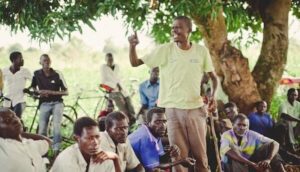
The custodians of this traditional justice system are the elders (Kal Kwaro). This article explores who they are and how they operate.
In the traditional Acoli system, Kal Kwaro refers to selected clan members—preferably elders with profound wisdom and a deep understanding of tradition—who are entrusted with authority. They are not simply old men, but a council carefully chosen for their understanding of history, land boundaries, and proven integrity. They serve as custodians of culture.
Think of them as respected community judges who know the history of every piece of land and every family, and who carry the authority of the ancestors. Every clan has a clan leader, supported by a council of elders. All are elected and approved by clan members.
Each council member heads a specific department, including land, reparation (mediation), women’s affairs, and youth affairs, among others. Members of the Kal Kwaro form a council that holds the mandate of the ancestors for each clan within a specific chiefdom in the Acoli community.
The Kal Kwaro serves as the backbone of traditional governance and social cohesion in Acoli society, carrying out a wide range of judicial, cultural, and administrative responsibilities aimed at maintaining harmony within the community.
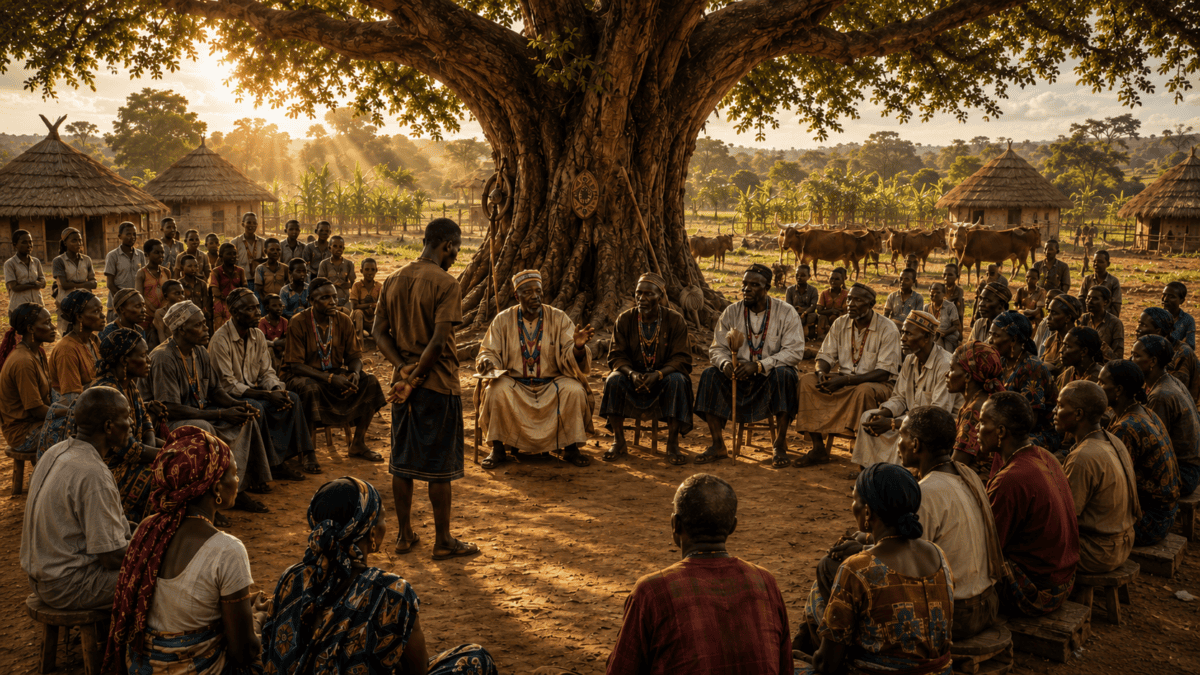
Major functions of Kal Kwaro
As a local court of first instance, the council mediates and resolves disputes ranging from family disagreements and inheritance conflicts to boundary and matrimonial disputes. Parties are often called to sit together under a tree, where both sides are heard in pursuit of dialogue, consensus, and “win-win” outcomes rather than punishment. In land-related conflicts, the council may physically inspect the disputed land before making a ruling.
Beyond dispute resolution, the Kal Kwaro also oversees culu kwor (blood compensation) in cases of murder or manslaughter, negotiating compensation between the offender’s family and the victim’s family to prevent revenge killings and restore peace.
Through its reparation department, the council works to reconcile broken relationships between families and clans through truth-telling, mediation, and forgiveness. Where conflict creates deeper communal fractures, the Kal Kwaro presides over traditional cleansing rituals such as mato oput, the symbolic drinking of the herb of reconciliation, to restore harmony, heal the land, and rebuild communal bonds.
The council also plays a central role in land governance. In the Acoli belief, land belongs not only to the living but also to ancestors buried in it and future generations yet unborn. For this reason, unnecessary land sales are discouraged.
The Kal Kwaro holds land in trust for clan members and acts as the ultimate authority on customary land administration (ngom kwaro). It is responsible for demarcating boundaries in consultation with neighbouring clans and families, allocating land for productive use, and ensuring that any land sales receive approval from the wider clan.
In addition, the council safeguards vulnerable groups such as widows, orphans, and children, ensuring they are not unlawfully evicted from their land. This may include appointing protectors to defend the rights of widows.
The Kal Kwaro also upholds social order through traditional sanctions and ceremonies, including Agat, which are used to address moral decay and social problems such as alcoholism, neglect, and persistent misconduct.
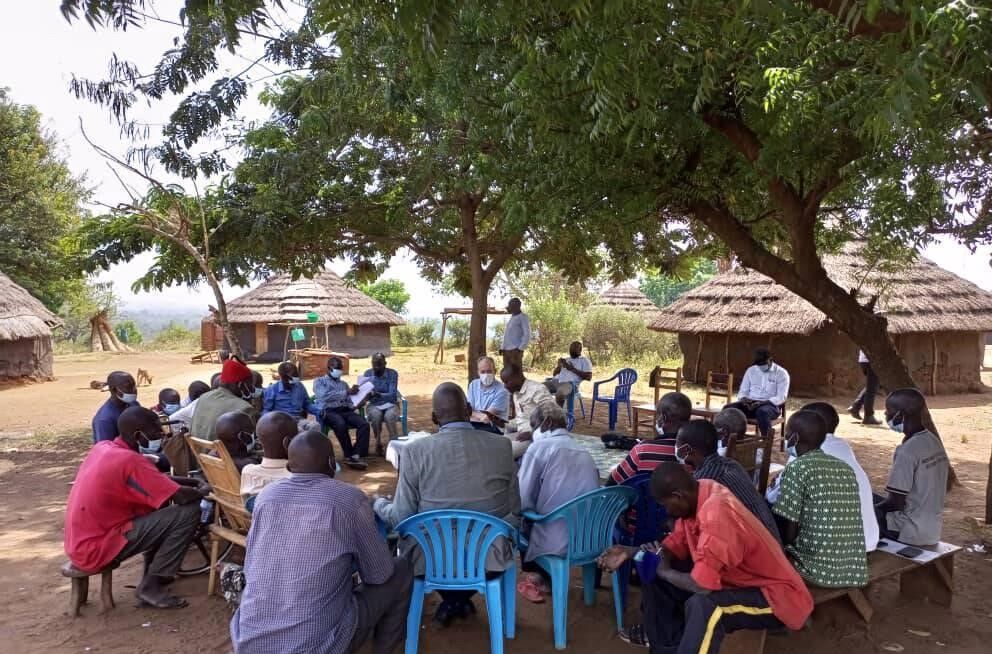
Restoring harmony
As custodians of Acoli culture, members of the council educate young people about customs, traditions, and acceptable moral conduct, helping to preserve cultural heritage and prevent future conflict. They also support the clan leader (Ladit Kaka) by offering counsel that promotes informed leadership and accountability.
At the community level, the council mobilises and sensitises people on issues such as land rights, government policies, and security. In post-conflict settings, the Kal Kwaro further facilitates the reintegration of former combatants into society through cleansing and reconciliation rituals designed to restore acceptance and belonging within the community.
It was simple. In cases of family disputes—such as conflicts between brothers, disputes between families, or issues of infidelity—the council would call the parties, hear both sides under a tree, and resolve the matter by advising them and making the consequences clear. The case would end there.
When disputes involved land, such as boundary or inheritance issues, the council would move to the land in question and demarcate it appropriately. If the dispute is between clans, members of the Kal Kwaro from both sides would settle it amicably, and the matter would be resolved.
In cases of killing, council members from both clans would meet at the chief’s administrative centre (Gang Kal pa Rwot), where mediation takes place. They would negotiate blood compensation, requiring the offender’s clan to compensate the victim’s clan—traditionally in livestock.
A cleansing ritual would then be performed to free the offender from spiritual vengeance by the deceased’s spirit. This would be followed by a reconciliation ritual (mato oput), restoring harmony between the two clans.

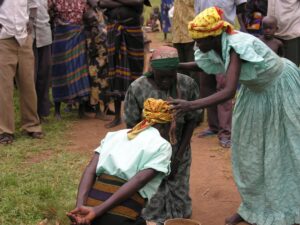
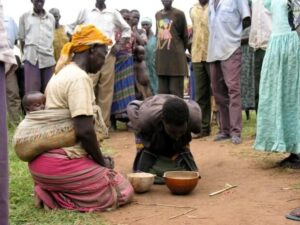
However, if the offender’s family or clan fails to appear, one of two outcomes may follow. If the offender’s clan is within reach, violent revenge may occur, leading to further killing. This is why elders must act quickly before burial takes place.
If the offender’s family cannot be reached or refuses to cooperate, the Agat ritual is performed during burial—an outcome far more severe for the offender’s clan. Agat is a powerful spiritual sanction that compels offenders, especially in cases of killing, to confess and take full responsibility.
While Western legal systems focus on punishment—often turning neighbours into lifelong enemies and fracturing communities—the Acoli tradition offers a different path: restorative justice that repairs relationships. While the Kal Kwaro (Council of Elders) are the visible face of this system, its authority is rooted in a deeper traditional mechanism.
This article has explored who these elders are and how they operate as custodians of land and custom. The next will examine how they use the spiritual authority of Agat to maintain peace, administer justice, and safeguard the future of the culture.
Leave a Reply