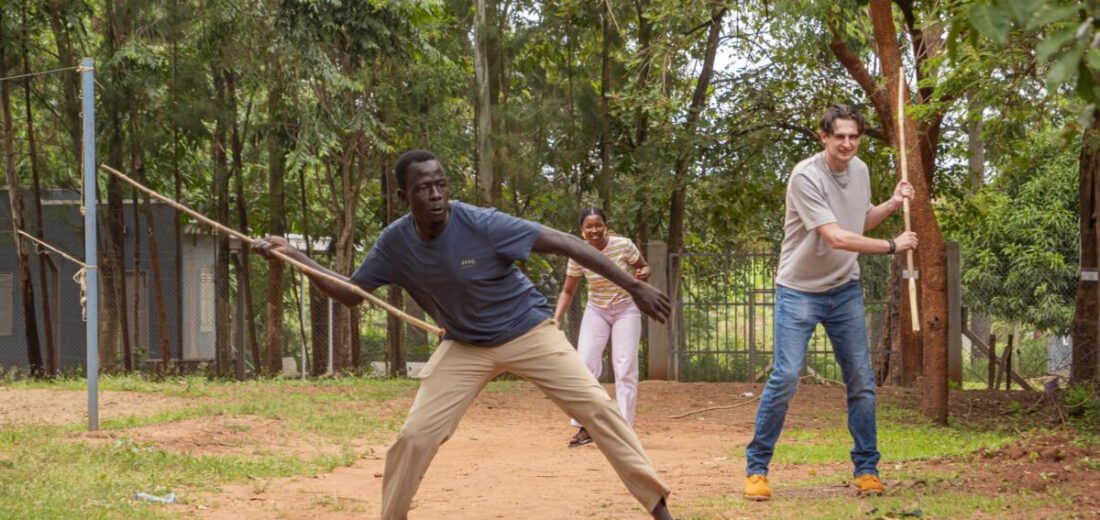
 Lawala is not a game; it is a test of instinct, endurance, and precision. Played for generations among the Acholi people, it transforms a simple hoop and spear into a contest of strategy and survival. On the red dust of the field, every throw, strike and spin echoes a deeper story of identity, discipline and the spirit of the hunt.
Text: Abok Santo Ray
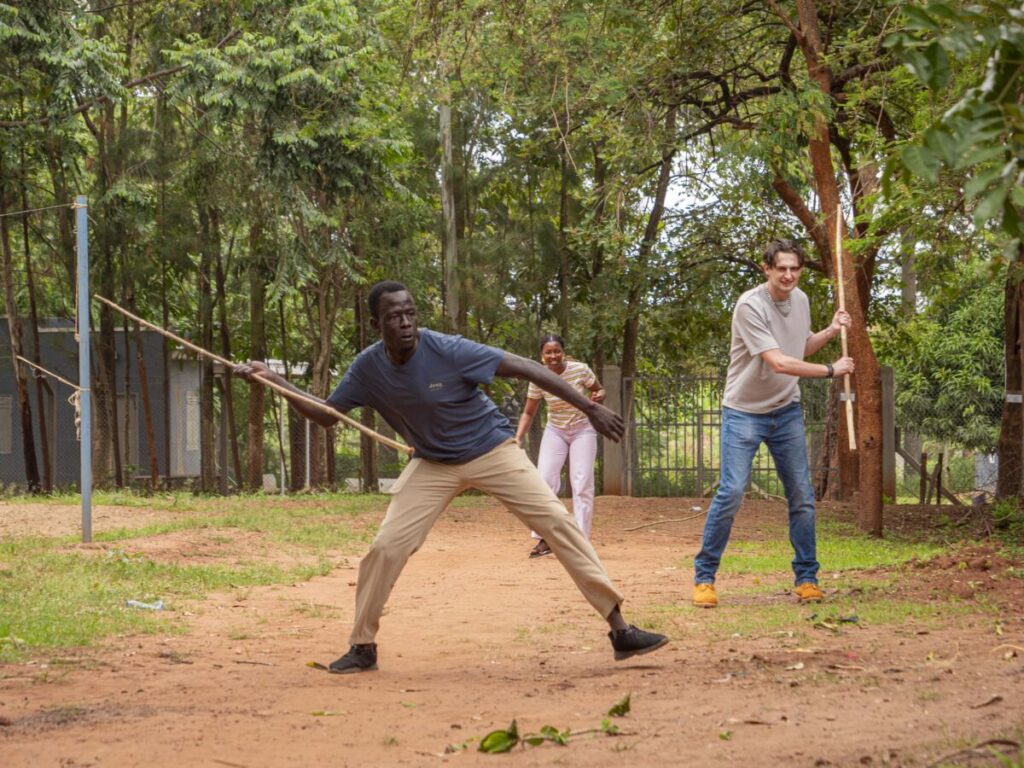
In the heat of the afternoon sun, the air was thick with the scent of dry dust, rising in a blinding screen that concealed the threat. But I was alert. I could see it. I could hear it—a low, rhythmic thud-thud-thud tearing across the ground. My opponent had sent the Lawala flying—a fast-spinning ring of fire meant to make me look foolish. My heart pounded, but my hands already knew what to do. I threw myself to the side, adjusting my stance, my eyes locked on the zigzag path of the hoop. I tightened my grip on the spear. This was more than a game—it was survival.
Just as it was about to break through our line of defence, I struck. The wooden spear pierced the centre of the hoop, pinning it into the red dust. The look of surprise on my opponent’s face was worth more than a point. A roar erupted from the spectators. I did not wait to celebrate. I grabbed the Lawala and hurled it far into the distance, forcing my opponent to run, as I sprinted to take my new position before they could even reach it. The cheers were not just for a successful strike—they were for the preservation of a tradition that has echoed across these plains for generations. To an outsider, this might look like a frantic scramble in the dirt. But to the Acoli people, this is Lawala—a game where the stakes are as much about cultural identity as they are about physical strength.
Imagine a game where you throw a target at your opponent—and they must destroy it before it hits them. It begins with a sprint and ends with the crack of wood on wood. Welcome to Lawala—an ancient traditional game of the Acoli people. This intense spear-and-hoop contest is built for speed. One player hurls a wooden ring with force toward an opponent, who must intercept the moving target with a spear. The margin for error is razor-thin—miss the strike, and your opponent scores. But the real penalty is the chase. With every successful hit, the stakes escalate. The defender flings the Lawala deep into the distance, forcing their opponent to run harder, recover faster, and return with greater force.
At the heart of the game lies the Nguu (or Lakona)—the “Lion Strike.” This is a high, arching throw that resembles the action of a leaping predator. Once airborne, the defender must calculate quickly—adjusting position, reading the spin, and striking with precision. Then there is Kakokeno—a low, fast throw that skims across the ground at high speed. Victory in Lawala requires more than a sharp eye; it demands endurance. Once the hoop is pinned, it is flung far into the distance, forcing the opponent into a relentless sprint. The game becomes a cycle of motion—attack, intercept, chase, recover. It is a contest of tactical positioning, raw speed, and the instinct of the hunt.
Core Components
At its core, Lawala is defined by a few simple yet essential elements: a small woven hoop—crafted from sturdy branches or reeds—serves as the central object of play; sharpened wooden spears are used to intercept it; and two teams of two players face each other from opposite ends of a designated field.
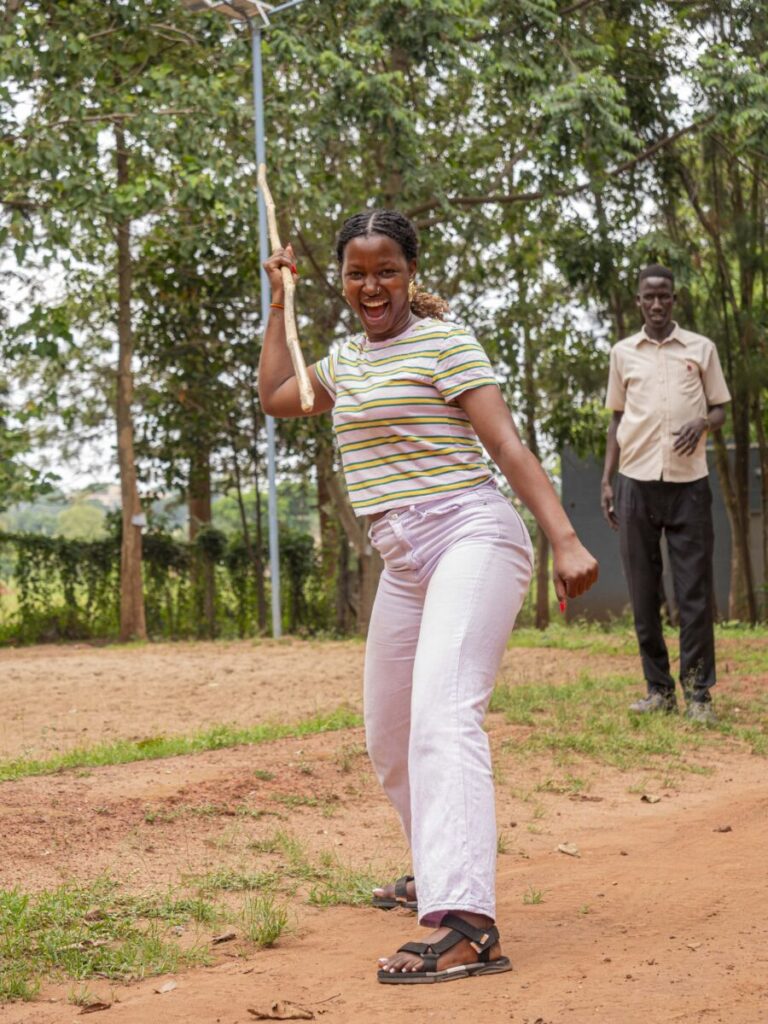
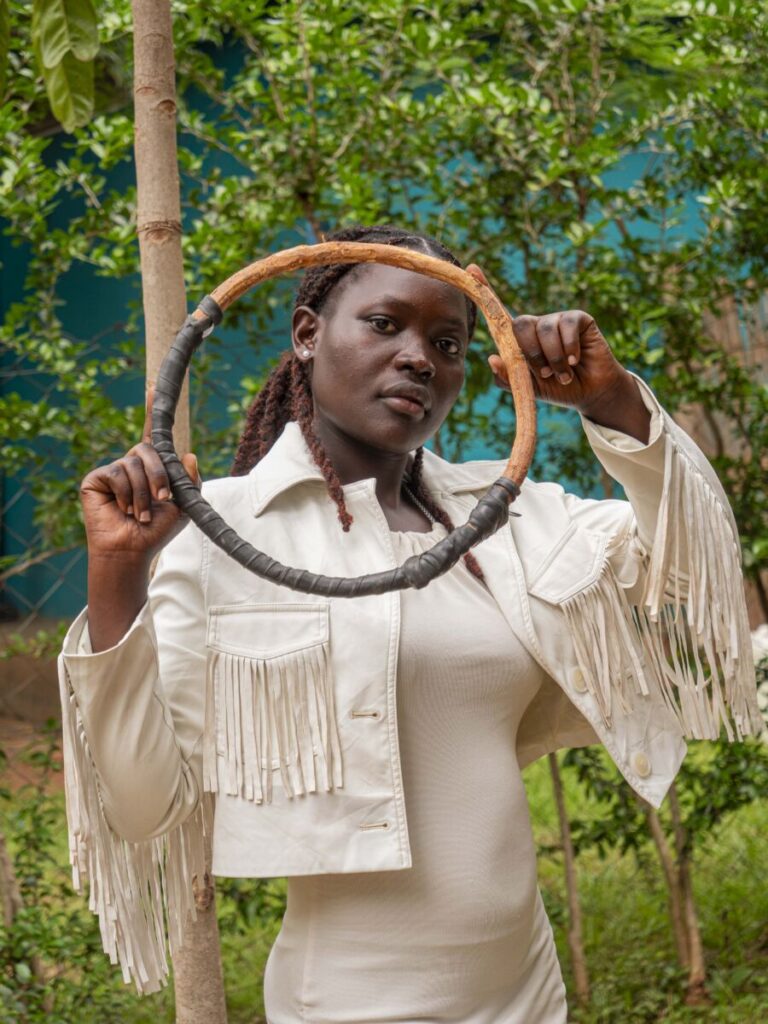
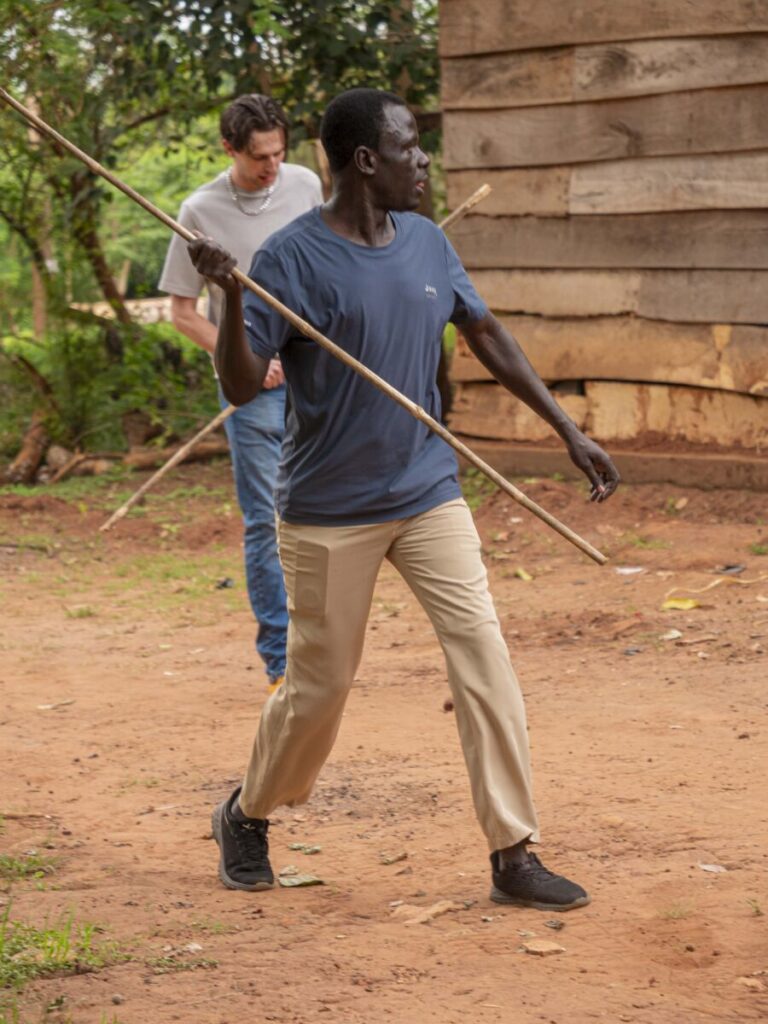
Players typically arrange themselves in a single-file, linear formation, creating a clear targeting corridor—often described as a “killing ground”—aligned with their dominant hand for precision and control. From there, the rhythm of Lawala unfolds through a sequence of deliberate, coordinated actions. One team initiates play by launching the hoop across the field, carefully controlling its speed and angle. The opposing team responds by attempting to intercept it mid-motion. A successful strike is not merely a hit—the spear must pierce through the hoop and bring it to a complete stop.
Once contact is made, the defending team faces a strategic choice: hold their position or fling the hoop deep into the distance to gain time and disrupt their opponent’s rhythm. Play continues in cycles. As long as a team successfully strikes the target, their opponents must keep throwing. A missed strike triggers a role reversal. Meanwhile, both teams continuously shift position across the field as the game evolves.
Mastering the strike
To master this ancient contest, a player must blend ruthless execution with instinctive awareness—balancing aggression with control, and foresight with adaptability. At the heart of the game lies the offensive technique known as the “Lion Strike” (Nguu/Lakona). This is not a simple throw, but an act of prediction. Because the Lawala spins at an unpredictable speed, a player cannot aim at where it is, but where it will be.
The spear is released into open space, intercepting the hoop at its peak. To counter wind resistance and maintain accuracy, experienced players rely on a sharp, controlled wrist flick—a subtle but critical motion that stabilises the spear’s flight.
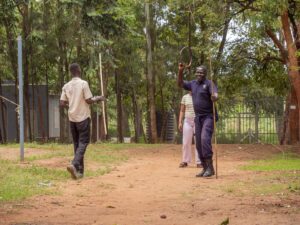
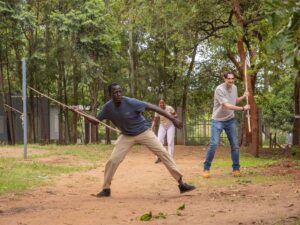
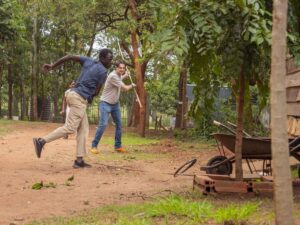
But Lawala is not only about the strike—it is equally defined by response. As the spear is released, the defender’s body becomes both shield and spring. The non-dominant hand steadies the body, anchoring it against the shifting momentum of the game. The moment the spear drives into the ground, pinning the hoop, the defender must transition instantly—dropping into a low crouch, scooping the Lawala, and launching it deep into the field. This movement does more than restart play; it disrupts rhythm, creates distance, and begins to wear down the opponent.
Even in failure, hesitation is costly. A missed interception demands immediate recovery. The hoop must be retrieved and thrown back forcefully, pushing it deep into the opponent’s territory and shifting the pressure back onto them.
Ultimately, Lawala is a war of attrition—a test not only of skill, but of endurance and mental control. Through repeated sprints and relentless exchanges, players turn fatigue into a weapon. Victory does not come from a single perfect strike, but from the moment an opponent’s focus fractures under exhaustion—when instinct outlasts endurance, and the final strike lands unanswered.
Why it matters
Lawala is an ancestral training institution where young men were prepared for hunting and the protection of their communities. It instilled physical discipline, sharpened the senses, and cultivated resilience under pressure. According to oral accounts, it was through this rigorous training that our ancestors were able to withstand colonial forces on the battlefield for an extended period—until the British ultimately resorted to the use of chemical weapons, including tear gas.
It is also a rite of passage. To play Lawala is to step into responsibility, to prove readiness for adult roles within the community. In a region that has experienced conflict and disruption, the game has gained renewed significance as a means of cultural restoration, rebuilding pride, and strengthening community bonds. Beyond speed, it is a discipline of strategy. It cultivates a “predator’s calm”—the mental clarity to remain composed, focused, and precise, even in the face of uncertainty.
When I stand in that red dust, the modern world falls away. I am no longer just a player—I become part of a lineage, connected to every Acoli hunter and warrior who came before me. The game gives me a language of movement that existed long before words were written. When I feel the rough wood of the spear in my palm and hear the steady thud of the Nguu, I recognise something deeper than instinct. I recognise belonging.
To others, it may look like a spinning hoop. To me, it is a lesson. Lawala has taught me that when something unpredictable comes at you with speed and force, you do not retreat. You calculate. You plant your feet. You strike. It has given me what I can only describe as a predator’s calm—the ability to remain focused in chaos, to act with precision under pressure. Whether I am pinning the hoop or chasing it across the field, the lesson remains the same: fatigue is real, but focus is a choice.
Lawala is not just a game I play. It is a story carried in my muscles—a living bridge between the past and the person I am becoming. It reminds me that no matter how far life throws me back, I have the strength to sprint forward and regain my position. And when the game ends, when my lungs are burning, and the dust settles, I do not just feel tired. I feel whole. I feel Acoli. I feel at home.
Leave a Reply