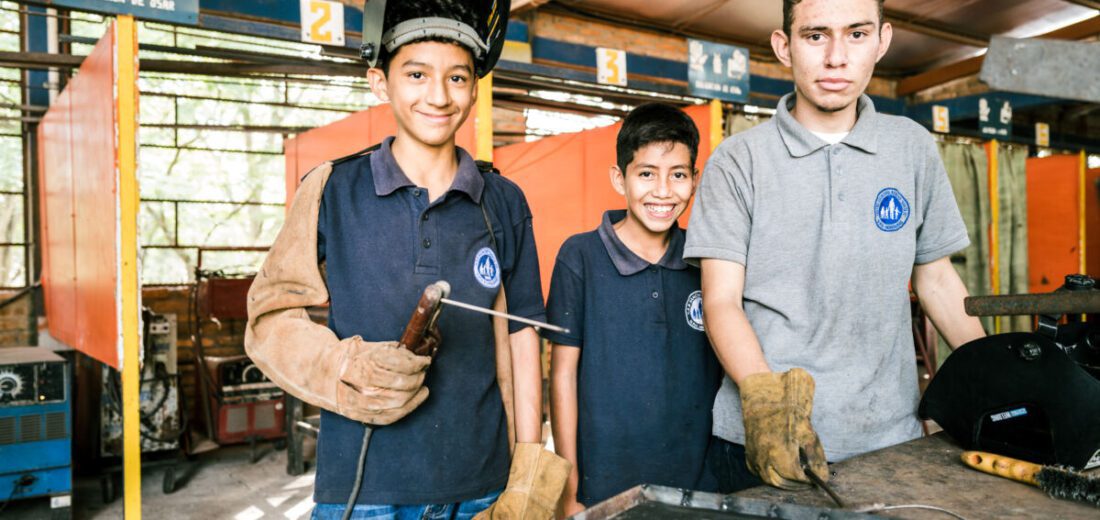
Lessons from WereldOuders’ Family-Centred Approach
Where the WereldOuders foundation once supported a single child in an orphanage, it now helps entire groups of children within their own families and communities. However, this system change also brings challenges. How do you bring donors along in such a transformation, and what does it mean for fundraising?
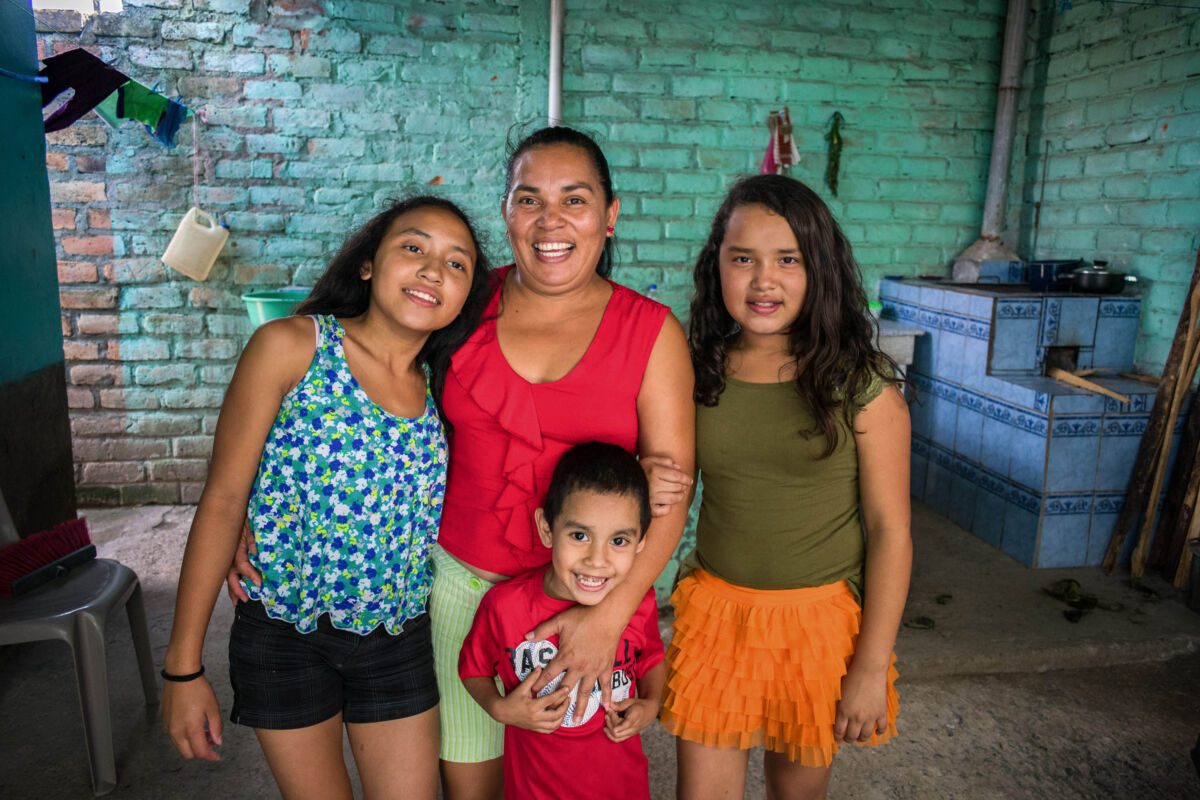
‘In the past, we worked in what others called an orphanage,’ says director Pauline Lemberger. ‘We called it a family home with a surrounding wall. But now we know it is better to support children within their own families, and provide help there.’
That realisation has gradually taken shape within Lemberger and her organisation, WereldOuders, over the past few years. We are sitting in the NGO’s Hilversum office, where for decades the team has been dedicated to improving the lives of children in Latin America.
Founded in 1991 as Onze Kleine Weeskinderen (Our Little Orphans), the organisation has since undergone a profound transformation. Its new name reflects its renewed focus: family.
The turning point came with one striking fact: 95 percent of the children were not orphans. That insight reshaped not only the organisation’s approach, but its entire understanding of what true child welfare means.
Family homes, that is how it all began. ‘Children received everything they needed: food, education, safety,’ Lemberger recalls. Yet the emphasis on family in the name would later prove ironic, as this well-intentioned model had a hidden cost. ‘We took children out of their families, out of their communities,’ she says, ‘and later we saw they could no longer find their place.’
Today, WereldOuders supports children in Latin America within their own communities. How did this transformation unfold? ‘It actually happened very gradually,’ Lemberger reflects. In the shift from family homes to family-based care, several building blocks came together.
An important step in the transition was listening to the children themselves. ‘We had many conversations with those who had grown up with us,’ she says. ‘We asked them: What did you miss?’ That simple question proved confronting.
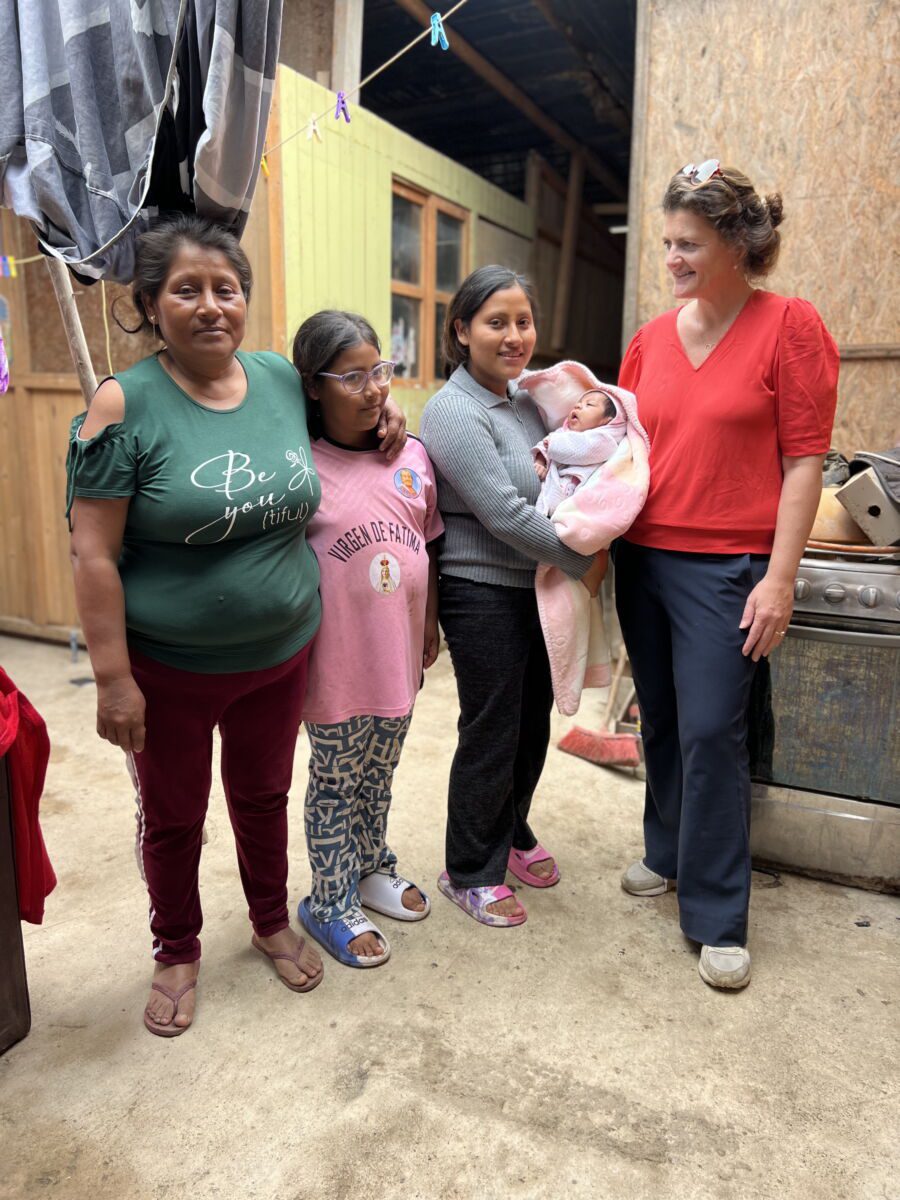
‘We saw that many children struggled enormously to reintegrate into society,’ she recalls. ‘We had taken them out of one system and placed them in another—but eventually, they had to return to their own local system.’
Lemberger witnessed this firsthand with a group of six girls in Haiti who, after leaving the family home, began living independently. ‘They told us they felt like outsiders, that they could not quite find their place in the community,’ she says.
‘The six of them lived together in a student house in the middle of a slum; independent, intelligent, with real opportunities. We initially saw that as something positive.’ She pauses. ‘But precisely because of that, the community saw them as different—even a little outcast. They no longer fully belonged to the world they had come from.’
In these new phases of life, many children found themselves missing their networks—the circles of support that had once revolved around the family homes where they had grown up. For Lemberger, this experience reinforced what international research had long made clear: ‘a child should grow up in a family.’
With that insight began a period of learning, adjustment, and investment for WereldOuders. ‘We started to focus on sharing knowledge and investing in training,’ she explains. ‘Together with our colleagues in Latin America, we spent a great deal of time critically examining what is truly best for the child, within the context in which we work.’
A pivotal role in this shift was played by child psychologist Nico van Oudenhoven, and Bep van Sloten, an expert in alternative care. ‘We funded that work from the Netherlands,’ Lemberger says.
‘Nico and Bep began as early as 2016 with training sessions on what defines the best care for both child and family. Each step was small, but together they set real change in motion.’ That transition demanded far more than knowledge alone.
‘Such a shift requires courage, time, money, and communication,’ says Lemberger. ‘It cost an incredible amount—and not only financially.’ She stresses that real change cannot be imposed.
‘It had to come from within. That intrinsic motivation within the teams in Latin America was the key,’ she explains. ‘You cannot enforce this from the outside; it must truly be felt.’
To nurture that shared sense of purpose, Lemberger deliberately invested in relationships with her colleagues in Latin America. ‘It was not about convincing them,’ she says, ‘but about listening, understanding, and genuinely connecting.’
She and her team travelled there several times to engage in open conversations and mutual reflection. But an equally important part of the process, she admits, was the mirror she held up to herself. ‘I began to look critically at my own role.’
Gradually, practice began to shift. ‘We started working within the community,’ she says. The organisation no longer focuses on separate care, but on strengthening the child’s existing support network. ‘We no longer remove the child from their system,’ she explains. ‘We leave them within that system, and provide help there, together with the parents.’
The new approach is broader and far more sustainable. ‘We now create a tailor-made plan for the entire family,’ Lemberger explains. The results are tangible. ‘In the past, we helped one child in an orphanage,’ she says. ‘Now we help ten children within their own community, supported by their own family. The circle has become much larger.’
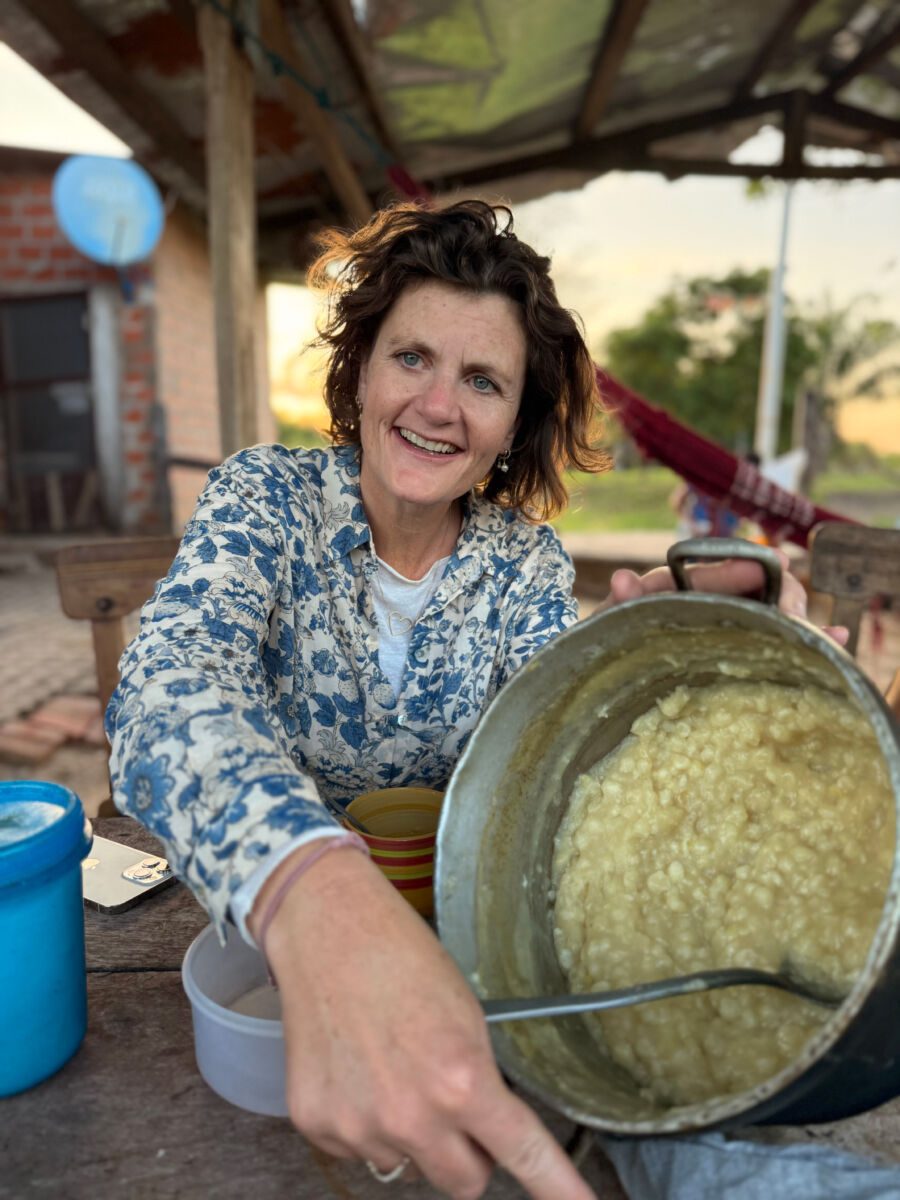
What began as a learning process has evolved into a fundamental shift in both mindset and practice; from an organisation that once worked for local communities to one that now works with them.
Substantively, it marks a major step forward. Yet the transition has not been without its challenges. One of the biggest, Lemberger notes, has been communicating this new approach to supporters. Donors often want to see exactly whom they are helping.
‘In the past, you could support a child and receive a photo and a letter in return,’ she explains. ‘But in our new model, that is more difficult. Now, donors are supporting a family or even an entire community, and that is much harder to visualise.’
The shift came at a cost. As a result of the new approach, WereldOuders lost a number of donors. To make up for this loss, the foundation had to seek alternative sources of funding. ‘We became more dependent on capital funds,’ Lemberger explains.
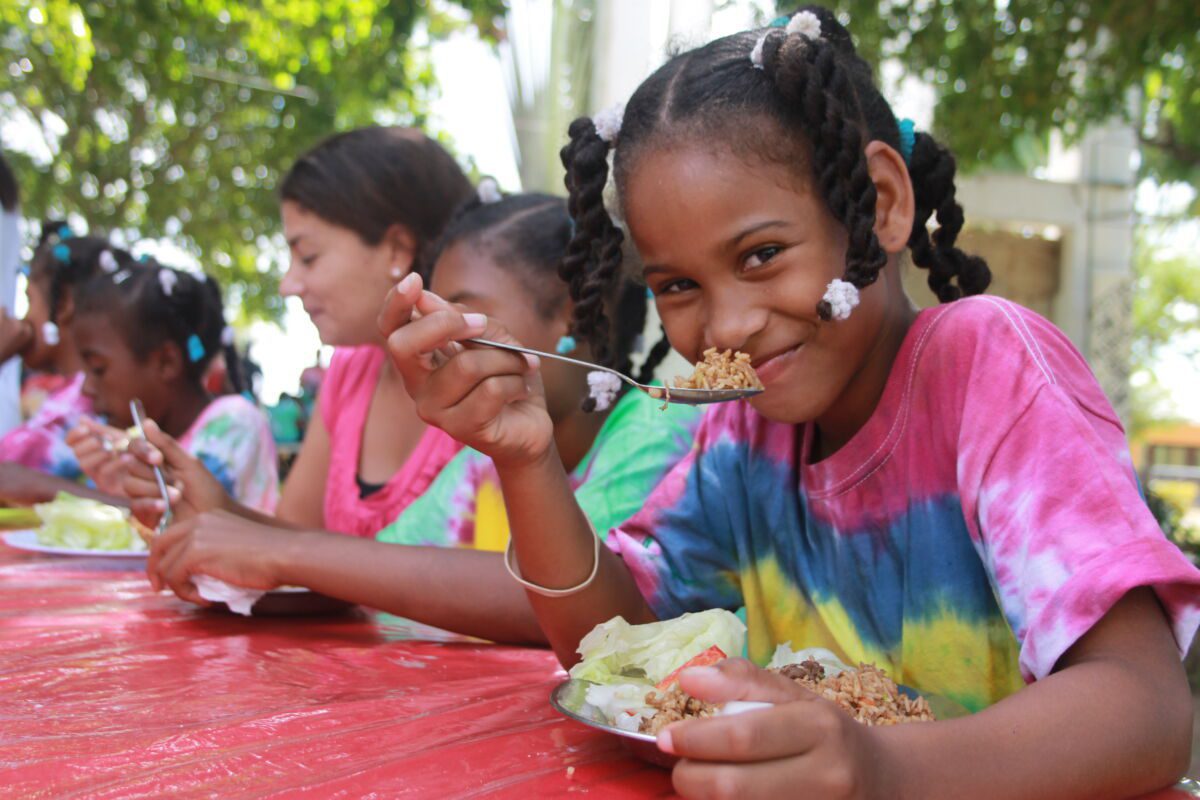
Yet this financial setback never led to doubt about the chosen direction. ‘We made the right choice,’ she says, ‘but we should have explained more clearly why we made it.’
Still, the broader fundraising climate remains difficult. Fundraising is under pressure worldwide. Lemberger notes that her organisation has also had to cut costs and ‘focus more sharply.’ ‘In Europe, we have seen revenues stagnate or even decline for several years,’ she says.
At times, she admits, she wishes the work were a little less precarious. ‘Every day is a challenge. Sometimes I wish we were a bigger organisation with a larger budget and a bit more certainty.’
But amid these challenges, new opportunities are emerging driven by the growing movement toward localisation. Lemberger notes that WereldOuders has been proactive in transferring its fundraising expertise to colleagues in Latin America.
Increasingly, funds are now being raised locally—a development she speaks of with pride, and one that is already bearing fruit. ‘Take the Dominican Republic, for example. Half of the budget is now raised locally,’ she says optimistically.
At the same time, teams across Latin America are forging new partnerships with the private sector. ‘They are working with companies like Makro and local supermarkets that donate food and clothing,’ she explains.
But how easily can donors be convinced to fund something as intangible as the transfer of local knowledge? It remains a real dilemma for Lemberger. ‘Most of the money goes to manpower; to the salaries of psychologists and social workers who work directly with families,’ she explains.
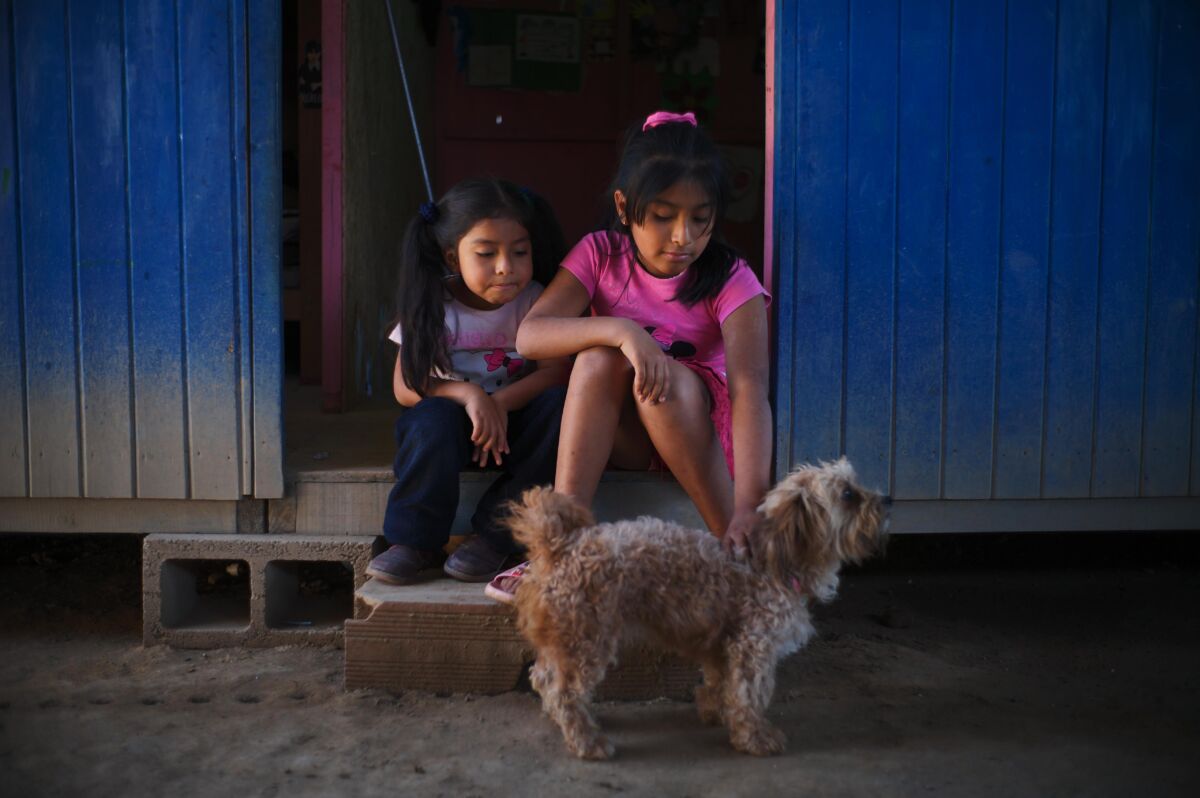
‘Yet most donors are moved by tangible things: school or food packages.’ Without well-trained professionals, however, long-term development becomes a far more difficult story to sustain.
She points to a recent project in Bolivia as an example. For one month, social workers and psychologists from the Dominican Republic, El Salvador, Guatemala, Honduras, and Peru gathered there with a single mission: to share knowledge.
The impact of such exchanges runs deep, strengthening the roots of every country involved, while allowing each to adapt lessons to its own context. ‘For fifty children, we need four social workers,’ Lemberger sighs.
‘But that is the kind of work few people are willing to fund. Those donors exist, but you have to look hard to find them.’
Text Box
What/who is WereldOuders?
For over thirty years, WereldOuders has been active in Latin America. Together with their Latin American partner organisation, they have spent three decades pursuing one goal: to give every child the right to a safe home. They support not only children, but also the families in which they grow up. Four pillars form the foundation for expressing their mission: education, healthcare, a safe home, and self-reliance.
Leave a Reply