No regrets, just growth
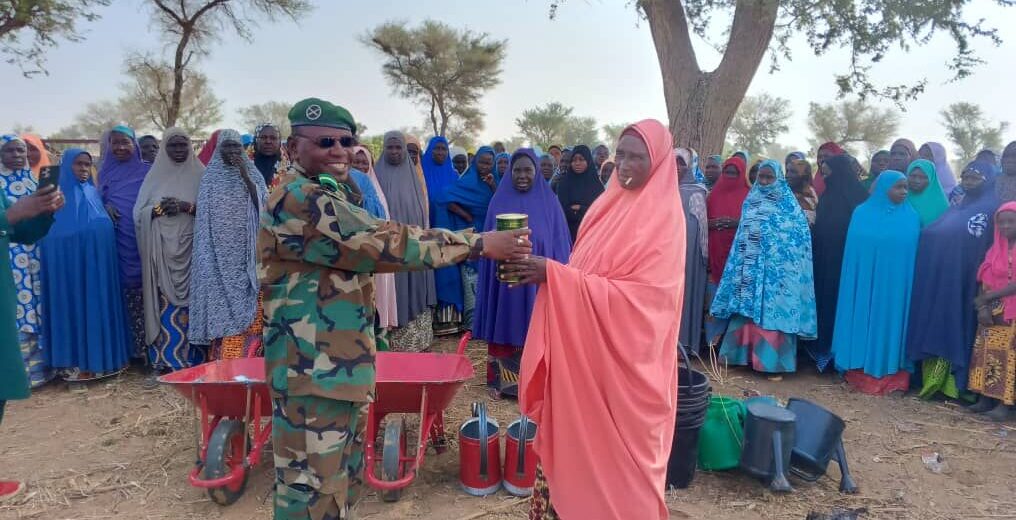
In Dosso, Tillabéri, and Niamey—three regions within Niger’s Niger River Valley—a wave of change is transforming communities. These communities are now leading the decision-making process for funding activities aimed at local development. This shift has sparked a renewed sense of ownership over projects, fostering stronger social cohesion, revitalised communal bonds, and overall improvement in community well-being.
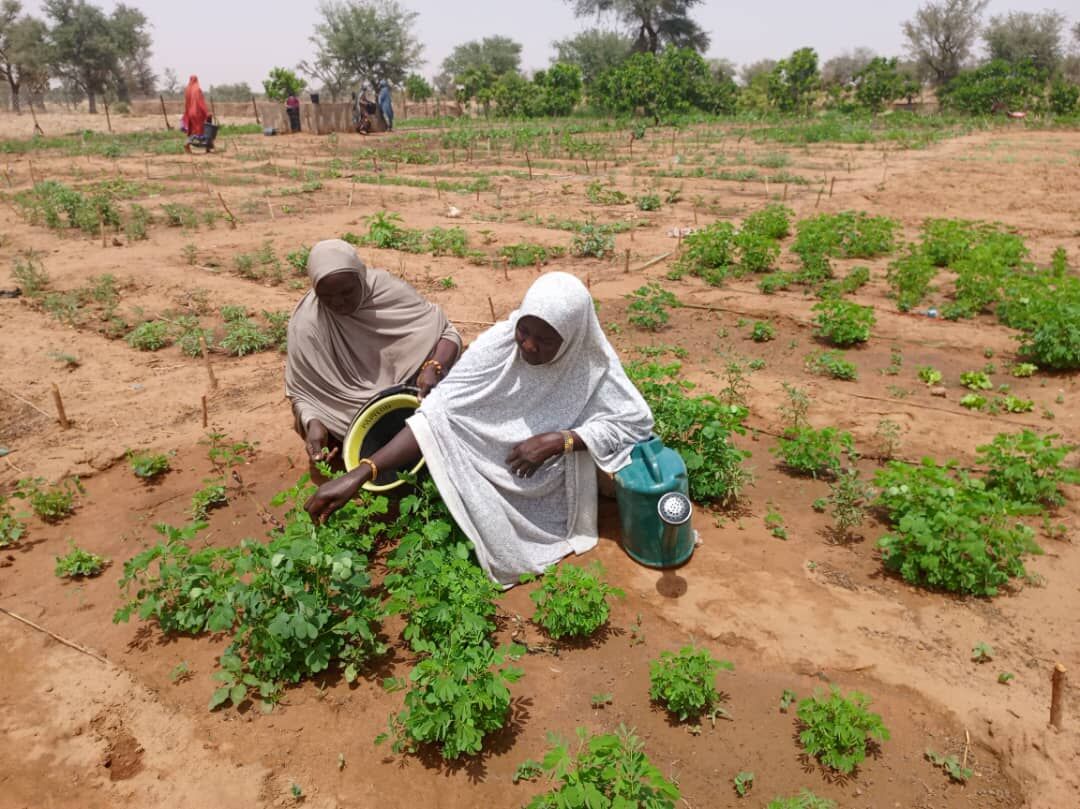
The contrast between the fenced-off garden and the non-farmed land on the other side is striking. One green and lush, with vegetables and fruit trees, the other dry and sunburnt, with scattered trees reminiscent of a dryland.
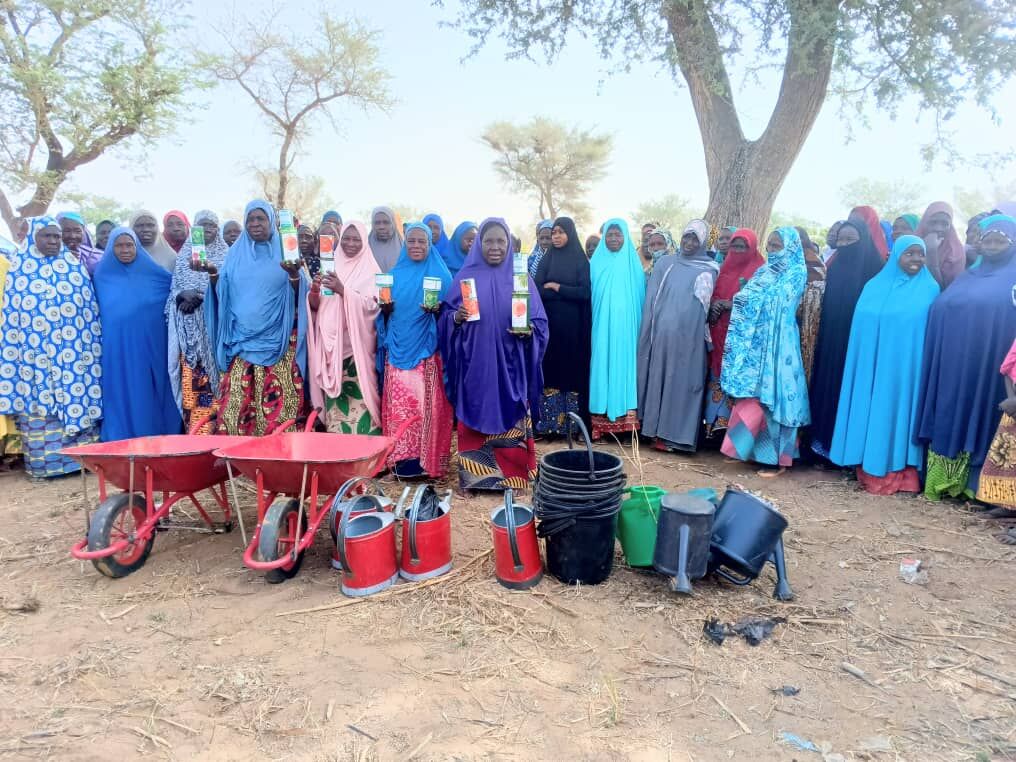
Inside the fence, the bustle, hustle and chatter of a group of about fifty women, some seated on the ground sorting out leafy vegetables, while others go back and forth between their gardens and the water holes, makes for a busy scene. Add to that the goings and comings of different women.
Two ten-cubic-meter tanks stand prominently, and the steady sound of water flowing into one of the four reservoirs signals a significant change—no longer do the women need to walk miles in search of water. Showing off freshly picked Cassia Tora leaves, a happy Amina Hamadou says that is what is on the dinner menu for her family tonight.
‘This market garden has changed our lives,’ she says. ‘Before, we used to cut down Lala Palm trees to weave mats for sale at the market. We were destroying the environment just to make a living.’
Hamadou is one of the original sixty women from the Gomni Women’s Group in Belandé Djerma village, Falmey Municipality, in Niger’s Dosso region. They received training from ONG Aménagement des Terroirs et Productions Forestières (ATPF), an NGO focused on land management and forest production, to establish the market garden.
In turn, they passed on their knowledge to other women, and today the garden is shared by 145 women—45 more than the original target of one hundred. Each woman tends ten plots of land, each measuring three by one meter, where she can grow crops of her choice.
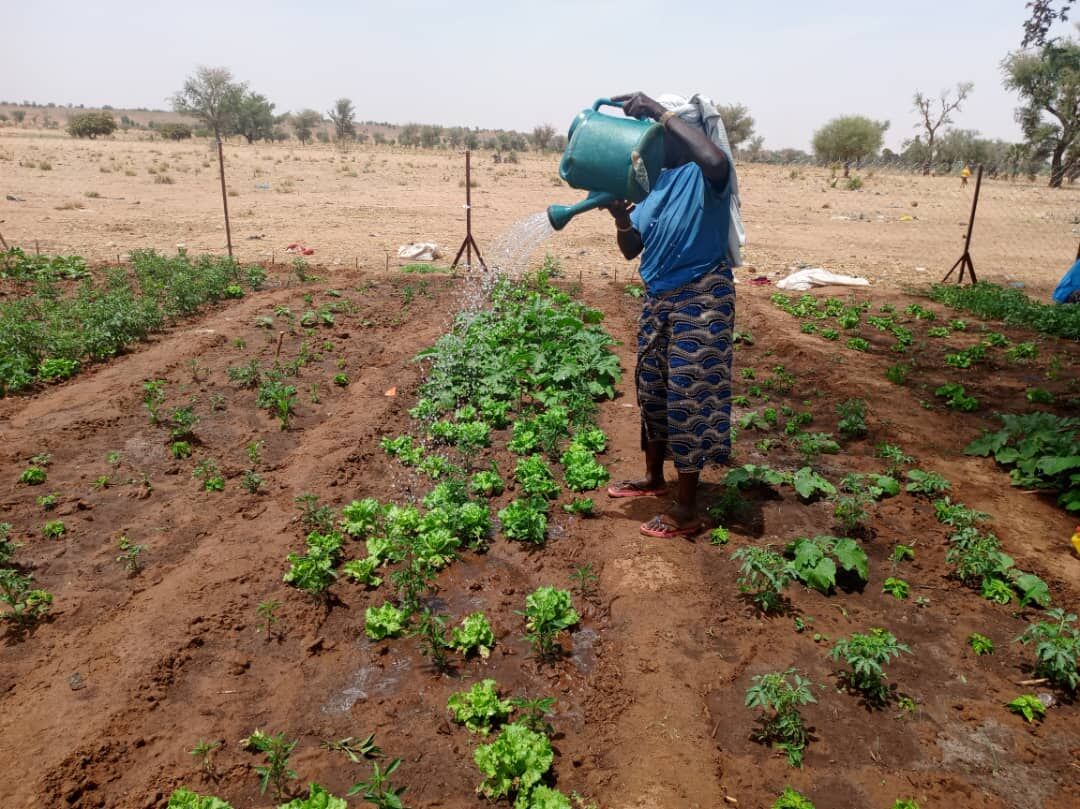
‘Today we have vegetables and fruit for our meals. We are always in the garden, which keeps us busy and occupied all day long,’ says Hamadou.
‘What we do not eat, we sell at the market, and the profits help us provide for our families,’ she explains. ‘Before, having a garden was impossible—we could not sustain it during the hot season because there was no water. But all that has changed now.’
‘This was entirely the women’s initiative,’ explains Boureima Ide Gourouza, a supervisor at ATPF. ‘After a series of meetings with them, they requested the establishment of a market garden so they could grow food year-round.’
He continues, ‘First, the women identified a piece of land, which was given to them by the village chief. Then they chose the crops they wanted to grow—tomatoes, carrots, cabbage, and potatoes. After that, they received training and began setting up the market garden.’
Following the training, the women successfully established market gardens for vegetable production. This improved their families’ nutrition and also boosted household incomes. They were trained in cultivation techniques, community organisation, and management. In addition, they received seed supplies, water infrastructure was installed, and they were supported in developing and maintaining the garden sites.
ATPF’s core mission is to combat poverty and environmental degradation in pursuit of sustainable development. Its approach is firmly rooted in participation, placing beneficiary communities at the centre as full partners and stakeholders in identifying, implementing, monitoring, and evaluating all development initiatives.
The NGO works closely with a range of partners, including government technical services, municipalities, and local communities.
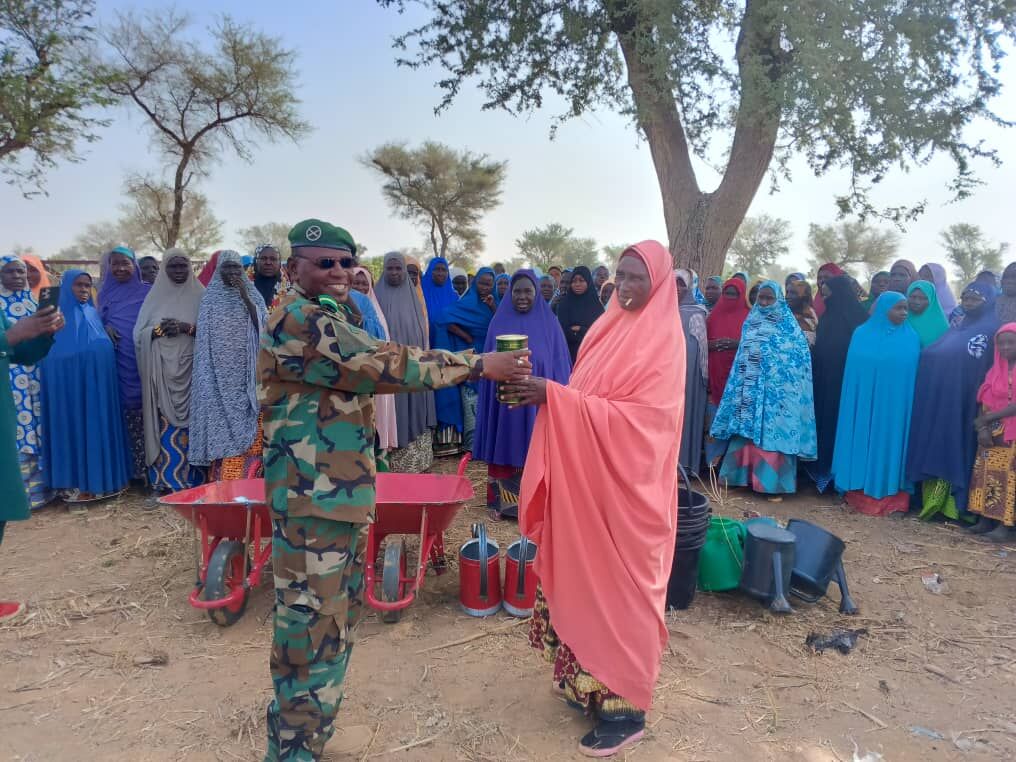
According to Hadi Ismaeila, secretary of the Gomni Women’s Group, ‘This market garden makes sense; it was our decision, and now we are reaping the benefits. It is the only one in the village. We feel safe working here because of the fence, and our crops are protected from damage by both wild and domestic animals.’
The Belandé Women’s Resilience Support Project is one of 31 grant-funded initiatives approved in 2024 under the Projet Sans Regret (No Regrets Projects).
‘Projet sans Regret is part of the 2022 – 2052 Strategic Planning Programme on the Sustainable Management of Natural Resources of the Niger River Valley in Niger. The programme’s main aim is to create a unified approach to accessing and utilising natural resources, allowing communities to benefit from them while at the same time ensuring their sustainable conservation,’ says Yacoub Seybou, coordinator of the Comité Technique d’Appui au Programme (CTAP)
While the strategic objective of the programme is the sustainable management of natural resources, Seybou emphasises that this goal can only be achieved by empowering the communities living in and around the Niger River Valley to be the primary decision-makers.
Hassane Cissé, Technical Assistant at CTAP, adds that components of the strategic planning programme—such as Projet Sans Regret—demonstrate the strategy’s potential to deliver concrete and lasting benefits to communities through funding of activities that communities consider significant for local development.
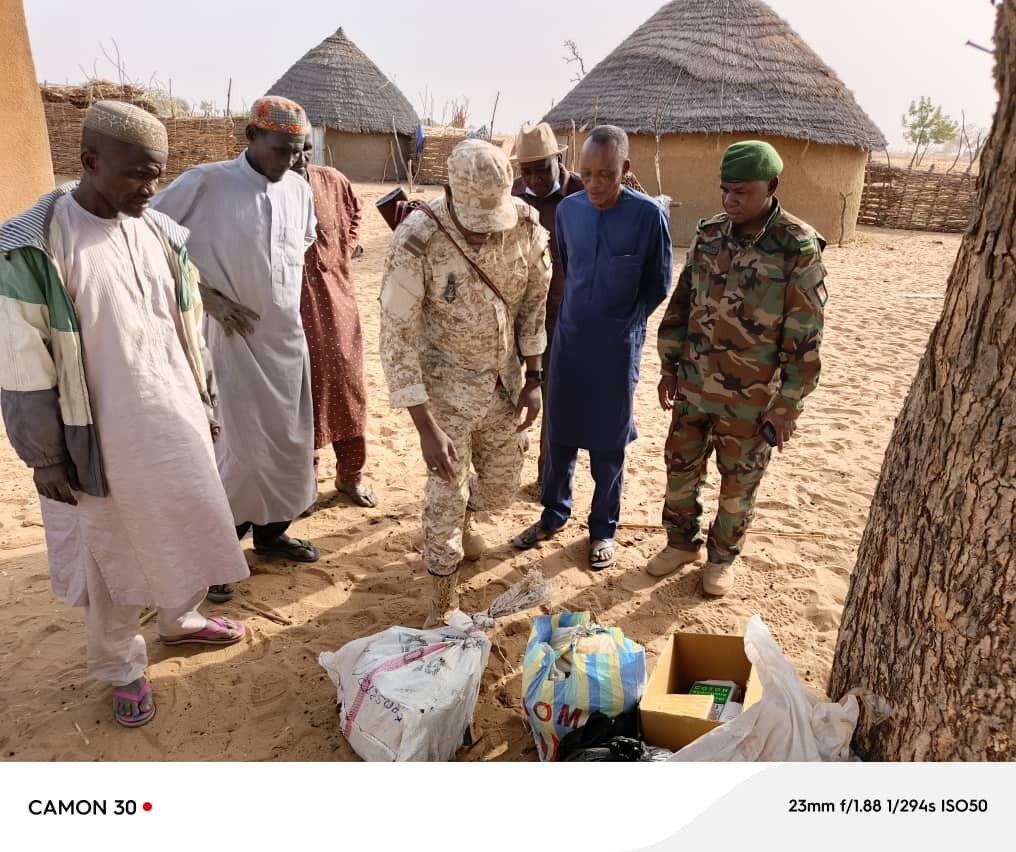
‘There are numerous opportunities, but our primary commitment is to drive development with communities at the forefront,’ says Cissé. He explains that this is why funding is directed straight to communities, allowing them to prioritise the activities they believe will most benefit development in their municipalities.
‘This means the funds don’t pass through Niger’s central government,’ he continues. ‘Instead, they are sent directly from the Netherlands to the communities—either through a municipal account or through a local NGO that is eligible to receive a micro-grant on behalf of the community.’
To ensure greater impact and avoid dispersing efforts, the Strategic Programme will be implemented in 48 communities across three of Niger’s eight regions. However, the first phase—Projet Sans Regret—has not yet been rolled out in all of them.
These targeted communities share natural resources and face inter-municipal challenges within the Niger River Valley. Projects that promote the sustainable management of land, water, and other natural resources are eligible for micro-grants of up to 25,000 Euros.
‘Only activities outlined in the planning document are eligible for funding under Projet Sans Regret,’ explains Cissé. ‘They must benefit the entire community, consider the interests of diverse groups, cause no harm to nature, people, or biodiversity, and be sensitive to potential conflicts.’
‘In April, we evaluated the programme to help us draw lessons from this approach and learn from the experience,’ says Seybou. ‘While it is too early to speak of success, the fact that we are working toward a shared vision and witnessing real transformations within communities is a step in the right direction.’
Hadizatou Kouboura Issa, Coordinator of Femme-Jeunesse-Environnement-Développement (FJED), adds that despite the relatively short time the project has been in operation, visible changes are already taking place.
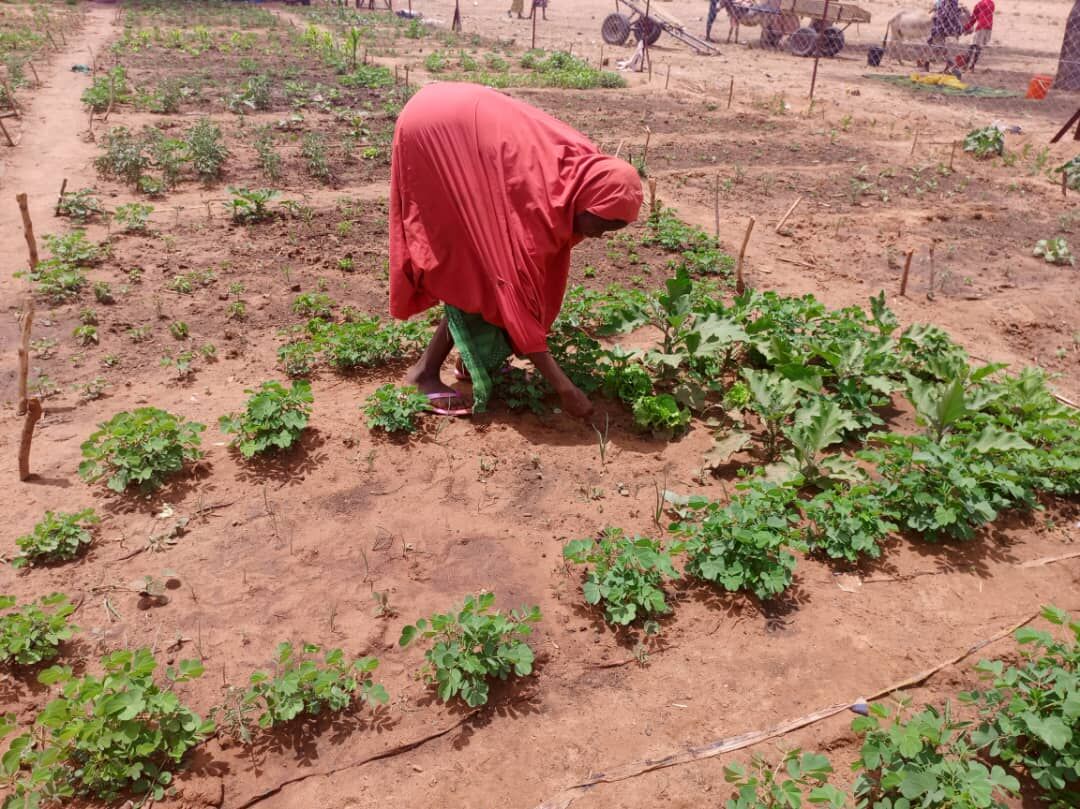
‘Today, we have carried out assisted natural regeneration on three hundred hectares—far beyond the fifty hectares we initially planned—allowing communities greater access to fields for cultivation. We established five sites instead of just one and are active in five villages through the Cash for Work programme,’ she explains.
FJED’s primary goal is to improve the management of degraded landscapes while simultaneously providing communities with economic opportunities as they carry out assisted natural regeneration on their lands. The long-term aim is to boost agricultural production. The regenerated land is now used to grow millet, sorghum, beans, and corn year-round.
The preliminary stages involved selecting the participating communities, identifying supervisors, and establishing village committees to oversee the activities. Other key steps included maintaining and monitoring plots, holding inter-communal meetings, and forming a five-member management committee—comprising two women, one young man, and two men.
‘The activity has been praised by both the Nigerian government and the local community. The Prefect of Falmey even awarded us a certificate of recognition for our work,’ says Issa Made. ‘We began in mid-February 2025, and today, we have 350 beneficiaries, including men, women, and youth.’
She credits this success to the direct funding from the Netherlands Enterprise Agency (RVO) to locally led development organisations.
‘As communities regenerate the land, they also earn an income—that is the essence of the Cash for Work programme. Communities learn by doing and by working, so even if we are no longer present, they have the skills and motivation to continue managing their land,’ explains Issa Made.
She continues, ‘This activity has been life-changing. Niger is currently facing a difficult period following the coup d’état. But in the communities where Cash for Work is active, people can now afford to feed their families. Women have established goat-rearing farms and small businesses. In the five villages, community markets that had disappeared have reopened, and people have regained their self-confidence—all thanks to Projet Sans Regret.’
Box
This goes beyond tackling issues like vegetation loss, land degradation, and declining water quality and availability. It is also about creating short-term employment opportunities for community members—especially young people—at the outset. The goal is to discourage migration to big cities or even attempts to immigrate to Europe. So that in the long term, they have the means to build on this opportunity and develop relevant, effective, and sustainable solutions – Yacouba Seybou
About the Programme
The Programme de Planification Stratégique sur la Gestion Durable des Ressources Naturelles de la Vallée du Niger au Niger 2022 – 2052 (Strategic Planning Programme on the Sustainable Management of Natural Resources of the Niger River Valley in Niger 2022–2052) covers the Niger River Valley within Niger, specifically the regions of Tillabéri, Dosso, and Niamey.
Based on zones facing insecurity and exacerbated by a high population growth within the Niger Valley, the areas are facing significant degradation of natural resources (water, land, and related resources).
The programme seeks to lay the foundations for sustainable management of the natural resources of the Niger Valley in Niger, by ensuring that natural resource management is guided by local expertise making it more inclusive and sustainable.
It also allows for communities within the Niger Valley River Region to reflect on what they want to do within their communities to create change; through projects that receive micro-funding one such being Projet Sans Regret (The No Regrets Project).
Financed by the Dutch government, the locally driven approach is supported by the Netherlands Enterprise Agency, RVO, and implemented by the Comité Technique d’Appui au Programme, CTAP (Technical Committee for the Support of the Programme).
Leave a Reply