One woman’s resolve to turn gullies into greenlands
What was once fertile land in Makueni has been carved into deep gullies, threatening homes and survival. As climate change accelerates land degradation, one woman and her community are pushing back—transforming loss into action and rebuilding both their land and their future.
By Beryl Beatrice
For Joy Wambui, a small-scale farmer from Mboni Village in Makueni County, the danger was personal. A gully near her home had grown so wide that it nearly swept her house away. Across Mutiswa village, nearly 200 households faced a similar risk: living on land that was slowly being eroded, season after season.
According to the Makueni County Forest and Landscape Restoration Implementation Action Plan, at least 13% of the county’s land is classified as degraded. “When a neighbour lost part of her farm to erosion that kept widening the gullies, I realised the problem was a communal one, not an individual one,” Wambui says.
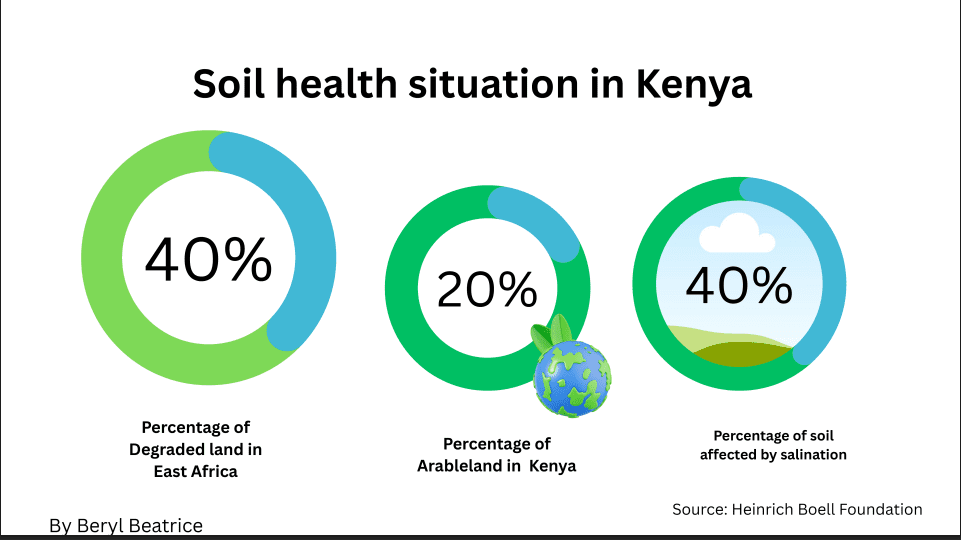
The crisis in Makueni reflects a broader regional challenge. A study by the Heinrich Böll Foundation estimates that over 40 percent of East Africa’s soil is degraded, threatening food security and livelihoods.
In Kenya, only 20 percent of cropland is arable, with losses of up to 26 tonnes of soil per hectare per year due to erosion. Soil salinisation further affects 40 percent of irrigated land, undermining agricultural productivity and long-term sustainability.
Cost of neglect
During the release of the report last year, Joachim Paul, Director of the Heinrich Böll Foundation, underscored the far-reaching impact of soil loss on food security: “Soil is the foundation of life, yet it remains one of the most overlooked and undervalued resources.
“Its health influences the food we eat, the water we drink, and the air we breathe. Protecting soil is not merely an agricultural concern—it is essential to sustaining ecosystems, ensuring food security, and strengthening climate resilience, particularly in Africa.”
The economic cost is significant. The German Agency for International Cooperation (GIZ) estimates that Kenya loses approximately KSh 170 billion each year due to declining soil fertility, erosion, and poor land management practices.
These patterns point to deeper challenges in land management and climate resilience, where communities often bear the brunt of environmental degradation with limited institutional support.
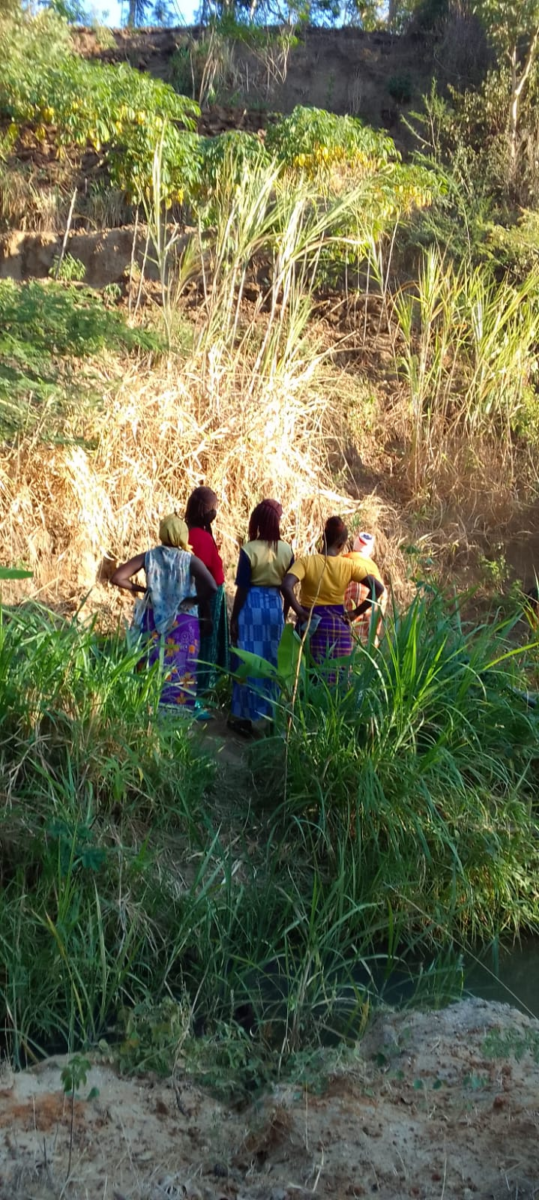
For Wambui and her neighbours, the situation was dire. Each rainy season brought destruction—farms washed away, roads and footpaths cut off, and homes near riverbanks collapsing under the force of the water. Farmers struggled to make ends meet, and putting food on the table became increasingly difficult.
This local crisis reflects national obligations. Kenya’s Constitution guarantees the right to food and freedom from hunger (Article 43), while Article 21 requires the state to protect these rights.
But rights require implementation. Under devolution, counties are responsible for planning and service delivery through County Integrated Development Plans (CIDPs). Yet many ward-level priorities—such as gully rehabilitation—continue to struggle to secure consistent funding and technical support.
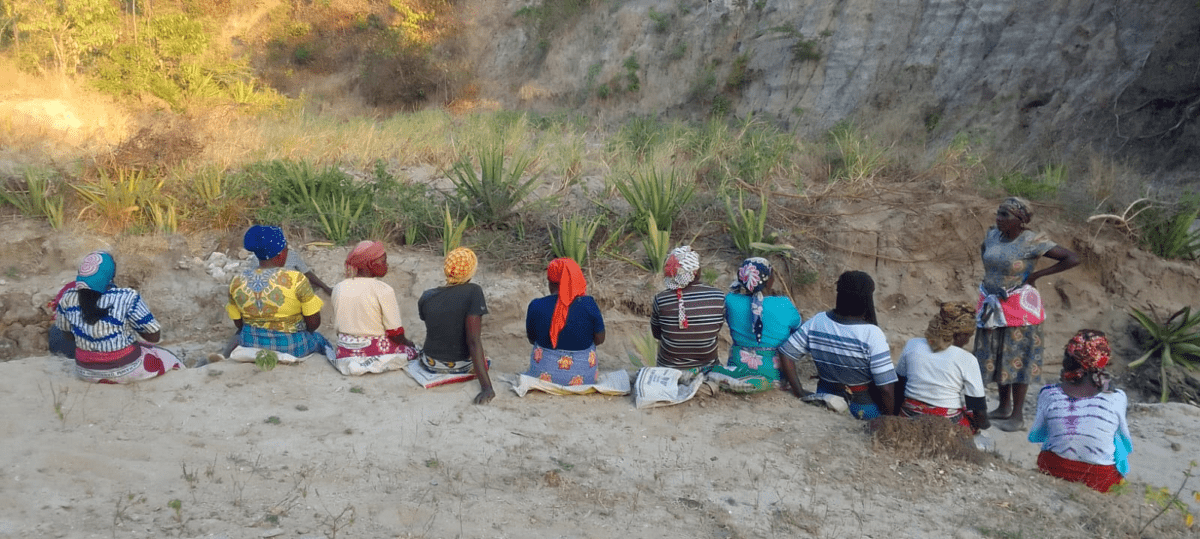
Where implementation falls short, communities are often left to act, so Wambui decided to take the bull by the horn. Despite never having held a leadership role before, she called a community meeting to confront the crisis threatening both livelihoods and homes.
“We engaged, and everyone was willing to find a solution,” she says. “The conversation centred on how we could come together and contribute what we had to build the gullies.” That meeting led to the formation of the Joyful Women Group.
Frustration with the government
When they started in 2019, they were just ten members. Today, there are 30 women, each directly affected by soil erosion and determined to reclaim their land. Wambui says the group emerged out of frustration with delayed or insufficient government response.
“We were tired of lamenting to both the county and national government,” she says. “We had to step up. We wanted our agricultural land back. We wanted our children to go to school, to access markets, and for our families to rebuild their livelihoods.”

At one point, Wambui says, up to seven homes were destroyed by flooding, forcing affected families to seek refuge at the Chief’s camp. At least three of those families were unable to rebuild, lacking both savings and insurance.
Rebuilding homes
In response, the women turned to collective action. Through savings, contributions, and table banking, they raised funds to construct two-bedroom homes for affected members while also reclaiming nearly five hectares of land.
Each house required more than 2,000 stones—costing approximately KSh 30,000—an enormous commitment for the group. But leaving their neighbours exposed to recurring destruction was not an option.
Soil erosion is not unique to Makueni. Across Kenya, regions such as Migori, Kajiado, Kitui, and Marsabit continue to experience land degradation, with expanding gullies destroying farms and livelihoods—pointing to a broader national challenge in land management and climate resilience.
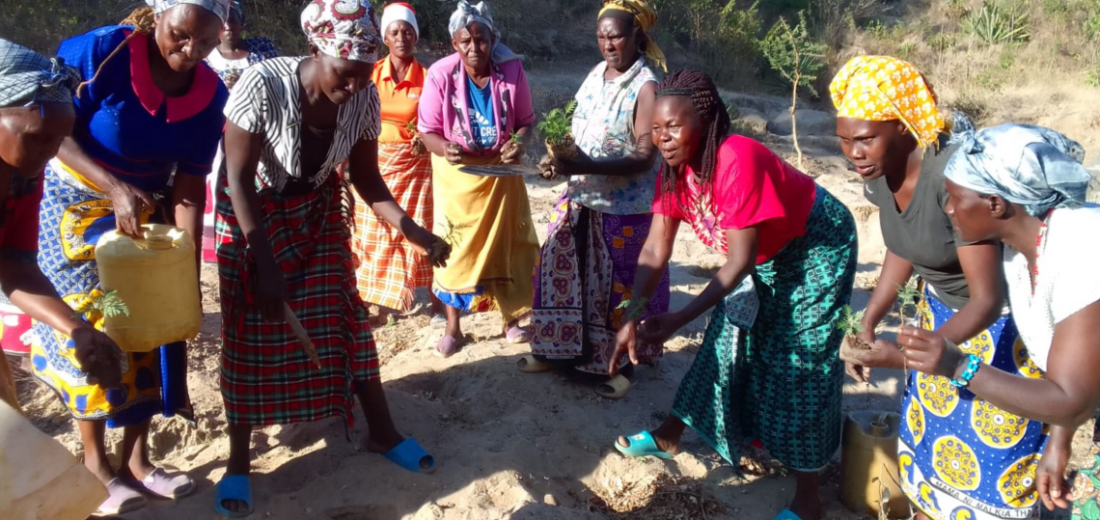
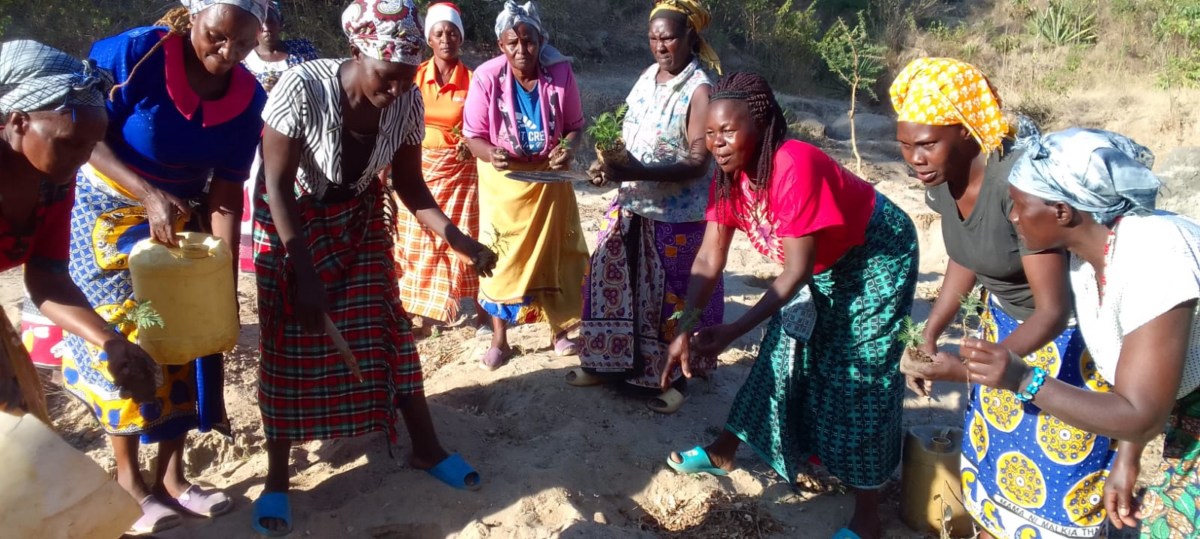
For the Joyful Women Group, restoring their land became both a necessity and a strategy for survival. Armed with shovels, spades, seedlings, stones, and wire mesh, they began constructing makeshift barriers and sandbags. They planted sisal and napier grass to stabilise the soil and prevent water from overrunning their homes.
“We used to complain daily through the media and go back to our degraded land, but complaining did not bring change or stop the erosion,” says Susan Kioko, one of the group’s founding members.
Kioko, a small-scale farmer, recalls watching erosion sweep away her farm and those of her neighbours, forcing her to abandon her land and relocate to safer ground.
Even with their progress, resources are still a constant challenge. To sustain their work, the group relies on table banking—pooling contributions to purchase materials such as wire mesh, seedlings, and to hire additional labour.
“We reached a point where we needed materials we did not have and had to buy them. So we began contributing a thousand shillings each to afford seedlings and wire mesh,” Kioko explains.
Since 2024, the group has saved over KSh 200,000, which members also use to pay school fees and start small businesses, extending the impact of their efforts beyond land restoration.
Despite these gains, the initiative faces significant limitations. Extreme weather conditions continue to test the durability of their work, with some gullies unable to withstand the rapid flow of water during heavy rains.
Addressing these challenges often requires technical expertise that remains beyond the group’s reach. “We did our best, but excessive rain damaged our gullies. This work requires support from other teams or organisations,” says Wambui.
The leading support
For those working closely with the Joyful Women Group, the crisis extends beyond land degradation. Ndinda Maithya, programme manager at the Voices for Just Climate Action Programme, describes climate change as a human rights issue—one that disproportionately affects women and vulnerable communities.
“It undermines democracy and threatens the economy and development at large. The greatest burden falls on those already poor—the vulnerable, mainly women, and young people who are the least responsible for climate change,” she says.
The programme adopts a rights-based approach, working with communities to build locally driven climate solutions, strengthen grassroots alliances, and bridge divides across gender, age, and geography.
Yet for many communities in Kenya, meaningful involvement in climate decision-making has often been limited. Indigenous and local populations—despite being among the most affected—have historically had little influence over how climate interventions are designed and implemented.
Policy frameworks
This is gradually beginning to change. In Marsabit County, for instance, a community-led and community-centred climate action plan was launched in Loiyangalani within the Elomo community. The launch took place during the Lake Turkana Cultural Festival and was officiated by President William Ruto.
Developed through a participatory risk assessment process by Pastoral Community Initiative and Development Assistance, in collaboration with Hivos, the plan identifies priority investments needed to strengthen climate resilience.
At the national level, Kenya has established legal and policy frameworks for addressing climate-related challenges. The Kenya Climate Change Act (2016), amended in 2023, alongside county-level legislation, seeks to integrate climate resilience into development planning—including efforts to combat land degradation.
The law recognises that soil erosion can be mitigated through sustainable land management practices, supported by coordinated policy interventions and long-term planning. It also aligns with broader commitments to achieve land degradation neutrality by 2030.
At the county level, the Makueni Climate Change Act (2022) provides a framework for mainstreaming climate action across sectors. It mandates the development of five-year climate action plans and outlines mechanisms for integrating climate resilience into local development priorities.
These frameworks reflect wider constitutional and continental commitments. The Constitution guarantees the right to be free from hunger (Article 43) and obliges the state to protect that right (Article 21), while also promoting gender inclusion in public decision-making.
At the continental level, Agenda 2063 calls for resilient, food-secure communities, while African Union gender frameworks emphasise women’s economic participation and leadership—priorities reflected in community-led efforts such as the Joyful Women Group. However, the scale of the challenge remains significant.
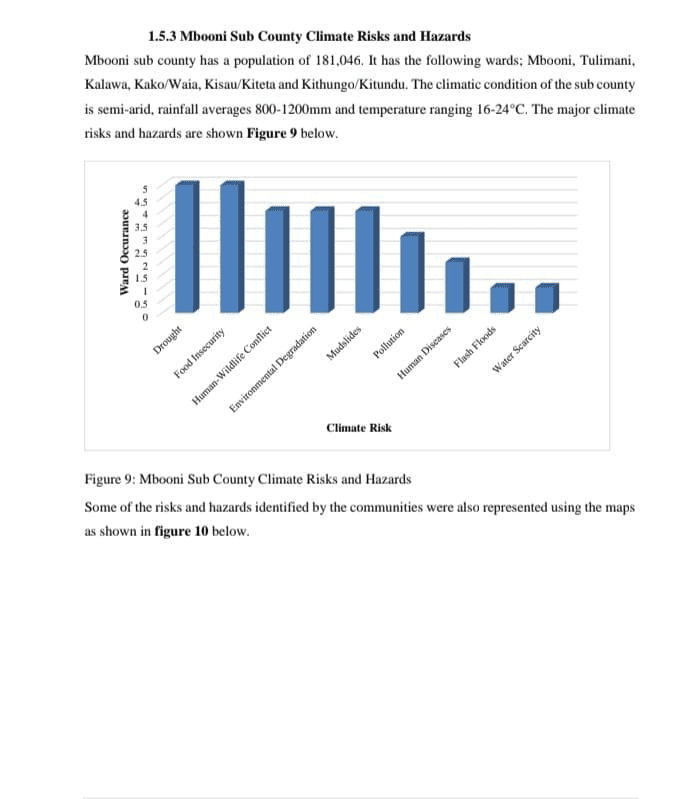
According to Joash Munyua, a county official, Makueni, particularly Mboni sub-county, faces high levels of climate vulnerability. With a population of over 181,000 people, the area experiences fluctuating rainfall patterns and rising temperatures, placing additional strain on already fragile ecosystems.
Over the past five decades, rainfall in the county has steadily declined, with fewer wet days recorded across both the long and short rain seasons. These trends underscore the urgency of sustained investment and coordinated action to strengthen local resilience. The climate risks and hazards are shown below.
The Voices for Just Climate Action programme, working alongside the Joyful Women Group, received a grant from the Next-Level Grant Facility (NLGF) in September last year to strengthen their climate response efforts.
The funding—KSh 193,500 (USD 1,500)—enabled the group to construct more advanced gullies designed to slow water flow during the rainy season, while also supporting tree planting and the establishment of a seedling nursery.
Part of the grant was used to provide daily wages of KSh 400 (USD 3) to women involved in the construction work, offering both immediate income and long-term environmental benefits. The NLGF mechanism is designed to make climate finance more accessible to local communities—recognising their critical role in driving grassroots solutions.
“Even with limited capacity, we took the initiative to write a proposal and were able to secure funding,” says Wambui.
Building on this progress, the group now plans to expand its work to other affected areas, replicating the success of its gully restoration efforts. Their experience highlights what is possible when local initiative is matched with targeted support—turning vulnerability into resilience, and degraded land into opportunity.
Leave a Reply