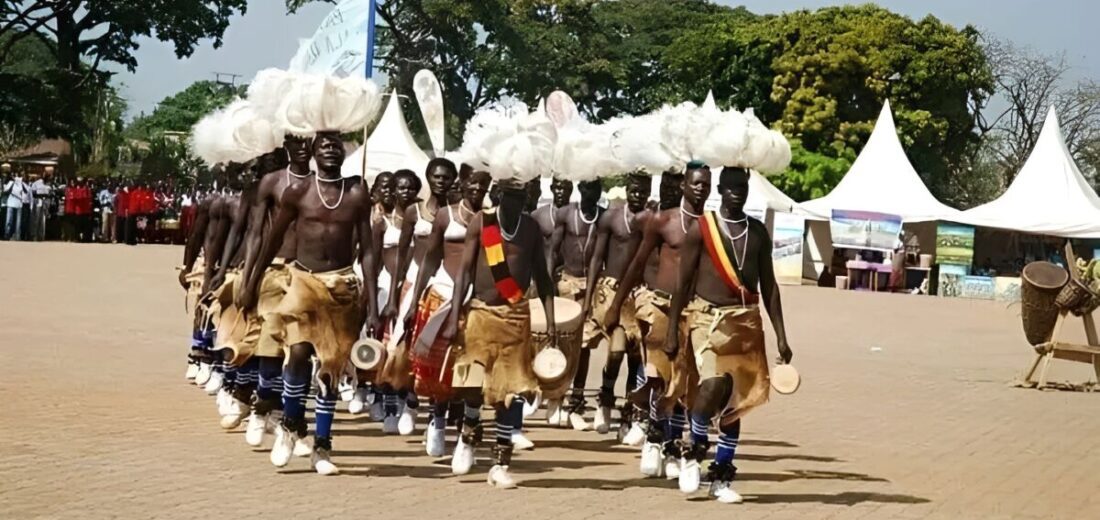
 For years, Northern Uganda was defined by conflict that disrupted lives, displaced communities, and silenced cultural expression. Today, a powerful revival is underway. Through the rhythms of the Bwola dance, the Acholi people are reclaiming their identity, restoring pride and reconnecting generations, transforming a once fractured past into a living, moving celebration of resilience and belonging.
Text: Hayati Ismail – Tina
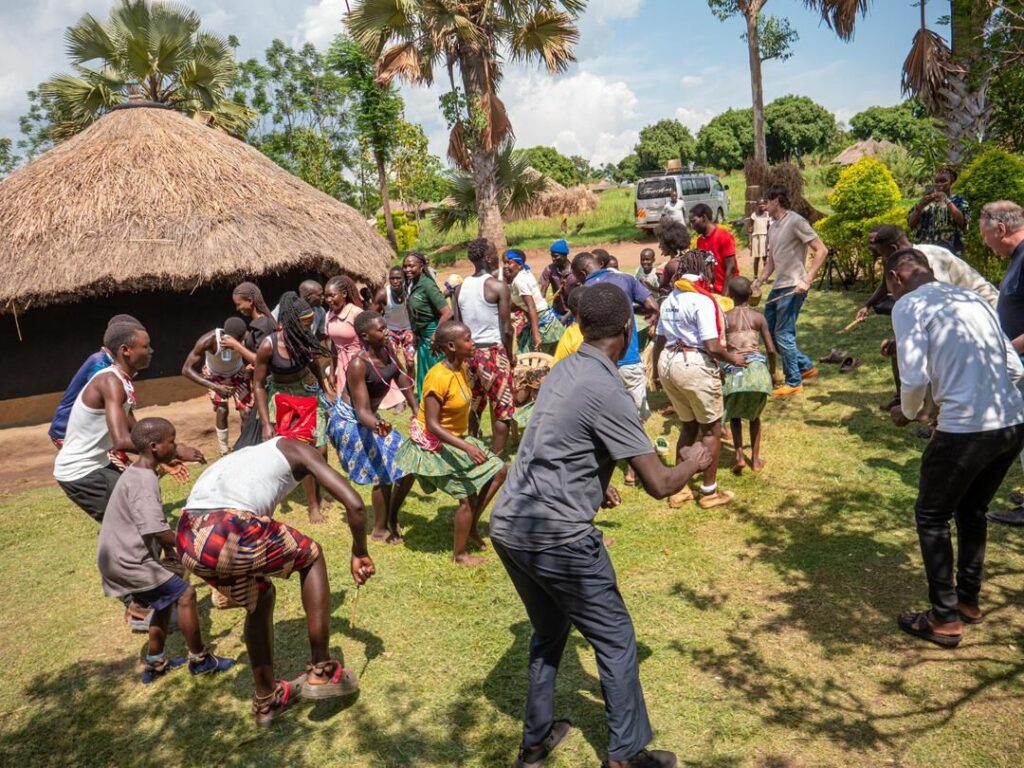
The Acholi people are a vibrant and culturally rooted community in northern Uganda. For decades, however, the region bore the scars of conflict, particularly from the Lord’s Resistance Army (LRA) insurgency. Communities were displaced, traditions disrupted, and cultural expression pushed to the margins of survival.
Today, nearly two decades since relative peace began to return through the combined efforts of communities, government, and non-governmental organisations, a quiet but powerful revival is underway. At the heart of this resurgence is Bwola dance (myel), one of the most iconic royal cultural expressions of the Acholi people, performed during important communal ceremonies.
More than just a dance, Bwola brings people together. It reinforces identity, restores pride, and reconnects communities to their heritage. As peace has gradually returned, so too have the rhythms of the drums and the spirit of cultural belonging. A new generation is now rediscovering what was nearly lost.
The royal dance
Bwola dance (myel) is a royal performance traditionally held in honour of Rwots (chiefs), serving as a powerful expression of respect and recognition. It is most prominently performed during significant cultural ceremonies, such as the installation of a new chief or major royal gatherings.
Over time, however, Bwola has evolved beyond strictly royal occasions. Today, it is also performed at weddings, funerals of prominent individuals, political gatherings, and community events bridging tradition with contemporary life. A notable example was during Hon. Norbert Mao’s political campaign at Peace War Memorial Stadium, where Bwola featured prominently, demonstrating its continued cultural relevance in modern public spaces.
While Bwola originates from the Acholi people, its influence is gradually extending beyond its cultural roots. Neighbouring communities, such as the Madi and the Langi, have begun incorporating elements of the dance into their own cultural practices, reflecting its growing significance in the region. The performance itself is both structured and symbolic. Men and women form separate lines, moving in coordinated circular formations, men clockwise and women anticlockwise. The dance emphasises controlled footwork, while the upper body remains relatively steady, creating a striking visual rhythm.
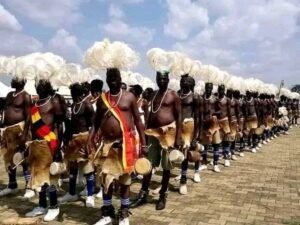
These circular movements symbolise unity and continuity- values deeply embedded in Acholi culture. Every dancer plays a role in keeping the rhythm, showcasing the power of the group as a whole. After years of disruption caused by conflict, Bwola has re-emerged not only as a performance but as a powerful tool for healing, reconnection, and cultural renewal.
Costumes and instruments
Bwola dance (myel) is not only heard- it is seen and felt. The performance is brought to life through vibrant traditional attire that reflects cultural pride, royalty, and strength. The dancers’ appearance quickly captivates attention with striking visuals that reflect Acholi history and identity.
Elaborate cloth designs and intricate beadwork, often passed down through generations, add a deep sense of ancestral connection. Each costume is more than decoration- it is a statement of belonging and continuity. Animal skins and hides are commonly worn, symbolising strength and a close relationship with nature. Feathered headgear, often crafted from birds such as ostriches, conveys beauty, status, and prestige within the community. Beaded ornaments and waistbands introduce colour and movement, accentuating the rhythm of the dance with every step.
Around the ankles, dancers wear rattles made from curved metals or recycled materials such as bicycle bearings. With each movement, they produce a steady, percussive sound that enhances the rhythm and deepens the sensory experience. The attire differs slightly between men and women but remains equally symbolic. Women wear cloth wrappers and chest coverings, while men wear vests or shirts, creating a balanced visual harmony across the performance. Together, these elements transform the dance into a powerful, living expression of heritage.
Equally important are the auditory elements that drive the performance. Large traditional drums form the backbone of Bwola, setting the tempo and guiding every movement. Supporting drums add layers of rhythm and complexity, while calabash percussion instruments enrich the soundscape. The drumming is precise and highly coordinated, leading dancers through carefully timed steps and transitions. Its deep, resonant beats carry across the community, calling people together and reinforcing the collective spirit that defines Bwola.
watch the Bwola dance in motion
Rediscovery of Acholi identity
Bwola dance is experiencing a vibrant resurgence among young Acholi people in northern Uganda, emerging as a powerful pathway for rediscovering and reclaiming cultural identity. Many young people in the region grew up during or in the aftermath of conflict, often disconnected from their traditions. Today, they are actively reclaiming that connection, learning traditional dances, language, and customs with renewed pride and purpose.
Cultural groups, schools, and community organisations are driving this revival, using Bwola as a gateway to deeper cultural understanding. Through participation, young people not only reconnect with their heritage but also build confidence, strengthen their sense of belonging, and step into the role of cultural ambassadors.
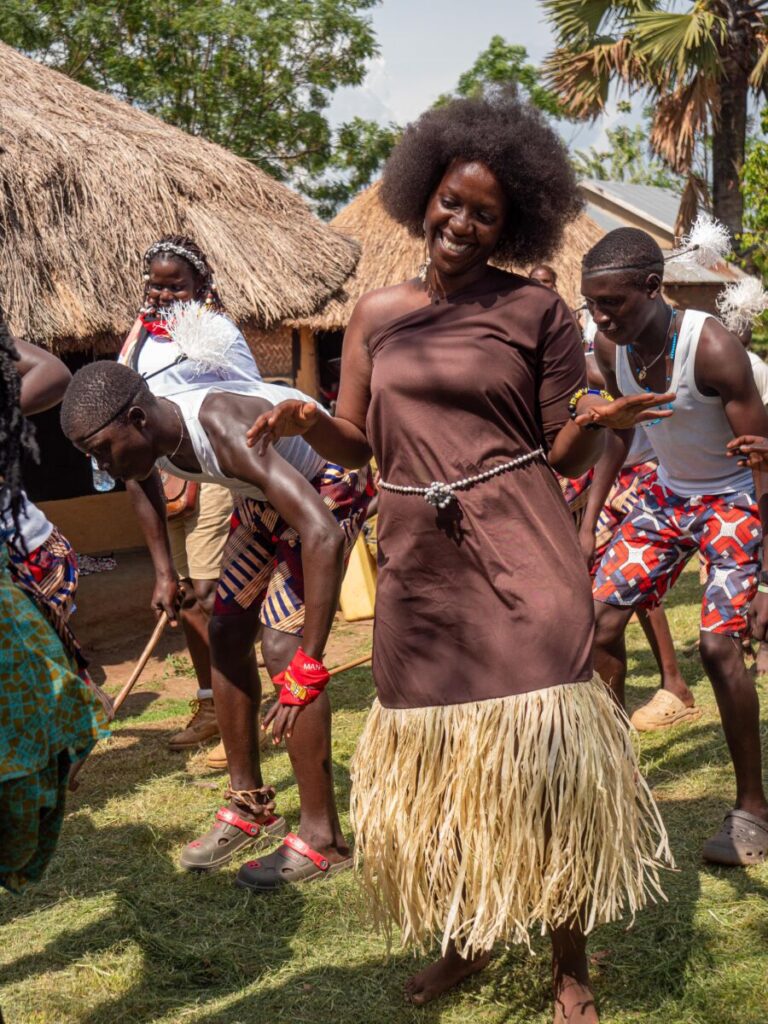
Social media and community storytelling are expanding the movement, enabling Acholi culture to reach broader national and global audiences. What was once at risk of fading, is now being reintroduced, reinterpreted, and re-celebrated by a new generation.
Bwola stands today as a striking expression of Uganda’s rich cultural diversity. It reflects the historical, social, and spiritual dimensions of the Acholi people, their connection to the past and their evolving sense of identity. More than a cultural revival, this is a story of resilience. From the shadows of conflict to the vibrant circles of dance, the Acholi people are reclaiming their narrative. Through the energy of young people and the guidance of elders, cultural pride is not only returning- it is growing stronger.
Bwola (myel) now stands as a powerful reminder that even after deep disruption, identity can be restored, traditions can be renewed, and communities can rise together.
Leave a Reply