Beads and the Natives
A Historical Fiction Inspired by the Luo Heritage of Northern Uganda
Gulu is moving fast. Motorcycles fill its streets, universities shape its young and markets stretch towards new horizons. But beneath the noise of a changing city lies an older story, carried quietly in beads. They are reminders that a people can embrace the future without surrendering the memory that made them.
 The first thing my grandmother ever gave me was neither land, cattle, nor money. She placed a string of faded blue beads in my hands. “They are older than you, me, and this homestead,” she whispered. “These beads crossed rivers before your ancestors built this hut.” As a child growing up in Gulu, I thought they were merely ornaments, beautiful little stones with holes through them. I could not understand why elders carefully wrapped them in bark cloth and stored them away as though they were living relatives. Years later, I learned that every bead carries a journey, every journey carries a people, and every people carries a memory.
Long before Gulu became a bustling city in Northern Uganda; before roads cut through the savannah and the church bells echoed across the plains, the Luo people were travellers. History tells us that the Luo speaking communities gradually migrated from the regions surrounding the Bahr el Ghazal and the Upper Nile, over many generations, moving southward through what is now South Sudan, into northern Uganda. It was not a single migration but a succession of movements driven by changing environments, conflicts, opportunities, and the search for fertile land and water.
Our ancestors did not travel lightly. Women carried gourds filled with seeds, men carried spears and shields, children carried hope, and the elders carried memory. And among their treasured possessions were beads. Some beads came through trade networks that stretched across Africa, while others were exchanged between neighbouring communities as symbols of trust, friendship, marriage, and prosperity. Unlike iron, beads did not rust. Unlike cloth, they did not rot. They survived journeys that consumed generations.
The language of beads
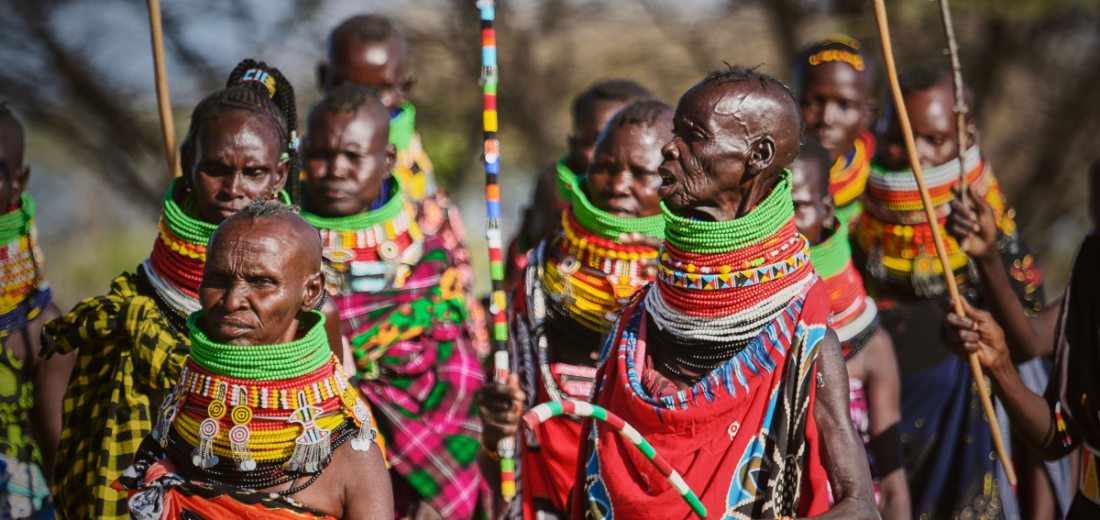
 To the Luo, beads were never simply decorations. A strand of beads around a young woman’s neck announced dignity, identity, and belonging. A bracelet of beads gifted to a bride symbolised the joining of two clans. Certain beads marked elders whose wisdom guided communities. Children wore protective bead charms believed to guard them from misfortune. Every colour spoke. Every pattern remembered someone. Every strand told a story.
When our ancestors finally settled across the fertile lands that today embrace Gulu, Omoro, Amuru, Nwoya, Kitgum, Lamwo, Agago, and Pader, they built more than homes. They built identity. The drum became the village heartbeat. The fire became the evening classroom. The moon became the storyteller’s lamp. Children gathered around elders to hear tales of migration, courage, sacrifice, and honour. Stories were never entertainment alone, they were libraries spoken aloud. A child who knew the stories knew who they were.
No story of the Acholi people can be complete without speaking of the warriors. The warriors were not merely fighters; they were protectors. Their responsibility was to defend cattle, safeguard families, preserve territory, and maintain peace within the clan. Courage was admired, but wisdom was expected. A warrior who sought conflict without reason endangered the community he was sworn to protect. Before setting out, elders offered blessings, women sang songs of encouragement, and children watched with admiration.
Around the neck of many warriors hung beads, not as magical objects, but as treasured reminders of family, ancestry, and the responsibilities they carried. A strand of beads from a mother, wife, or elder could represent love, remembrance, or clan identity. The spear defended the body. The shield protected life. The beads preserved memory. When warriors returned victorious, the village celebrated not because enemies had fallen, but because families remained together. Victory meant life had continued.
Then came strangers. Some arrived as traders while others came carrying religion. Later, the colonial administrators came with new systems of governance. With them arrived glass beads manufactured in distant lands, mirrors, cloth, metal goods, and currencies that slowly changed local economies. Trade expanded. Traditions adapted. Some ancestral bead-making practices declined as imported beads became more common, yet the meaning attached to beadwork endured in many families. The world was changing. Yet beneath every new fashion remained the heartbeat of an older people.
What progress cannot replace
Generations passed. The drums became quieter. Schools replaced many evenings around the fireplace. Children learned history from books before hearing it from grandparents. Phones began storing photographs where memory had once lived in songs. Sometimes I wonder whether we exchanged too much. Development gave us roads. Education gave us knowledge. Technology connected continents. But somewhere along the way, many forgot the language hidden in beads.

 One afternoon, I visited an elderly woman in a village outside Gulu. She was nearly ninety years old. Her hands trembled as she untied a faded goatskin pouch. Inside lay several old beads: blue, white, amber and red. She smiled gently. “These belonged to my grandmother,” she said. I asked if they were valuable. She laughed. “If you measure value with money,” she replied, “you will never understand.” She lifted one bead towards the sunlight. “This one remembers people whose names you no longer know.” At that moment I finally understood what my own grandmother had placed in my hands years earlier. She had not given me jewellery. She had entrusted me with memory.
Today, Gulu stands transformed. Motorcycles weave through busy streets. Universities shape new generations. Markets overflow with produce from every corner of Northern Uganda. Young people dream beyond borders. The city moves forward. And it should. But progress should never demand amnesia. A people who abandon their stories become strangers in their own homeland. The beads remain. Not because they are expensive. Not because they are ancient. But because they remind us that identity cannot be manufactured. It is inherited. It is protected. It is lived.


Whenever an elder fastens beads around the neck of a child, they are silently saying: “You belong to something older than yourself.” When dancers step into the arena wearing colourful beadwork that sways with every rhythm of the bul drums, they are not performing for applause alone. They are carrying generations onto the stage. Each movement echoes migration, resilience, and community, reminding audiences that culture survives when it is lived rather than merely remembered.
As I walk through Gulu today, I often remember my grandmother’s gift. The beads still rest in my hands, not merely as objects, but as a promise. A promise that our migration will not be forgotten. That our dances will continue to tell stories. That the courage of our warriors will remain honoured. And that the children of tomorrow will know that before there were roads, before there were borders, before there were cities, there was a people who carried beads across rivers and grasslands, believing that one day their descendants would inherit more than land. They would inherit identity.
And perhaps that is the greatest treasure our ancestors ever left us.
Photos by [Alvin Demule, Silvia Chepkoech, Aysegul Aytoren, Zeal Creative Studios, Magda Ehlers, Markus Winkler & Kold Shots] via Pexels.
Leave a Reply