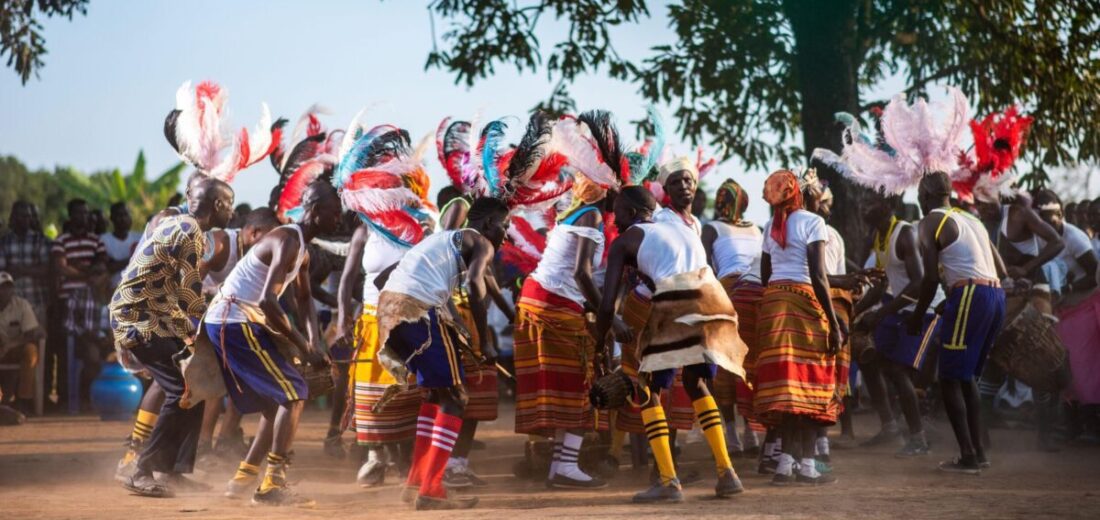
In Acholi, history does not sit quietly in the past. It moves, breathes, and rises with every beat of the drum. Through dance, memory becomes motion, and identity is carried across generations. What unfolds is more than performance; it is a living archive of resilience, where culture is not remembered from a distance, but embodied in the present.
When people hear of Northern Uganda, many still think first of war—the conflict that began in 1986 and stretched across decades, deeply affecting the Acholi sub-region. It disrupted communities, fractured social life, and left lasting scars. But that is not the whole story.
Today, the Acholi people are reclaiming their voice—reviving traditions that once seemed lost and telling a different story. A story not of gunshots, but of drums. This is an invitation to experience Northern Uganda anew.
As the sun dips below the horizon, casting golden light across the savannah, the air begins to pulse with rhythm. The sound of drums rises, steady and alive. This is the world of Acholi dance. It is not just performance, it is identity.
Each movement, each beat, each song carries history. These dances are living expressions of culture, passed from one generation to the next. They embody values, struggles, and triumphs. To experience Acholi dance is to step into a living archive.
It is a language—one that speaks without words, yet carries the wisdom of ancestors. In a world that often feels disconnected, Acholi dance reminds us of something deeper: the power of community, of shared joy, and of belonging. Here, you are not just a spectator. You are invited to participate.
Across the vast landscapes of Northern Uganda, the rhythm of Acholi dance continues to echo—steady, powerful, and deeply rooted in community life. These dances are more than coordinated movement. They are living archives of history, identity, and belonging—woven into everyday life. Through them, stories are told, values are reinforced, and connections are sustained.
To truly understand the Acholi, one must understand their dance. Each performance carries meaning. Some mark celebration while others signal transition—initiation, courtship, harvest, or community gatherings. Together, they form a cultural language that communicates far beyond words.
Embedded within these traditions are foundational stories—such as the legend of the Spear and the Beads, which speaks to separation, identity, and enduring connection among the Acholi people.
It is within this rich cultural landscape that individual dances take on their full significance.
The Bwola Dance
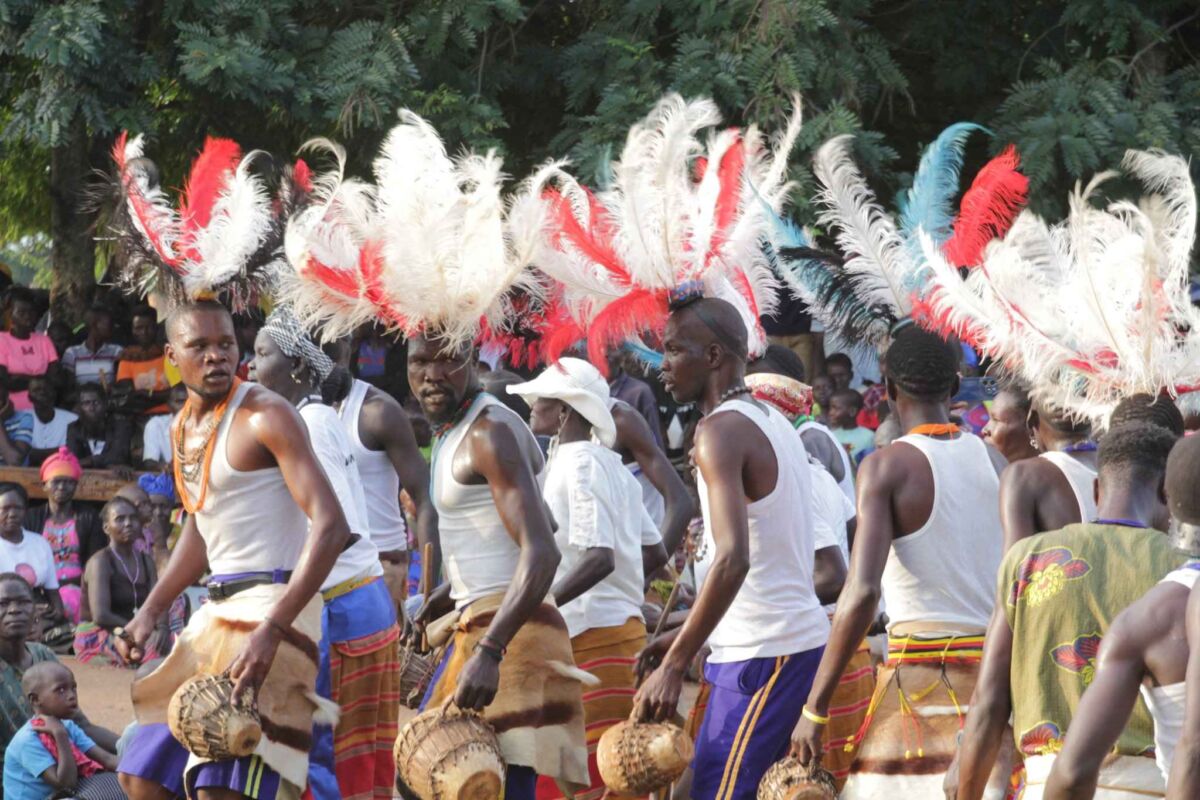
The bwola dance stands as one of the most recognisable and ceremonial expressions of Acholi culture. Traditionally associated with royal occasions, it reflects leadership, unity, and pride. Dancers move in coordinated formations, often dressed in elaborate attire that signals status and occasion.
The rhythm is deliberate, the movement measured, and the atmosphere dignified. To witness bwola is to experience a performance that carries both beauty and authority—a celebration not only of culture, but of collective identity.
The Larakaraka Dance
If bwola speaks of leadership and unity, larakaraka speaks of connection. This is a courtship dance—one of the most vibrant and socially engaging expressions of Acholi culture. It brings young men and women together in a space where attraction, confidence, and identity are expressed through movement.
The energy is unmistakable. Dancers move with rhythm and intention—each step, turn, and gesture communicating interest, admiration, and personality. It is both performance and interaction.
Traditionally, larakaraka also played a role in relationship formation. Through dance, young people observed one another—character, confidence, and presence all becoming part of the social language.
The symbolism is subtle but powerful. For women, grace, rhythm, and coordination reflect confidence and cultural pride. For men, strength, control, and presence signal readiness and responsibility. These are not rigid expectations, but expressions shaped by tradition.
At its core, larakaraka is about more than courtship. It is about community—about how relationships begin, how people connect, and how culture provides a shared space for that connection to unfold. To witness it is to see culture in motion.
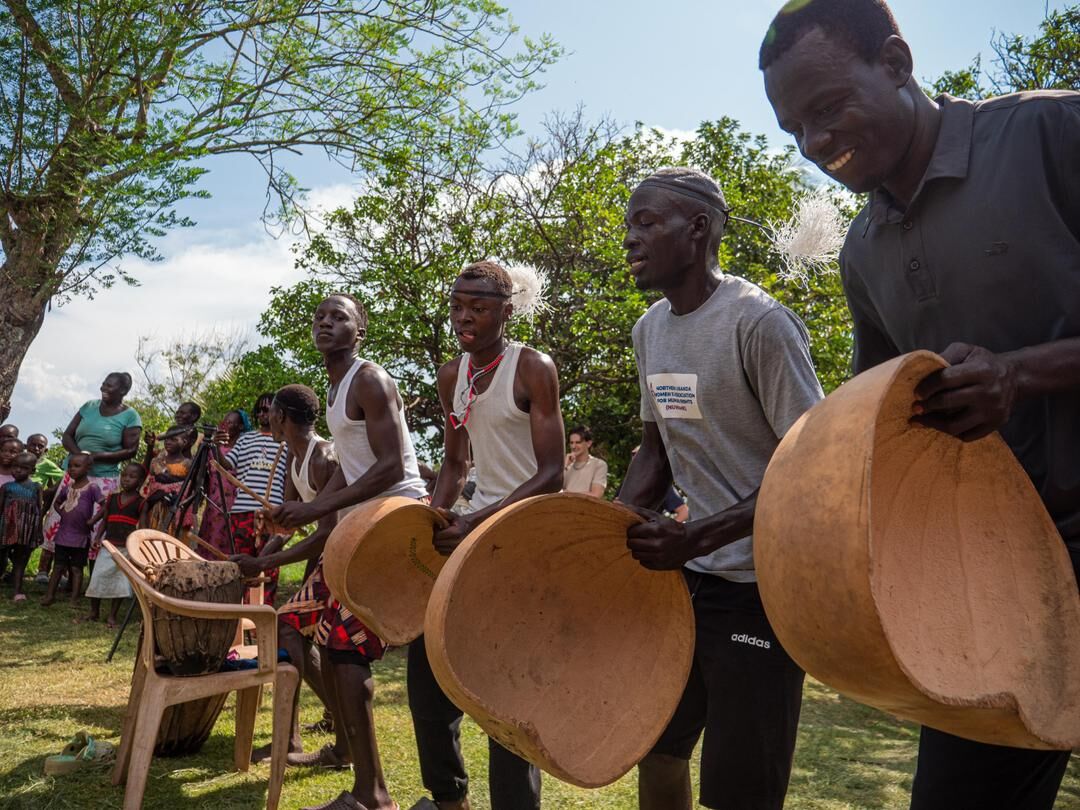
The Orak Dance: Celebration and Community
If larakaraka expresses connection, orak embodies celebration. Performed during communal gatherings and harvest moments, orak is a dance of joy, gratitude, and togetherness. Its movements are lively and expressive, often accompanied by laughter, clapping, and playful interaction.
It reminds us that culture is not only preserved in solemn moments, but also in joy. For visitors, orak offers something immediate and inclusive. You do not simply watch—you feel the rhythm, join the movement, and become part of the shared experience.

Echoes of Identity: The Spear and the Beads
Underlying many Acholi traditions is the enduring story of the Spear and the Beads—the tale of Gipir and Labongo. This story explores themes of separation, identity, and the enduring connections that link communities despite divisions.
Its presence within cultural expression, including dance, is subtle but significant. It reminds us that Acholi identity is not static—it has been shaped by history, resilience, and continuity. In every rhythm, in every movement, that story echoes.
Northern Uganda invites you—not just to visit, but to experience. To step into Acholi is to encounter a culture that lives through rhythm, movement, and community. It is to witness a people whose history is not only remembered, but performed.
In a world that often feels fragmented, Acholi offers something grounding: connection. Connection to history, people, and to self. Here, dance is not just art; It is memory. It is identity. It is life.
And as the drums rise and fall across the savannah, one truth becomes clear: The dust of Northern Uganda never settles. It rises—with every step, every beat, every story—carrying with it the spirit of a people who continue to move, to remember, and to welcome the world.
Leave a Reply